“Know the facts before asking questions”: NPS chief’s conduct sparks controversy, disrupting parliamentary audit; clashes also erupt over meeting minutes and Mifegyne
- Input
- 2026-10-28 00:30:54
- Updated
- 2026-10-28 00:30:54
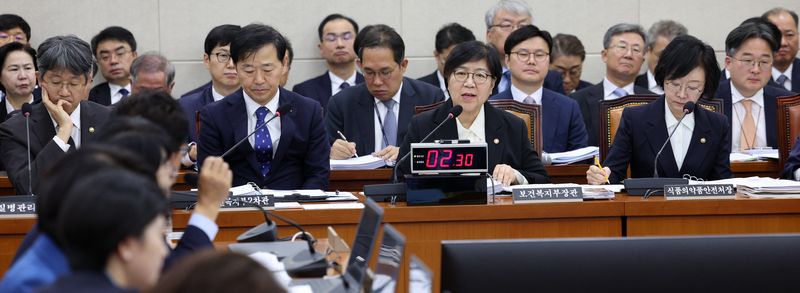
[Financial News] At a comprehensive parliamentary audit held by the National Assembly’s Health and Welfare Committee on the 27th, criticism and raised voices over National Pension Service (NPS) President Kim Sung-joo’s manner of responding briefly disrupted the proceedings. Tensions also ran high throughout the day between the ruling and opposition parties over the release of minutes concerning the NPS’s “rebalancing suspension” and the circumstances behind the introduction of Mifegyne, a medication for terminating pregnancy.
■ “Are you evaluating lawmakers’ questions?” ... Parliamentary audit suspended over NPS chief’s conduct
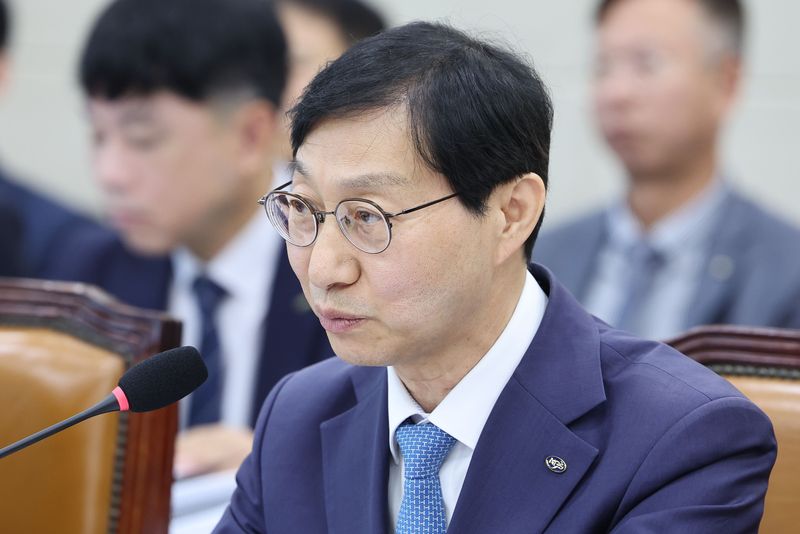
The first flashpoint of the day’s audit came during an exchange about investment returns on the NPS fund. In response to a question from Democratic Party of Korea (DPK) lawmaker So Byung-hoon, NPS President Kim Sung-joo defended his position, saying, “Overseas stocks and both domestic and foreign bonds are currently in negative territory, so domestic stocks are performing the best.” He added, “If we had not maintained the domestic stock allocation in line with current conditions, the NPS could have entered loss territory.”
Addressing the misconception that the NPS focuses solely on domestic stocks, he explained, “We invest in around 80 countries around the world, and overseas investments account for at least 55%.” He emphasized, “If you assess gains and losses by comparing highs and lows over a few months, pension funds, as long-term investors, will miss out on significant long-term gains.”
The problem was what he said immediately afterward. Kim added, “If the National Assembly, which deals with policy, asks questions with at least an accurate understanding of those points, unnecessary misunderstandings and controversy among the public could be avoided.”
Lee Man-hee, chair of the Health and Welfare Committee and a member of the People Power Party, strongly protested, saying, “I am not in a position to evaluate the questions themselves. Are committee members asking about losses to the public’s retirement funds without knowing what they’re talking about? That is an extremely insulting remark.” The meeting was briefly suspended amid raised voices from lawmakers on both sides. After the audit resumed, Lee again criticized Kim, asking, “The people’s hard-earned money has disappeared—how can you talk as if it were someone else’s concern?” Kim explained, “I said that because the same questions kept being repeated even though I had explained the matter sufficiently at the previous audit.” He eventually bowed his head and said, “I apologize for the wording, which could be misunderstood.”
■ Clash over minutes on “rebalancing suspension” ... Opposition: “Name those responsible” vs. ruling party: “Political attack”
Whether to release the National Pension Fund Operation Committee’s minutes concerning the NPS’s decision to suspend rebalancing was also a central point of contention. People Power Party lawmakers, from the opposition, launched a fierce attack, accusing the government of changing the rules to suit its political preferences. Lawmaker Baek Jong-heon criticized the DPK, saying, “I called for former Blue House policy chief Kim Yong-beom to be called as a witness to find out how the rebalancing suspension affected people’s retirement funds, but the DPK opposed it across the board.” Lawmaker Kim Tae-ho also pressed the government, saying, “If they keep delaying the release, the public will have no choice but to think the decision itself was tailored to political preferences.”
The ruling Democratic Party of Korea, in turn, called the criticism a baseless political attack. Lawmaker Seo Young-seok, the ruling party’s secretary on the Health and Welfare Committee, said, “I regret that they have mounted political attacks from the start to the end of the audit, despite knowing that the law bars disclosure of the minutes for four years, preventing a smooth audit.” Lawmaker Nam In-soon also defended the decision, saying, “The materials were not submitted to the National Assembly because the ruling and opposition parties failed to reach an agreement.”
Health and Welfare Minister Jeong Eun-kyeong also stood by the decision to keep the minutes confidential. “The decision was made to keep the minutes confidential because their release could affect the pension fund’s returns or the market,” she said. “Given the high level of market uncertainty at the time, experts and committee members broadly agreed that it was necessary to monitor the situation for around six months and adjust the rules.” She also rejected claims that the rebalancing suspension had caused losses of 182 trillion won, saying, “That is only a difference in market capitalization depending on the valuation date; it is not a realized investment loss.” Meanwhile, responding to the government’s explanation that the NPS fund’s depletion date had been pushed back to 2078, Jeong added, “That estimate was based on returns through the end of last year.”
■ Circumstances behind Mifegyne’s introduction under scrutiny ... “Presidential order” vs. “The National Assembly has been demanding it for two years”
Toward the end of the day’s comprehensive audit, a heated dispute also arose over the circumstances behind the introduction of Mifegyne, a medication for terminating pregnancy.
Committee chair Lee Man-hee of the People Power Party criticized the government, saying, “We are not opposing its introduction; we are saying we should proceed cautiously because this is an issue directly tied to people’s lives. But what else is it if the government rushes to follow as soon as President Lee Jae Myung, at the Blue House, says a word?” Fellow party lawmaker Lee Dal-hee also raised her voice, asking, “Wouldn’t it be safer to revise the Criminal Procedure Act and the Mother and Child Health Act before selling the drug?” She called it “a policy dictated from above.”
DPK lawmakers responded forcefully. Lawmaker Lee Su-jin countered, “They say the government acted on a single remark from President Lee, but after bills were introduced in the National Assembly, we had consistently urged the Ministry of Health and Welfare and the Ministry of Food and Drug Safety to prepare measures for nearly two years, and the government prepared them in response.” Lawmaker So Byung-hoon also shot back, “I am older than the president and the prime minister. I would ask you at least to refrain from saying, ‘It’s an order from above’ or ‘They just do as they’re told.’” The exchange continued.
[email protected] Park Ji-hyun Reporter