Three Russian tankers head for New York ahead of US midterms... Controversy intensifies as sanctioned vessel is included
- Input
- 2026-10-27 23:31:20
- Updated
- 2026-10-27 23:31:20
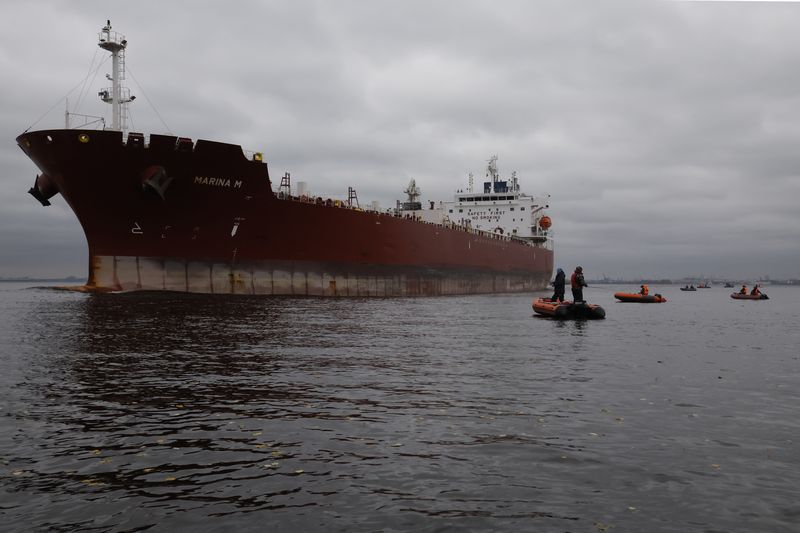
[Financial News] Under a surprise “diesel trade agreement” between US President Donald Trump and Russian President Vladimir Putin, three tankers loaded with Russian diesel are expected to arrive in US ports one after another next month. The Trump administration’s gamble is aimed at curbing soaring domestic diesel prices ahead of the US midterm elections on the 3rd of next month. But the inclusion of a vessel sanctioned by Europe in the shipments has fueled security concerns and fears of discord among allies.
According to the Financial Times (FT) and other foreign media on the 27th (local time), three tankers carrying a total of 140,000 tonnes of Russian diesel are currently sailing toward the US East Coast, and a fourth tanker is expected to set sail on the 28th. The first to arrive will be the Greek-owned tanker Agioi Panendes, carrying about 40,000 tonnes, which is due in New York on the 7th of next month. Russian diesel, which had not entered the United States since July 2023, will thus return to US ports after about three years and four months. The Russian tanker Talisman and the Hong Kong-owned Leruo are then expected to arrive on the 9th and 11th, respectively.
Russia has agreed to increase supplies to the United States and international markets to as much as 3 million tonnes a month in the future, starting with an immediate supply of 300,000 tonnes this month, followed by 500,000 tonnes next month and 1 million tonnes in December. Russian Deputy Prime Minister Alexander Novak said that day, “The agreement between the leaders of the two countries is being properly implemented as planned.” After securing new export quotas in the middle of this month, Russian refiners raised diesel production to around 180,000 tonnes a day. With domestic demand falling in the autumn, they were able to divert a substantial share of output to exports bound for the United States.
However, the sparks of domestic political opposition in the United States and international legal disputes over the diesel deal remain. In particular, the Leruo, due to make the third port call, is listed for sanctions by the UK, the European Union (EU), Canada and others for disabling its GPS and conducting ship-to-ship transfers or violating the G7 price cap. Trade lawyer Jeremy Fanner said, “The president has the authority to issue temporary licenses, but a vessel sanctioned by allies calling at a US port could pose a major problem.”
The US Congress is also mounting strong bipartisan opposition. Democratic lawmakers and Republican Senator Thom Tillis, among others, sent letters to banks, port authorities and distributors in the United States, stating, “This measure funds Russia’s invasion of Ukraine and threatens national security.” They warned that companies involved could face congressional investigations as well as civil and criminal liability.
The Russian side, by contrast, dismissed the domestic US backlash. Deputy Prime Minister Novak criticized the Democratic Party, saying, “It is surprising that the party takes a position of making statements and taking actions that run counter to the interests of the American people.” Energy experts, meanwhile, said it remains uncertain whether Russia will be able to supply the promised volumes without disruption if Ukraine resumes drone attacks on Russian refineries.
[email protected] Park Ji-hyun Reporter