“Fighting North Korean troops as a private” ... War game set in South Korea sparks debate, even in political circles
- Input
- 2026-10-28 04:40:00
- Updated
- 2026-10-28 04:40:00
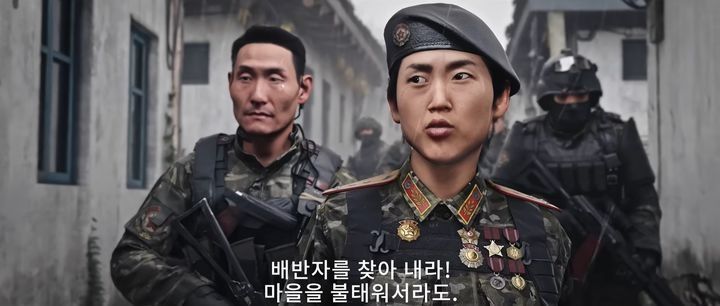
[Financial News] The game Call of Duty: Modern Warfare 4, which depicts a war breaking out on the Korean Peninsula after a North Korean invasion, has ranked No. 1 in South Korean Steam sales. The game lets players experience the war from the perspective of a South Korean soldier and features familiar Korean streetscapes, including signs in Korean and convenience stores.
Players have responded positively to the game’s portrayal of everyday life in South Korea and its combat scenes, but opinions are divided over its use of the division of the two Koreas and war as game material. Politicians have also linked the game to security policy, and the issue led to a debate over creative freedom during a parliamentary audit.
According to Steam, a PC game distribution platform, on the 28th, Modern Warfare 4 topped the South Korea region’s “Top Sellers” list. The Steam ranking is based on sales revenue, not the number of players.
Released on the 23rd, Modern Warfare 4 is a first-person shooter (FPS) developed by Infinity Ward and published by Activision. The story follows young South Korean soldiers sent to war after a full-scale North Korean invasion, as well as the operations of Captain Price, a major character in the series. The war that begins on the Korean Peninsula escalates into a global crisis in the game.
The game’s main point-of-view character is Private Park Hyun-jun of the Republic of Korea Marine Corps. Through Private Park, players experience the situation facing South Korean soldiers sent into an unexpected war.
Early in the game, South Korean soldiers are shown coming under a North Korean missile attack while patrolling an ordinary street. Everyday places, including alleys with Korean-language signs and convenience stores, become battle zones immediately after the attack, depicting daily life collapsing as war breaks out without warning.
Player reviews have also been largely positive. Of 605 Korean-language reviews posted on Steam, 87% were positive, earning the game a “Very Positive” rating. Players wrote: “Regardless of political leanings or left-versus-right politics, the game itself is fun”; “The scenes feel like they could really happen in real life—the immersion is insane”; and “This is military education, right here.”
Work was also done during development to reflect real-life conditions in South Korea in the game. The development team said it reviewed details such as streets and shops so that Korean players would find them familiar.
Alex Norris, associate design director at Infinity Ward, said in an interview with Xbox’s official publication Xbox Wire last May that the studio maintained a dedicated internal channel for discussing Korean culture. He explained that the experiences of team members of Korean heritage were incorporated into development, and that the team checked details ranging from the meanings of words on signs to convenience-store layouts and the placement of food products.
The game’s premise of a North Korean invasion was also discussed in political circles. On the 20th, People Power Party lawmaker Ahn Cheol-soo mentioned the game while criticizing President Lee Jae Myung’s remarks on North Korea’s nuclear weapons. Ahn said, “If you don’t understand the danger of North Korean provocations, at least try playing Call of Duty: Modern Warfare 4.”
Independent lawmaker Han Dong-hoon also shared his thoughts on the game’s depiction of a North Korean invasion in a Facebook post on the 23rd. He said, “Rather than frowning because it depicts a North Korean invasion, we need to pay attention to the question this game raises,” and asked, “If that day comes again, are we ‘prepared’?”
On the other hand, some say caution is needed about turning a war on the Korean Peninsula into entertainment while the reality is that the war between North and South Korea has not ended. Sarah Son, a senior lecturer in Korean Studies at the University of Sheffield in the UK, said in an interview with the BBC last May that choosing this subject matter could lead to controversy.
The debate surrounding the game also came up during a National Assembly audit, where the issue was whether the same standards for creative freedom should apply to films and games.
At a comprehensive audit of the National Assembly’s Culture, Sports and Tourism Committee on the 23rd, People Power Party lawmaker Kim Seok-ki criticized as a double standard the recognition of creative freedom for the film “Assassin(s)” while demanding that distribution of a game depicting a fictional war on the Korean Peninsula be halted.
In response, Minister of Culture, Sports and Tourism Choi Hwi-young said it was natural for people to have differing opinions about works. He added, “The government does not engage in prior censorship of games either.”
[email protected] Han Seung-gon Reporter