From Furniture and Graphics to Gastronomy... Design House Opens ‘MAK,’ Its 50th-Anniversary Exhibition [fn Art Snap]
- Input
- 2026-10-27 19:30:00
- Updated
- 2026-10-27 19:30:00
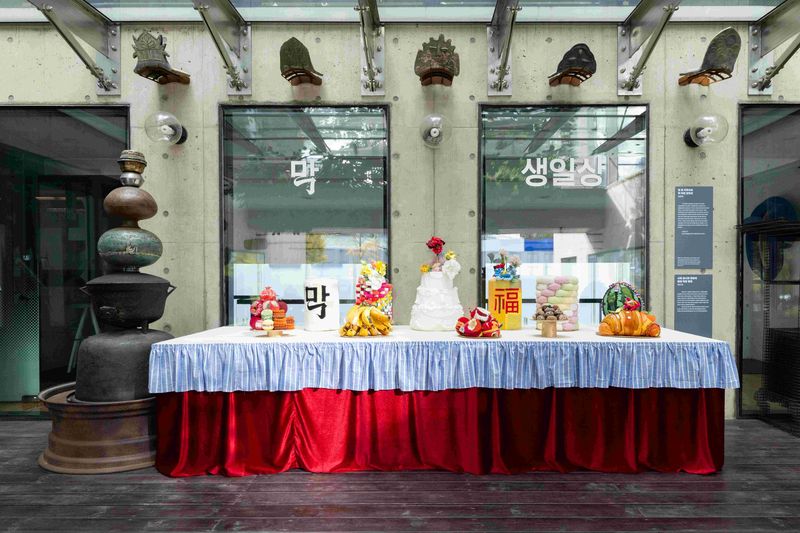
According to Design House on the 27th, its 50th-anniversary exhibition MAK opened the previous day at its headquarters in Jangchung-dong, Jung-gu. Eighteen teams and 26 individuals working across fields including design, architecture, graphics, fashion and food are taking part. The exhibition is open to the public from today through November 25.■ A feast table made from old clothes and a transparent bandaji chestThe exhibition takes its starting point from “mak,” the word found in mak-sabal, makgeolli, makguksu and makchum. Design House interprets it as a creative attitude: trying things first, even if the result is rough or unpolished, and mixing different sensibilities. Works are displayed in 17 spaces—including the entrance, lobby, garden, meeting rooms and café—of the headquarters designed by Seung H-Sang.
Fabric artist Kim Eun-ha created a birthday table inspired by the goimsang, a royal feast table from the Joseon dynasty. She made yugwa, okchun sweets, cakes and more from old clothes and fabric scraps, and inscribed “mak” and “bok” on colorful towers. The arrangement, in which the objects on the table scatter when the exhibition ends, also reflects the custom of sharing food at a feast.
Jung Ku-ho’s “Baekgoldong” is a transparent bandaji chest combining plexiglass with jangseok, the metal fittings used to decorate traditional furniture. The see-through material reveals both the furniture’s structure and its ornamentation. Prints depicting a bandaji chest at full scale are also being shown for the first time.
Baek Jong-hwan presents the “Sambangtakja” and “Obangtakja,” variations that reduce or expand the structure of a traditional sabangtakja display stand. Park Gil-jong gathered discarded café tables and materials left over from previous projects to give them a new use.
“Dada Friends,” featuring actor and photographer Park Sang-won, architect Choi Si-young, musician Kim Su-cheol and others, each gave their own distinct treatment to Kartell’s “Louis Ghost Chair.” Objects drawn from the lives and work of the six creatives were also placed in a prop box.
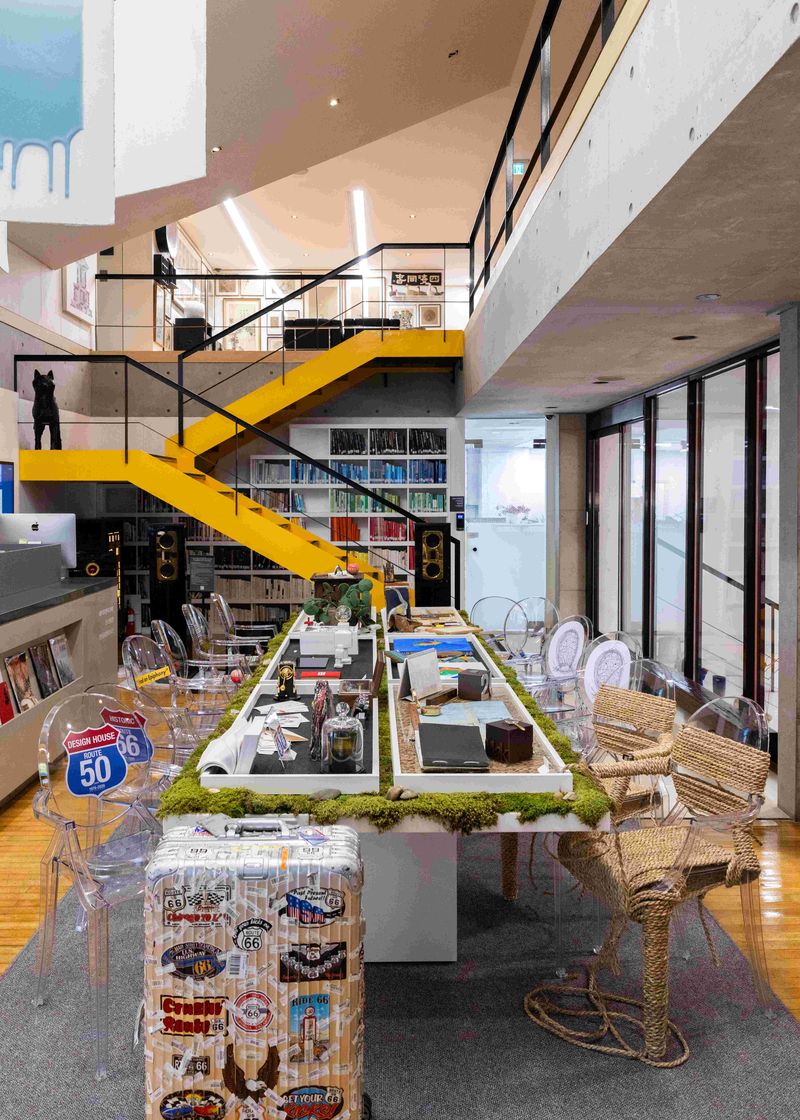
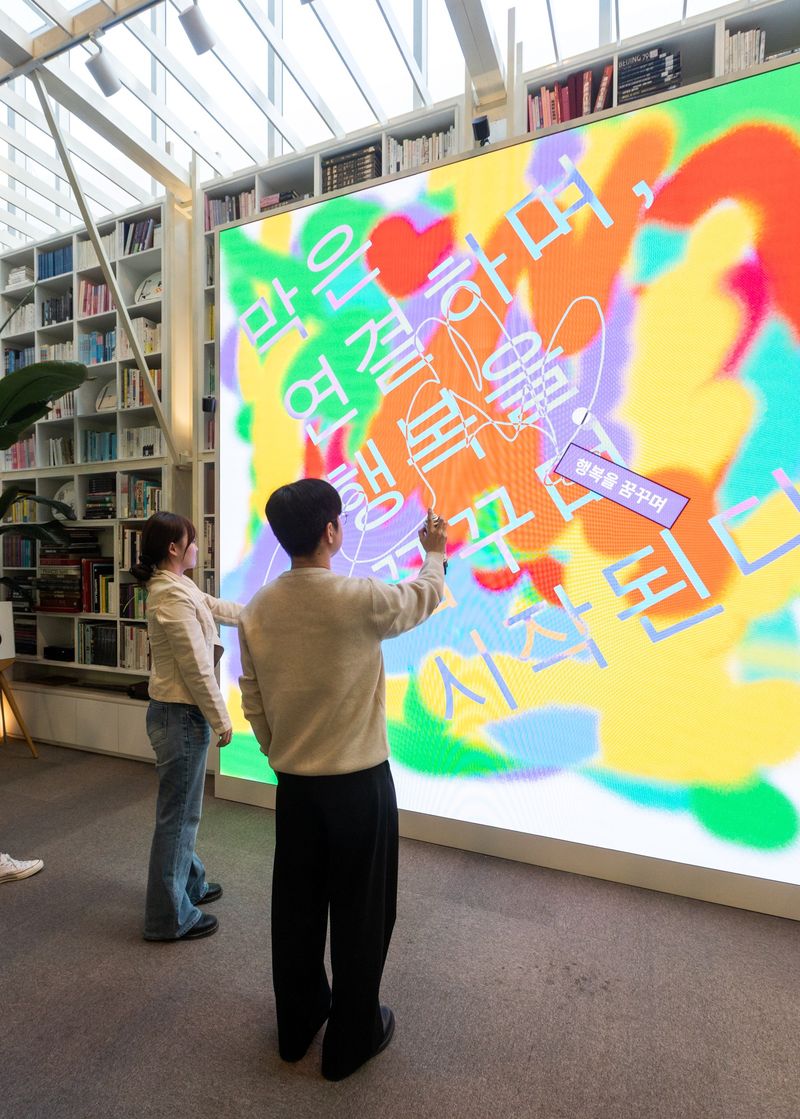
The creative group Level9 divided the company’s 50-year history into decades and presented the experiments and keywords from each period on a graphic wall. It also installed digital graffiti where visitors can add their own colors and letters. The work changes throughout the exhibition as visitors take part.
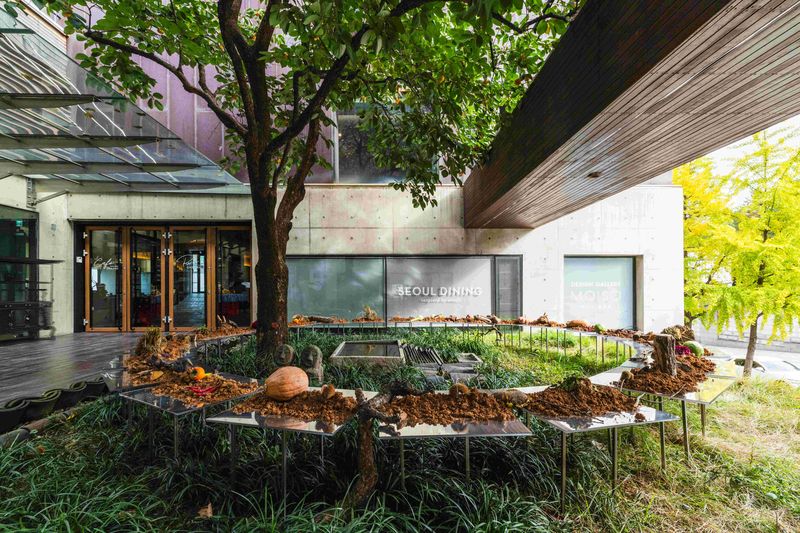
A small garden by flower artist Leo Kim has been created in the persimmon tree garden. Through the cycles of nature—filled with flowers, leaves and fruit, then emptied again—it explores the relationship between fullness and emptiness.
At Chajiso, the café in the headquarters, Seven Doors by stylists Min Song-i and Min Deul-re combines hanji paper, the five traditional colors known as obangsaek, and mak-sabal bowls with contemporary furniture and materials. The food, tableware and surrounding space together bring out the exhibition’s theme.
The menu was created by chefs Yoon Dae-hyun and Kim Hee-eun of Soul, a one-Michelin-star restaurant. Limited-time offerings during the exhibition include makguksu made with buckwheat capellini, jeungpyeon and butter fermented with makgeolli, potato gnocchi inspired by gamjajeon (potato pancakes), and mousse cakes decorated with patterns from traditional rice-cake molds.
The exhibition is open from 10 a.m. to 6 p.m. on weekdays and is closed on Saturdays and Sundays. Admission is 10,000 won.
[email protected] Jang In-seo Reporter