Kookmin University Professor Choi Seong-jin named among world’s top 2% of researchers for sixth consecutive year
- Input
- 2026-10-27 17:52:43
- Updated
- 2026-10-27 17:52:43
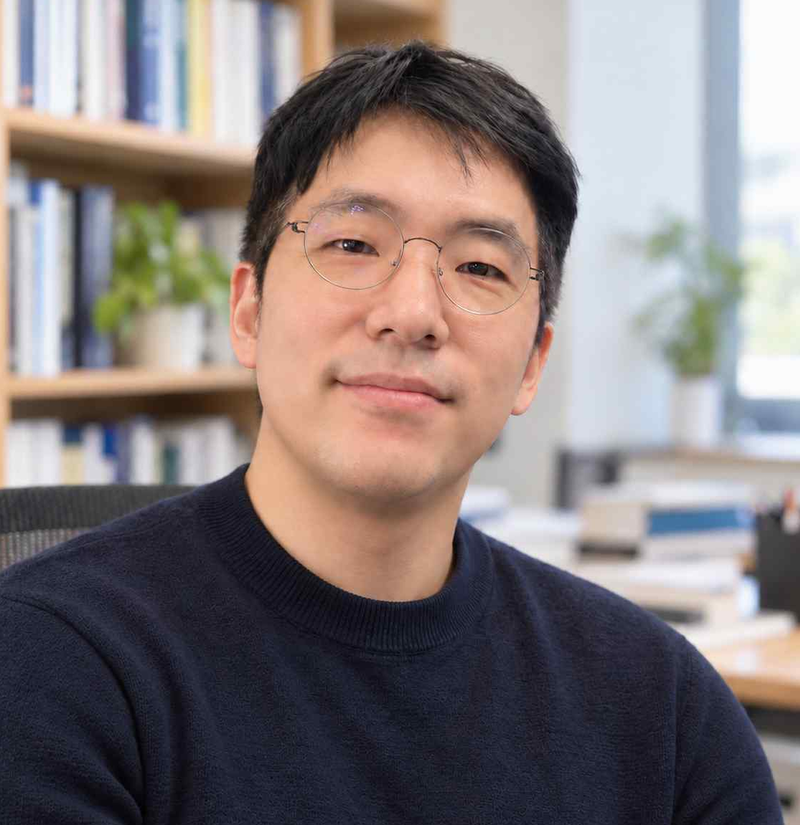
[Financial News] Kookmin University said on the 27th that Professor Choi Seong-jin of its School of Electrical Engineering had been named to the “2026 World’s Top 2% Researchers” list announced by Stanford University in the United States and global academic publisher Elsevier for the sixth consecutive year.
Professor Choi said, “It is meaningful that research built up over many years by students and fellow researchers continues to be used in academic circles around the world,” adding, “I will work to advance next-generation semiconductor technologies that process more information while using less electricity, and to nurture future generations.”
Professor Choi has been selected for six consecutive years, from 2021 through this year, and was named in both the category assessing his entire research career and the category assessing the impact of his research over the past year. In applied physics, his performance places him at approximately the top 1.3% on a cumulative basis and approximately the top 0.9% on a single-year basis. His academic influence is recognized by researchers worldwide having cited his papers more than 25,000 times in total.
Professor Choi has researched next-generation semiconductor components based on silicon and carbon nanotubes, as well as 3D integration technology that stacks semiconductors layer by layer. He developed a low-temperature process that uses lasers to stack new components on upper layers without causing heat damage to semiconductor components below, laying the groundwork for high-performance semiconductors that pack more functions into a smaller space.
Recently, he has expanded his research to AI semiconductors that learn on their own by mimicking human brain neurons, and to security technologies that use the unique electrical characteristics of each device like an electronic fingerprint. These technologies reduce power consumption while processing large amounts of information quickly, and are expected to play a key role in low-power AI devices and the Internet of Things (IoT) in the future.
[email protected] Kim Man-gi Reporter