K-Semiconductors Feature in Anthropic IPO Filing: Why Supply “Cannot Be Guaranteed”
- Input
- 2026-10-28 06:00:00
- Updated
- 2026-10-28 06:00:00
According to the Korea Exchange on the 28th, Samsung Electronics closed the previous day at 222,000 won, up 4.23% from the previous trading session, while SK hynix ended at 1,341,000 won, up 5.18%. Foreign investors and institutions were net buyers of Samsung Electronics shares, purchasing 221.6 billion won and 92.9 billion won, respectively. Foreign investors were net sellers of 41.3 billion won worth of SK hynix shares, but institutions bought 151 billion won worth.
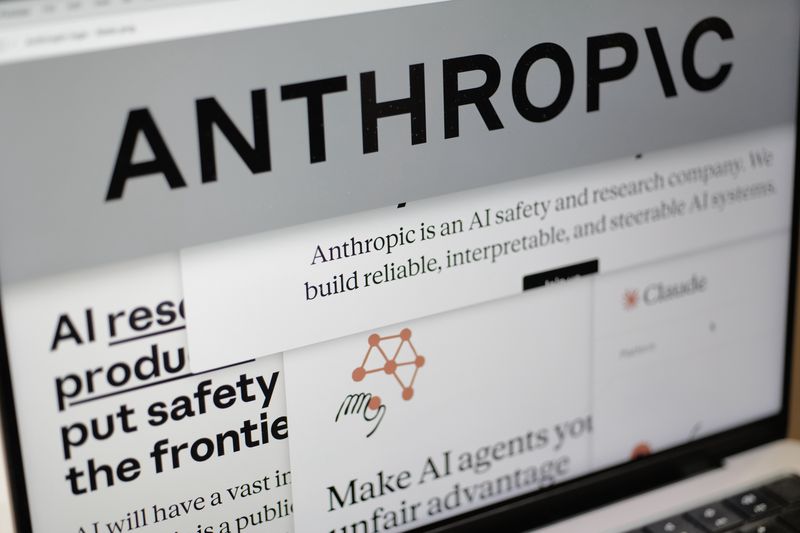
What drew analysts’ attention was the improvement in profitability accompanying Anthropic’s revenue growth. According to its registration statement (S-1) filed with the U.S. Securities and Exchange Commission (SEC), revenue in the second quarter of this year rose about 144% from the previous quarter to $11.555 billion. Computing and infrastructure costs increased about 64% over the same period to $5.558 billion. Operating results swung from a loss of $1.667 billion to a profit of $974 million. The operating margin was 8.4%.
Analysts say revenue grew faster than computing costs, demonstrating the potential to recoup AI investments. In recent months, the market has focused less on AI companies’ top-line growth and more on whether they can generate actual profits and sustain their investments. Analysts say these results could help counter concerns that AI investment will not generate economic returns.
Hwang Su-wook, a researcher at Meritz Securities, explained, “I believe the increase in revenue per dollar of computing costs—from $0.57 in the second quarter of last year to $2.07 in the second quarter of this year—reflects the use of the latest GPUs and improvements in model performance.” He added, “AI service demand is rapidly filling the computing capacity already secured, suggesting that economies of scale are emerging.”
Analysts say expectations for AI demand and expanded infrastructure investment supported investor sentiment toward domestic semiconductor stocks. They say that if improved profitability at AI companies eases doubts about their ability to sustain investment, views on demand for memory products such as high-bandwidth memory (HBM) could also improve. Raising funds through a public listing is also seen as a factor that could increase their capacity to invest in the future.
The filing also named domestic memory manufacturers. Anthropic identified SK hynix, Samsung Electronics and Micron Technology as major manufacturers of HBM and other high-performance memory. It said there was no guarantee that supply would increase quickly enough to meet demand, even with these companies expanding capacity, and that large customers or competitors securing supply in advance could affect semiconductor availability.
However, some analysts say it is too early to extrapolate one company’s operating profit in a single quarter into a resolution of investment pressures across the entire industry. They noted that as AI companies increase investment while relying on external financing, including equity offerings and leases, expectations for demand must be considered alongside the burden of raising funds. Investment plans and memory-demand forecasts to be assessed in this week’s earnings reports from domestic semiconductor companies and U.S. big tech firms are also factors in whether the rally will continue.
Yang Hyeon-gyeong, a researcher at iM Securities, said, “Companies that are increasing investment faster than their internally generated free cash flow appear to be relying on external funding, including equity offerings and leases.” Yang added, “This is positive for domestic memory semiconductors in the short term, but continued investment growth will require supportive financing conditions and a timely return of cash.”
[email protected] Bae Han-geul Reporter