Four days after reorganization plan rejected, Jeju education chief Ko Ui-suk publicly apologizes
- Input
- 2026-10-27 16:15:40
- Updated
- 2026-10-27 16:15:40
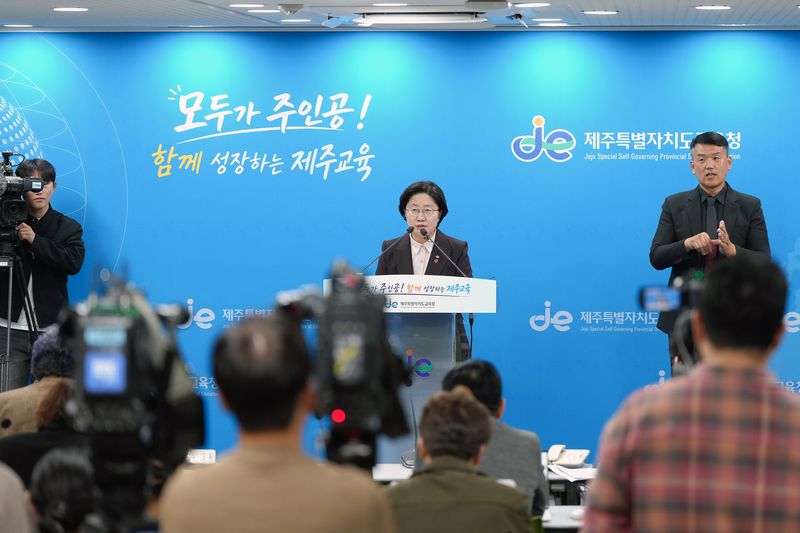
【Financial News Jeju=Reporter Jeong Yong-bok】 Ko Ui-suk, superintendent of the Jeju Special Self-Governing Provincial Office of Education, publicly apologized for the provincial council’s rejection of the first organizational restructuring plan since she took office and said she would consult directly with Song Young-houn, speaker of the Jeju Special Self-Governing Provincial Council. The planned establishment next January of school support units, including the Office for the Protection of Educational Activities and the 4·3 Education Division, is also inevitably facing delays.
At a press conference on the 27th in the Jeju Special Self-Governing Provincial Office of Education’s press room to announce the 18th superintendent’s pledge implementation plan, Superintendent Ko Ui-suk stated her position on the rejection of the organizational restructuring ordinance before explaining the pledges.
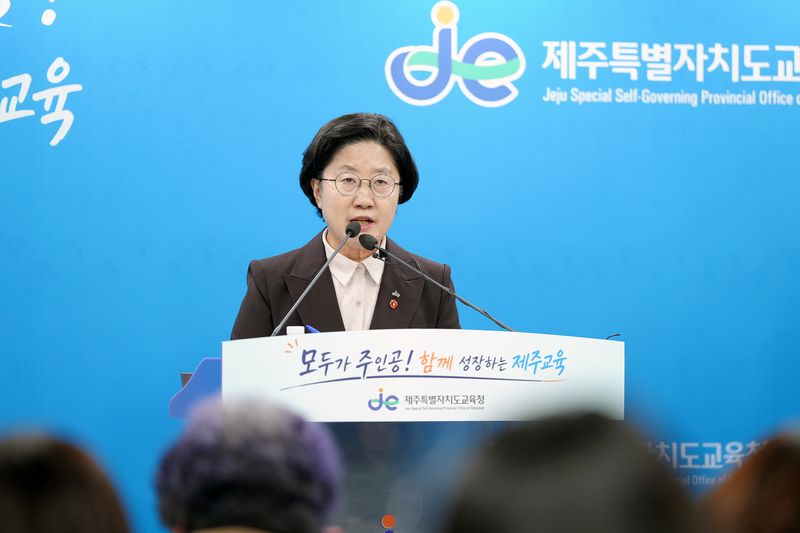
“I sincerely apologize for causing concern to Jeju residents and the education community,” Superintendent Ko said. “I humbly accept the criticism that there was insufficient communication and cooperation with the council members, including Speaker Song Young-houn, during the processing of the ordinances.”
Superintendent Ko, who expressed regret to the provincial council immediately after the bills were rejected on the 23rd, has now acknowledged her own lack of communication and apologized, four days later. She said she would continue the work that can be handled by the existing organization to avoid disrupting support for schools, while consulting with the provincial council to find a solution.
She stressed in particular, “I will do my utmost to minimize the harm to schools resulting from the rejection of the ordinances.” She also said she planned to meet Speaker Song Young-houn as soon as possible to reconcile differences over the organizational restructuring and find common ground.
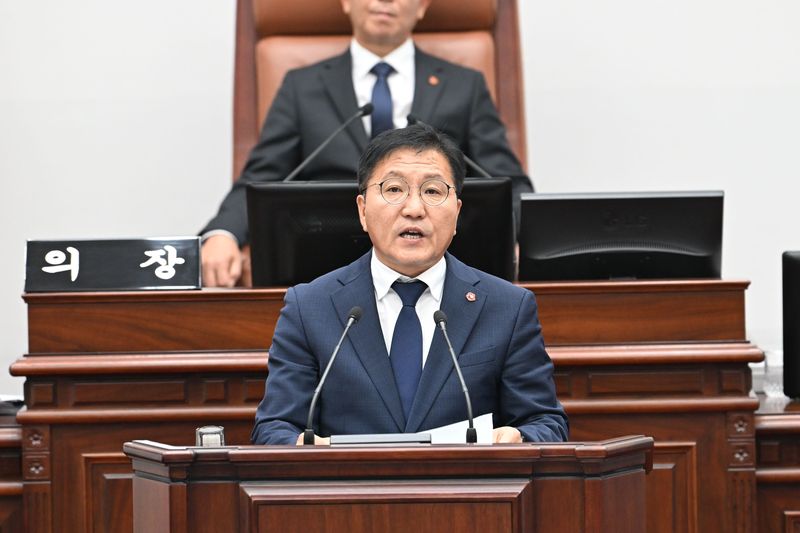
The conflict came to a head when two bills related to the education office’s organizational restructuring were rejected at the second plenary session of the 455th extraordinary session of the Jeju Special Self-Governing Provincial Council on the 23rd.
At the time, the “Partial Amendment to the Ordinance on the Establishment of Administrative Organizations of the Jeju Special Self-Governing Provincial Office of Education” was rejected, with 4 votes in favor, 28 against and 9 abstentions among the 41 members present. The “Partial Amendment to the Ordinance on the Quota of Local Government Employees under the Jeju Special Self-Governing Provincial Superintendent of Education,” submitted alongside it, also failed to pass, with 5 votes in favor, 28 against and 8 abstentions.
The two bills had been approved in their original form by the Education Committee, the committee in charge, two days earlier, on the 21st, but the outcome was overturned at the plenary session.
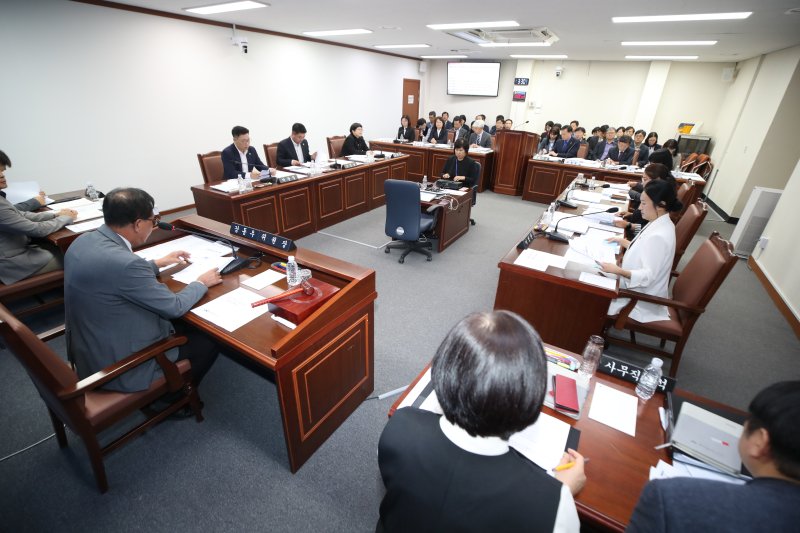
The key issue is the affiliation of the expert advisers’ office serving the Jeju Special Self-Governing Provincial Council’s Education Committee and who has personnel authority over it. Currently, the education committee expert advisers are civil servants belonging to the education office. The provincial council has called for the office’s affiliation and personnel authority to be made independent, saying, “The structure needs to be changed so that the committee’s expert advisers, who are supposed to check and scrutinize the education office, do not belong to that office.”
The education office, on the other hand, says, “With the education councilor system abolished, the roles and affiliation of the education committee’s expert advisers must be carefully reviewed to maintain the committee’s expertise and the independence of educational self-governance.”
The provincial council criticized the education office for submitting the organizational restructuring plan without giving a clear answer on the issue.
Ha Seong-yong, chair of the Jeju Special Self-Governing Provincial Council’s Steering Committee, criticized the education office during debate against the bills at the plenary session, saying, “The education office did not adequately address the issues raised by the council concerning the affiliation and personnel authority of the education committee expert advisers.” Speaker Song Young-houn also noted, “There was insufficient prior consultation with the council on major education policies and the organizational restructuring process.”
The rejection of the bills has also halted the creation of units intended to carry out Superintendent Ko’s key education policies.
The education office had originally planned, effective January 1 next year, to reorganize its current structure of one office, three bureaus and two directorates into one centered on one office, two bureaus and three directorates, and to establish units including the superintendent’s Office for the Protection of Educational Activities, the School Support Policy Task Force and the 4·3 Education Division.
The Office for the Protection of Educational Activities is a dedicated unit that responds to violations of teachers’ rights and conflicts in schools. The 4·3 Education Division was conceived as the body overseeing the local curriculum and democratic citizenship education, grounded in the peace and human rights values of the Jeju uprising.
The School Support Policy Task Force is a unit that helps reduce schools’ administrative workload so they can focus on educational activities.
As the ordinances needed to establish these units have not been amended, it will be difficult to implement the organizational restructuring as planned next January. Even if the education office and provincial council reach an agreement, they will need to prepare revised bills, obtain council review and complete subsequent administrative procedures.
Since the restructuring plan was rejected, teachers’ organizations in Jeju and the education office’s civil servants’ union have also voiced concern about gaps in school support and called for measures to address them.
The Jeju Federation of Teachers’ Associations and the Jeju branch of the Korean Teachers and Education Workers Union (KTU), among others, said, “The issue of the education committee expert advisers’ affiliation needs to be discussed separately from the restructuring of school support units.”
Superintendent Ko announced that, despite the conflict over the organizational restructuring, she had finalized an implementation plan for the education policies to be pursued over the next four years.
The pledge implementation plan calls for a total of 218.26 billion won to be invested in 47 projects across five areas from July 2026 through June 2030. It consists of 25 new projects and 22 ongoing projects.
A total of 66.238 billion won was allocated to easing overcrowding in special education classes and improving the educational environment. Key pledges also include tailored education for each student, protecting teachers’ rights, safe taxi services for the journeys to and from school, establishing the 4·3 Education Division and expanding International Baccalaureate (IB) high schools.
Considering the state of education finances and other factors, the entrance preparation allowance for new elementary, middle and high school students was reduced from the campaign promises of 700,000 won to 300,000 won for elementary students, and from 500,000 won to 200,000 won for middle and high school students. The allowance is planned to be paid starting in 2027, following the enactment of the relevant ordinance and consultations with the Ministry of Health and Welfare.
Of the total funding for the pledge projects, 185.363 billion won will be covered by the education office’s own budget, accounting for 84.9%. Investment will be highest in 2028, at 62.897 billion won.
However, finalizing the pledge implementation plan is separate from carrying out individual projects. Projects requiring new organizational units must await amendments to the relevant ordinances, while budget-funded projects also require annual budget allocations and review by the Jeju Special Self-Governing Provincial Council.
At the press conference, Superintendent Ko identified the AI transformation, the declining school-age population and narrowing educational disparities between regions as key challenges. She also reiterated her plans to promote tailored education for every student, protect teachers’ educational activities and build support systems for care and safety.
But with the organizational restructuring needed to carry out key pledges stalled at the provincial council, reaching agreement between the education office and the council on the affiliation of the education committee expert advisers has emerged as a priority. Measures are also needed to minimize gaps in school support ahead of the new school year next year.
[email protected] Jeong Yong-bok Reporter