Japan, Having Lost Its Solar Lead, to Invest 840 Billion Won in Next-Generation Cells
- Input
- 2026-10-27 15:19:34
- Updated
- 2026-10-27 15:19:34
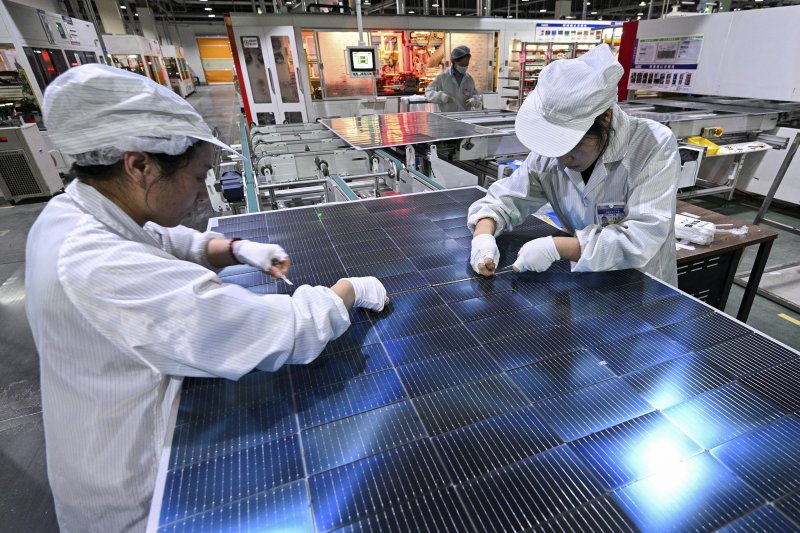
【Financial News, Tokyo = Correspondent Seo Hyejin】The Japanese government will provide about 840 billion won over four years to support mass production of perovskite, a next-generation solar cell. Its plan is to regain, with next-generation technology, the leadership in the solar market it ceded to low-cost Chinese products. Companies will also invest more than the government’s support to build mass-production plants.
According to the Nikkei on the 27th, Japan’s Ministry of Economy, Trade and Industry (METI) has decided to provide Ricoh and Choshu Industry with about 100 billion yen (about 839.2 billion won) in Green Transformation (GX, the transition to decarbonization) subsidies through 2029. Including the companies’ own investments, public- and private-sector funding for mass-production facilities is expected to reach at least 200 billion yen (about 1.6785 trillion won).
Ricoh is developing thin, bendable film-type solar cells using inkjet technology used in printers. Choshu Industry is focusing on tandem cells, which boost power-generation efficiency by stacking perovskite cells on existing silicon solar cells.
Perovskite solar cells can be made thin, lightweight and flexible. Their advantage is that they can expand the range of applications to places such as building walls and car roofs, where conventional silicon panels have been difficult to install because of their weight and shape.
Japan once led the market for silicon solar panels but was overtaken by Chinese companies that competed on price. This time, its strategy is to leverage its strengths in materials and manufacturing technology to gain an early lead in the next-generation market.
Japan is the world’s second-largest producer of iodine, after Chile. Because it can secure at home a key raw material for perovskite cells, it is well positioned to build a domestic supply chain. It can also reduce economic security risks stemming from reliance on overseas raw materials.
Along with providing subsidies, the government will also revise regulations on installations. It plans to change the operating rules under the Factory Location Act, which requires at least 25% of a factory site to be set aside for green space and environmental facilities, and ease safety regulations related to fire prevention and construction to support wider adoption.
[email protected] Seo Hyejin Reporter