GS Entec Builds Offshore Wind Production Base with 300 Billion Won Investment; Capacity to Reach 3.75 Times Its Previous Level [On-Site Report]
- Input
- 2026-10-27 16:00:00
- Updated
- 2026-10-27 16:00:00
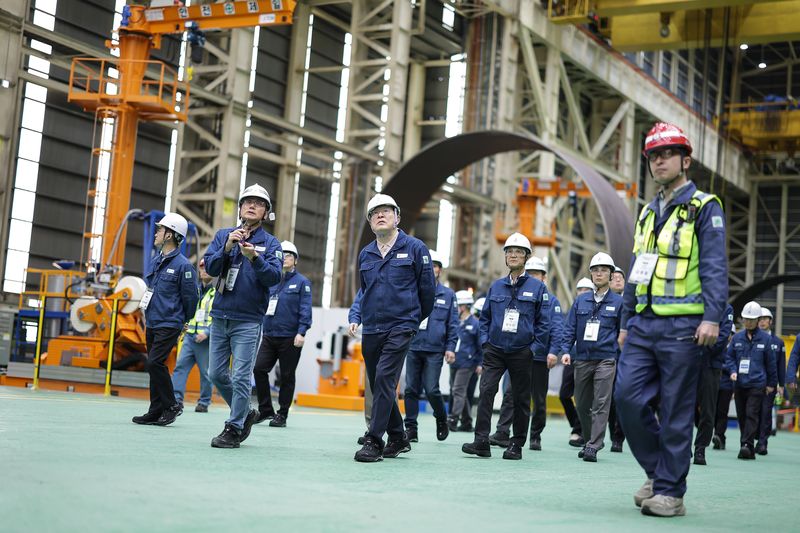
The production facility toured after the completion ceremony was equipped with large machines for forming thick steel plates into cylinders and welding them. The process involves welding together cylindrical sections made by rolling steel plates, then assembling them into large structures. The plant has an automated production system covering everything from steel plate processing to welding and painting.
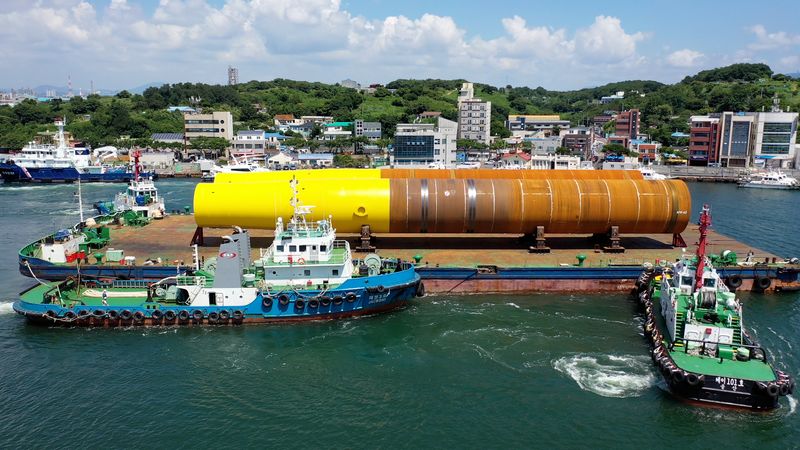
The facility can produce giant monopiles measuring up to 11 meters in diameter and 100 meters in length, and weighing 2,500 metric tons. Annual production capacity has risen from 40,000 to 150,000 metric tons, or 3.75 times its previous level.
After the completion ceremony, GS Group Chairman Huh Tae-soo said, “The completion of GS Entec's Yongjam Plant is symbolic in that it has transformed an existing chemical equipment manufacturing facility into a production facility for renewable energy infrastructure, turning the defining change of our time—the energy transition—into a new business opportunity and bringing about an active business transformation.” He went on to emphasize, “It is also an example of how GS Group is expanding its business scope by seeking opportunities in future growth areas, including artificial intelligence (AI) data centers, renewable energy and related infrastructure.”
GS Entec has manufactured large chemical equipment for refinery and petrochemical plants for about 30 years. In response to slower investment in its existing business and intensifying competition, it shifted to the monopile business, where it can apply its accumulated expertise in steel plate processing and welding. In 2023, it established a technical cooperation relationship with Dutch monopile specialist Sif and reconfigured the production facilities at its Yongjam Plant over about two years starting in October 2024.
GS Entec supplied 64 monopiles for the Yeonggwang Nakwol Offshore Wind Power Generation Project, completing delivery in October last year. Last September, it signed a contract to supply 37 monopiles, weighing about 51,000 metric tons in total, for the 504-megawatt (MW) Taean Offshore Wind Project. Production is scheduled to begin next July, with deliveries to be made in stages through 2028. The company is also considering two to three domestic projects and one to two projects in Japan as potential additional orders.
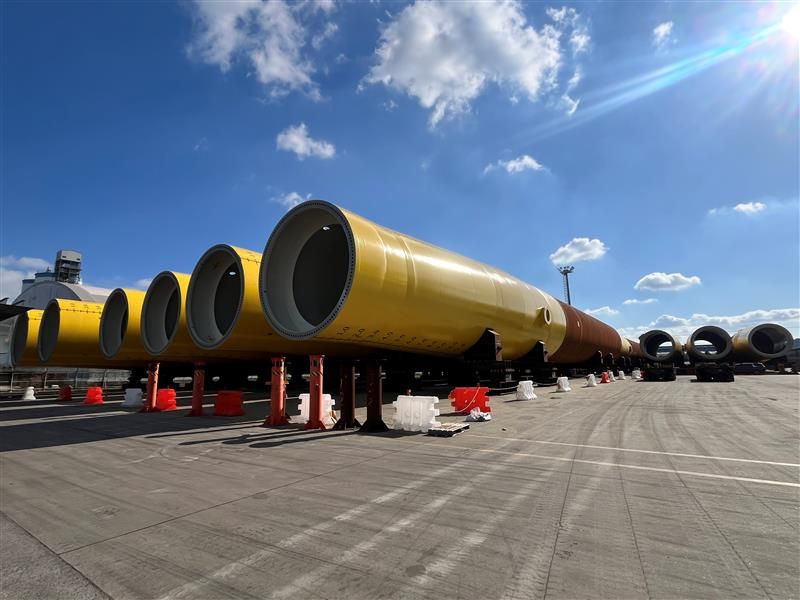
A shortage of dedicated port infrastructure for storing large monopiles and transporting them to offshore installation sites remains a challenge. At a press briefing, Song Won-gil, CEO and head of production at GS Entec, said, “A single monopile weighs 1,650 metric tons, and the ground needs a bearing capacity of at least 30 metric tons per square meter to place one on a quay.” He added, “General-purpose quays have a capacity of around 5 metric tons per square meter, so a marshalling port is essential.” A marshalling port is a support port where large offshore wind turbine components are gathered, stored and pre-assembled before being loaded onto offshore installation vessels.
GS Entec explained that it can use existing quays at Mokpo New Port, the Daebul Industrial Complex and Ulsan Port, so production is not at immediate risk of disruption. However, as offshore wind projects expand, securing a port in the hinterland where large structures can be stored and transported in line with installation schedules will become important.
GS Entec plans to lay the groundwork for additional orders through the stable operation of its new facilities and deliveries for the Taean project. Heo Cheol-hong, representative director and chief executive officer (CEO) of GS Entec, said, “We will carry out the projects we have secured diligently and build our manufacturing capabilities on the experience and data accumulated during production,” adding, “Building on our track record in Korea, we will expand our opportunities in overseas markets as well.”
[email protected] Kim Mi-hee Reporter