KRX Implements KRICS Overhaul: Samsung SDI Moves to Industrials, SK to IT
- Input
- 2026-10-27 16:04:34
- Updated
- 2026-10-27 16:04:34
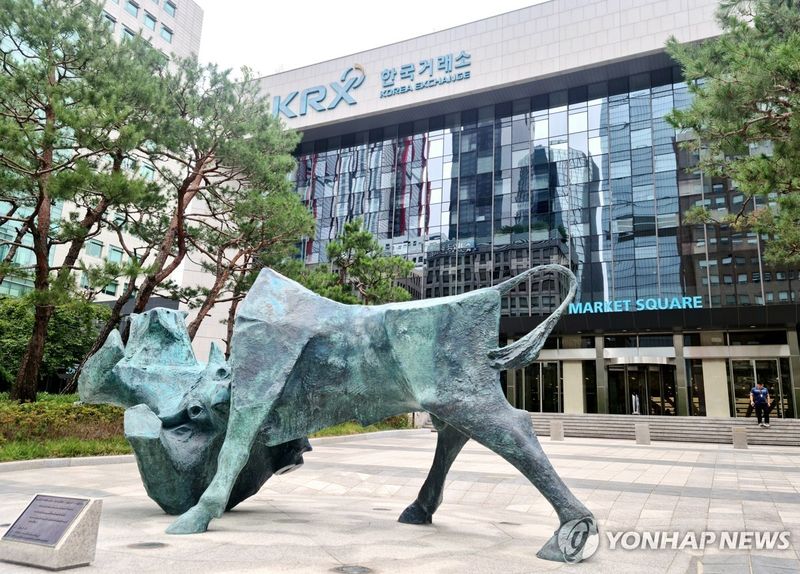
[Financial News] The introduction of the Korea Exchange’s new industry classification system (KRICS) has reshaped the sector map of South Korea’s stock market. Korean Air moved from Industrials to Mobility, while Samsung SDI moved from Information Technology to Industrials.■ Hyundai Motor Company, Kia Corporation and Korean Air join newly established Mobility sectorAccording to the Korea Exchange on the 27th, applying KRICS has reorganized the stock market’s sector classification into 9 sectors, 24 industry groups, 60 industries and 129 sub-industries. Unlike the previous Global Industry Classification Standard (GICS), the new system groups automobiles and passenger transportation under a newly created Mobility sector. It also consolidates Consumer Staples and Consumer Discretionary into a single Consumer sector, and Utilities into the Energy & Chemicals sector. Hyundai Motor Company and Kia moved to the new Mobility sector from Consumer Discretionary, while Korean Air moved from Industrials.
The reclassification of individual companies split up firms that had belonged to the same investment themes. Samsung SDI moved from Information Technology to Industrials, putting it in the same sector as LG Energy Solution and POSCO Future M. LG Chem, meanwhile, moved from Materials to Energy & Chemicals, where it was grouped with SK Innovation, while POSCO Holdings was classified under Materials. Among holding companies, SK and LG moved from Industrials to Information Technology, but SK Square remained in Industrials. A Korea Exchange official explained, “Diversified companies are assessed primarily on the basis of sales, while holding companies are classified according to the sector their major subsidiaries belong to or their main business on a consolidated basis.”
Even in the market classified under KRICS, Information Technology, which includes Samsung Electronics and SK hynix, accounted for more than half of total market capitalization. The 570 Information Technology stocks had a combined market capitalization of 2,549.5 trillion won, or 53.5% of the total. Of these, semiconductors and displays accounted for 214 stocks, or 8.4% of all listed stocks, but their market capitalization stood at 2,309.2 trillion won, amounting to 48.5% of the total.■ To be reflected in December KOSPI 200 and KOSDAQ 150 reshuffleThe new classification is expected to affect the selection of constituents for major indices as well. On December 11, the Korea Exchange plans to incorporate KRICS into the regular rebalancing of the KOSPI 200, KOSDAQ 150 and related sector indices, and to change their constituents. It plans to apply the system to other market indices in stages, with changes to KRX sector indices and others scheduled for September of the following year.
Mirae Asset Securities forecast that 10 stocks, including Daeduck Electronics, Iljin Electric and Doosan Fuel Cell, would be added to the KOSPI 200, while 11, including Asia Holdings and SeAH Steel Holdings Corporation, would be removed. Samsung Securities identified the possibility of 12 additions, including SK Eternix and HD Hyundai Energy Solutions. The firms projected that 10 and 11 stocks, respectively, would be replaced in the KOSDAQ 150.
Sector indices are expected to see tracking funds shift as companies change sectors.
Jae-hong Yoon, a researcher at Mirae Asset Securities, said, “A total of 63 indices, including benchmark and market indices, are directly or indirectly affected by this change to the industry classification system, and assets tracking the related exchange-traded funds (ETFs) amount to about 88.1 trillion won.” He added, “LG Electronics and Samsung SDI are expected to leave the KOSPI 200 Information Technology Index, while SK and Daeduck Electronics are expected to join.” Gyun Jeon, a researcher at Samsung Securities, said, “Large-scale turnover is expected in the Energy & Chemicals sector, where the number of constituents has increased,” adding, “As large-cap stocks move to other sectors, mid-cap stocks are expected to be newly added to the Industrials, Materials and Consumer sectors.”
[email protected] Joo Won-gyu Reporter