“They don’t drink plain milk, but they do drink lattes” ... Dairy industry finds an opening in the cafe and bakery B2B market
- Input
- 2026-10-28 08:28:24
- Updated
- 2026-10-28 08:28:24
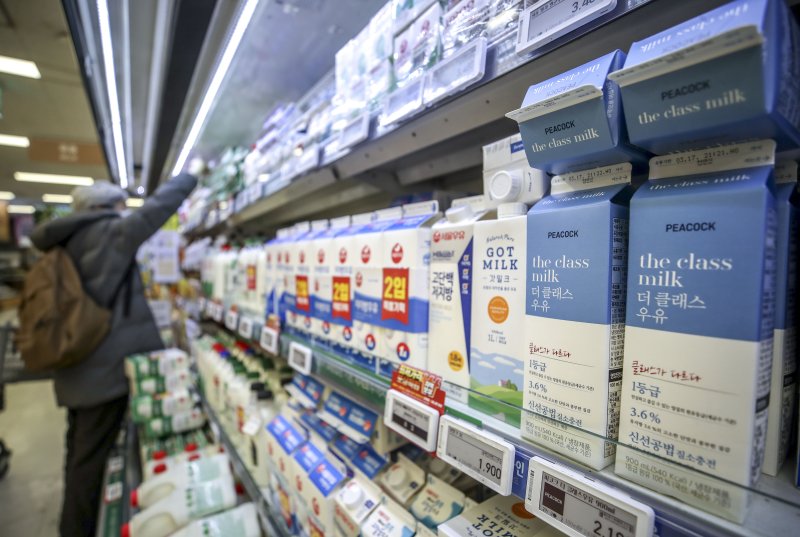
[Financial News] As the population of infants and children—the main consumers of plain milk—shrinks amid the fallout from low birth rates, the business-to-consumer (B2C) market has contracted. In response, the dairy industry is seeking a new breakthrough in the business-to-business (B2B) market, targeting cafes, bakeries and other businesses. Dairy companies are going all out to gain an early foothold in the B2B market by developing franchise-only products and proposing recipes tailored to client companies.
According to the Korea Dairy Committee on the 28th, per-capita plain milk consumption in Korea fell to 22.9 kg last year, its lowest level in more than 40 years. That was a sharp drop of 2.4 kg (9.5%) in a single year, even compared with 25.3 kg in 2024, deepening concerns for the dairy industry and dairy farmers.
The shift in consumption patterns is also clearly reflected in market size. According to the Korea Agro-Fisheries & Food Trade Corporation (aT), the domestic B2C milk market shrank by 206.9 billion won (11.8%) over five years, from 1.7529 trillion won in 2020 to 1.546 trillion won last year. By contrast, over the same period, the B2B milk market surged 51.5%, or 212 billion won, from 412 billion won to 624 billion won, fully offsetting the weakness in the B2C market.
The rapid growth of the B2B milk market has been driven by the spread of Westernized food culture. Demand has risen for dairy products used in dishes such as pasta and cream sauces, while deliveries to cafe and bakery franchise outlets have expanded substantially. In particular, the domestic coffee market, which reached 3.73 trillion won last year, has grown by an average of 5.2% annually over the past six years, driving demand for milk used in lattes and other drinks.
In response, South Korea’s dairy companies are stepping up their B2B-focused research and development (R&D) and expanding customized supply for individual clients to accelerate their push into the market.
Seoul Milk raised the B2B share of its total milk sales volume from around 23% in 2023 to the 28% range in the first half of this year. It supplies raw milk to major coffee franchises in South Korea and provides customized products that reflect client requirements. In particular, because milk plays a decisive role in the taste of coffee drinks such as lattes, the company carefully reviews product specifications in consultation with clients and supplies milk with specifications optimized within the limits of its production capabilities.
Namyang Dairy Products is also focusing on B2B research and development and expanding its portfolio of franchise-only products, including milk and fresh cream. Going beyond simple deliveries, it focuses on solution-based sales, proposing to clients the best ways to use its dairy products along with recipes tailored to individual menu items. As a result, its B2B sales have continued to post strong double-digit growth each year, rising 27% year on year in 2024, 14% last year, and 11% in the first half of this year compared with the same period a year earlier.
A Namyang Dairy Products representative said, “We will further strengthen our support for menu development and quality management tailored to each client’s needs by combining our in-house products and overseas dairy sourcing capabilities with specialized R&D expertise.”
Industry insiders expect the B2B market and processed milk products to become key growth drivers in the years ahead, as a rebound in the milk market will be difficult given demographic trends. A dairy industry representative explained, “Margins in the B2B market are not as high as in the general retail market, but once a contract is signed, large volumes can be supplied steadily over the long term. That makes it a very important market for stabilizing performance and expanding the business.”
[email protected] Park Kyung-ho Reporter