Entrance-preparation grants cut to half or less ... Jeju education finalizes 218.3 billion won in pledge spending
- Input
- 2026-10-27 14:32:29
- Updated
- 2026-10-27 14:32:29
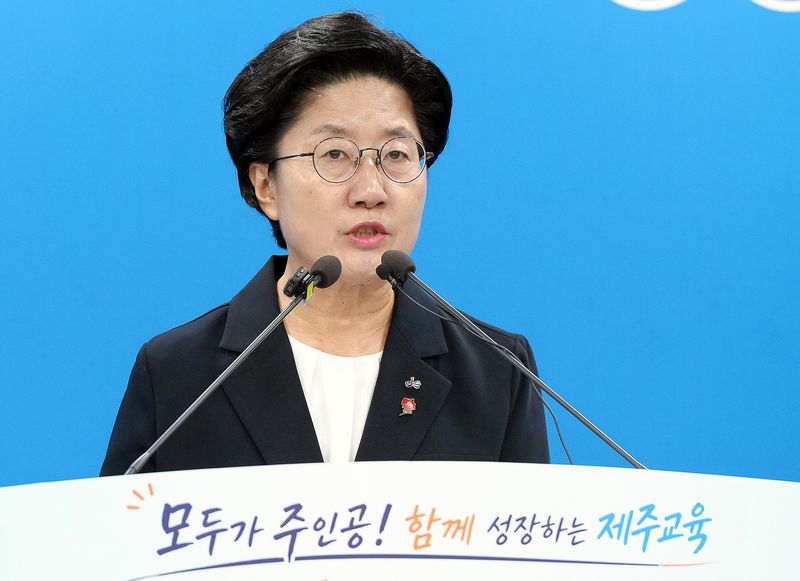
【Financial News Jeju = Reporter Jeong Yong-bok】 Entrance-preparation grants for new elementary school students in Jeju have been cut from the campaign pledge of 700,000 won to 300,000 won, while those for middle and high school students have been reduced from 500,000 won to 200,000 won. Go Ui-suk, superintendent of education for Jeju Special Self-Governing Province, finalized an implementation plan for 47 pledges, with 218.3 billion won to be invested during her term, lowering the grants in light of worsening education finances and allocating 66.2 billion won to improving the special education environment.
According to the Jeju Special Self-Governing Province Office of Education on the 27th, the 18th superintendent’s pledge implementation plan calls for a total investment of 218.26 billion won in 47 projects across five areas, from July 2026 to June 2030. It consists of 25 new projects and 22 ongoing projects; 43 are funded projects and four do not require a budget.
The biggest change is the scale of the entrance-preparation grants. In last June’s local elections, Superintendent Go Ui-suk pledged to provide 700,000 won to new elementary school students and 500,000 won each to new middle and high school students. The combined grants at the three school-entry stages amounted to 1.7 million won per student.
Under the final implementation plan, however, the amounts were adjusted to 300,000 won for elementary school and 200,000 won each for middle and high school. The total grant across the three entry stages fell by 1 million won (58.8%), from 1.7 million won to 700,000 won. The elementary school grant was cut by 57.1%, and the grants for middle and high school were each reduced by 60%.
The main reasons for the sharp cuts were worsening education finances and the financial burden of existing education programs. Choi Eun-hee, deputy superintendent of the Jeju Office of Education, explained at an administrative audit by the Jeju Special Self-Governing Provincial Council’s Education Committee on the 14th, “We adjusted the grant amounts after comprehensively considering fiscal conditions and the budgetary burden of other pledged and ongoing projects.”
The education office also reviewed grant levels in other cities and provinces, the Ministry of Health and Welfare’s criteria for consultations on new social security programs, and the views of the pledge implementation committee and the residents’ evaluation panel. The existing school-uniform support program in Jeju was also taken into account in setting the amounts.
In particular, grants for new middle and high school students were set lower than those for elementary students because the former already receive uniforms in kind.
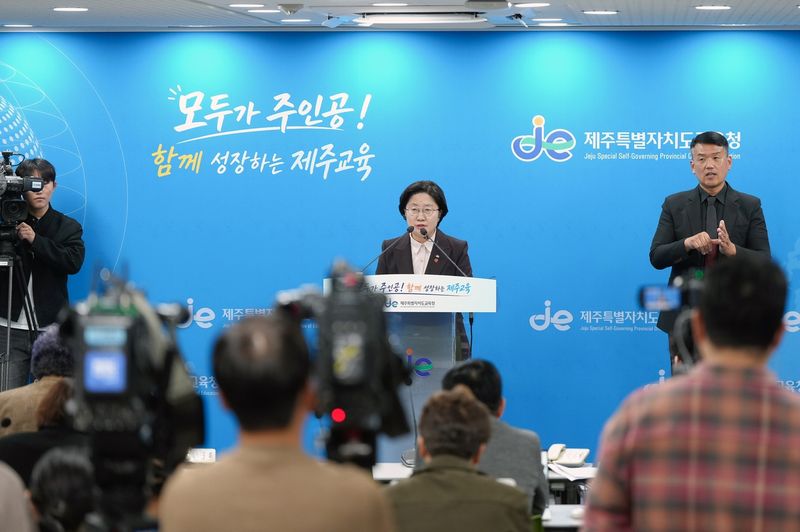
The entrance-preparation grants are scheduled to be paid starting in 2027. Eligible students are new first-year students at elementary, middle and high schools, including special schools and broadcast and correspondence middle and high schools. The grants will be issued as policy-benefit points in Tamna Jeon, Jeju’s local currency.
A total of 15.477 billion won has been allocated to the related program from 2027 through 2030. The planned amount for next year is 4.213 billion won. Before implementation, the program must go through procedures including the enactment of an ordinance, consultations with the Ministry of Health and Welfare on the social security program, and securing a budget.
Special education received the largest allocation among all pledge projects. A total of 66.238 billion won will be invested in easing overcrowding in special education classes and improving their learning environments. This is about 30.4% of the total pledge-project budget and the largest investment among the 47 individual pledges.
The projects include expanding the school building at Jeju Yeongji School, adding classrooms and relocating the cafeteria at Seogwipo Onseong School, and establishing a special school in the eastern region. The plan will improve the learning environments of existing special education classes and support a co-homeroom system, in which two teachers instruct students, for classes that exceed capacity.
Expansion projects at Jeju Yeongji School and Seogwipo Onseong School are targeting completion in 2028. The special school in the eastern region, tentatively named Jeju Yeongji School Branch, is slated to begin construction in 2027 and open in 2029.
The administrative structure will also be reorganized to protect teachers’ educational activities. The education office plans to establish an “Educational Activities Protection Officer” directly under the superintendent in 2027 and unify the system for responding to school complaints. It will also pursue early intervention by conflict-mediation specialists, operate a reassurance call center, and build cooperation systems with police, medical institutions and others.
The “Safe Taxi” service for students who have difficulty using public transportation is scheduled to begin operating in 2027. It will assign dedicated taxi drivers to students in areas with limited transportation, either to help them get to and from school or to take them from hubs in eup and myeon areas to their schools. The related project budget is 2.007 billion won.
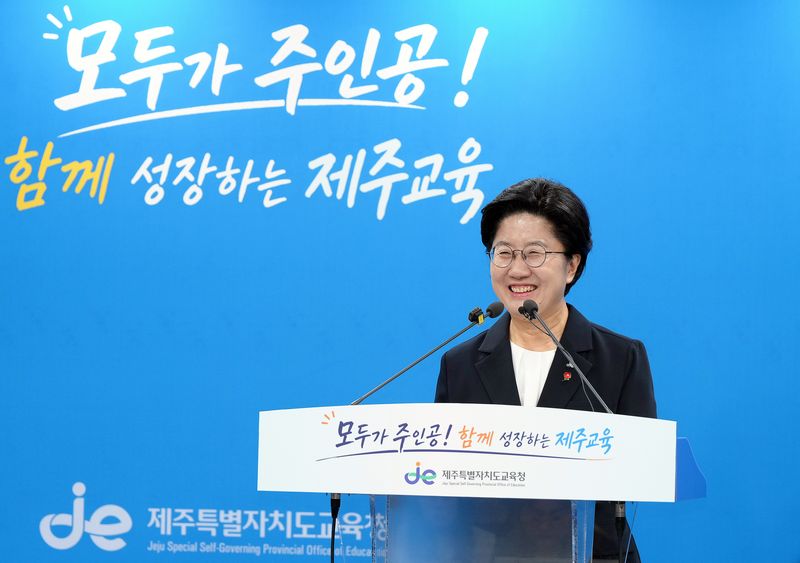
Establishing a dedicated organization for Jeju April 3 education is also among the key pledges. The provincial education office plans to establish an “April 3 Education Division” in 2027 to oversee peace and human rights education and education about Jeju. It will also develop curricula and officially approved textbooks on April 3 peace and human rights education, and expand related education nationwide.
The plan calls for strengthening the operation of existing International Baccalaureate (IB) schools and expanding the program to high schools. The goal is to designate one additional high school to offer the IB Diploma Programme (DP) in each of 2028 and 2029.
The “Dreaming Afternoon” program, under which schools and communities share responsibility for childcare, will also be pursued. Starting in 2027, community care centers will be operated on a pilot basis around the areas where students live, with three hubs planned by 2030.
Funding has also been allocated to the digital transformation of education and individually tailored learning. The plan is to establish a hyper-personalized learning support system using artificial intelligence (AI) and learning data, and introduce it in regular schools starting in 2028. The goal is to have it used in 130 schools by 2030.
The pledge implementation plan was finalized amid structural changes, including a declining student population in Jeju and worsening education finances. According to the provincial education office, the number of elementary, middle and high school students in Jeju fell 9.3%, from 80,926 in 2017 to 73,373 this year. It is projected to fall to 59,254 in 2031, a 19.2% decrease from this year.
This year’s main budget for the Jeju Office of Education is 1.5788 trillion won, down 18.5 billion won from the previous year. Funds transferred from the central government and local governments account for 91.3% of total revenue, while personnel costs amount to 797.9 billion won, or 50.5% of the total budget.
Of the total budget for the pledge projects, 185.363 billion won, or 84.9%, will be covered by the education office’s own budget. National treasury funds and special grants amount to 28.362 billion won, local government funding to 3.645 billion won, and other sources to 890 million won.
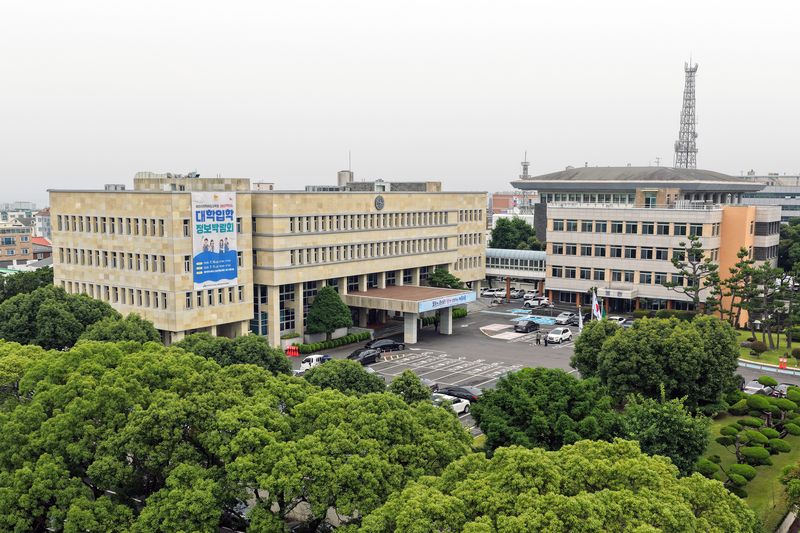
Annual investment plans are 35.475 billion won this year, 52.4 billion won in 2027, 62.897 billion won in 2028, 38.153 billion won in 2029 and 29.335 billion won in 2030. A total of 28.8% of the project budget is concentrated in 2028.
The provincial education office plans to secure funding for the pledges by adjusting existing projects and consolidating or eliminating overlapping ones, in response to fluctuations in funds transferred from the central government and increases in essential expenses. Actual spending may vary depending on annual budget planning and the results of deliberations by the Jeju Special Self-Governing Provincial Council.
The plan was finalized after expert review by the pledge implementation committee and deliberation by the residents’ evaluation panel. The panel approved six of the seven proposed pledge revisions and rejected one. It also offered 28 recommendations for improvement regarding eight pledges under review.
In particular, the residents’ evaluation panel did not approve a proposed revision that did not specify where in the western region an additional IB high school would be designated. The final implementation plan includes a provision to designate additional IB high schools in the western region and elsewhere.
The provincial education office plans to conduct its own assessments of the implementation of each pledge twice a year and incorporate improvements following external evaluations by the pledge implementation committee and the residents’ evaluation panel. A booklet detailing the pledge implementation plan is scheduled for publication in November, and progress will be made public on the education office’s website.
Superintendent Go Ui-suk said, “We fleshed out the pledges based on the views of residents and the education community,” adding, “We will monitor their implementation and pursue them responsibly so that the pledges lead to changes in schools.”
[email protected] Jeong Yong-bok Reporter