“The complacency of ‘we’ve done well’ is our biggest enemy” ... First, South Korea must narrow the production-cost gap with Chinese EVs [Chinese automakers make inroads into the home market as South Korean automakers face internal and external challenges (Final installment)]
- Input
- 2026-10-27 15:07:04
- Updated
- 2026-10-27 15:07:04
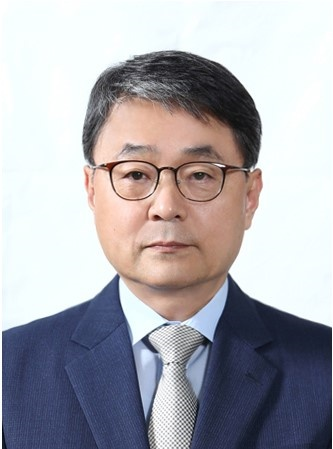
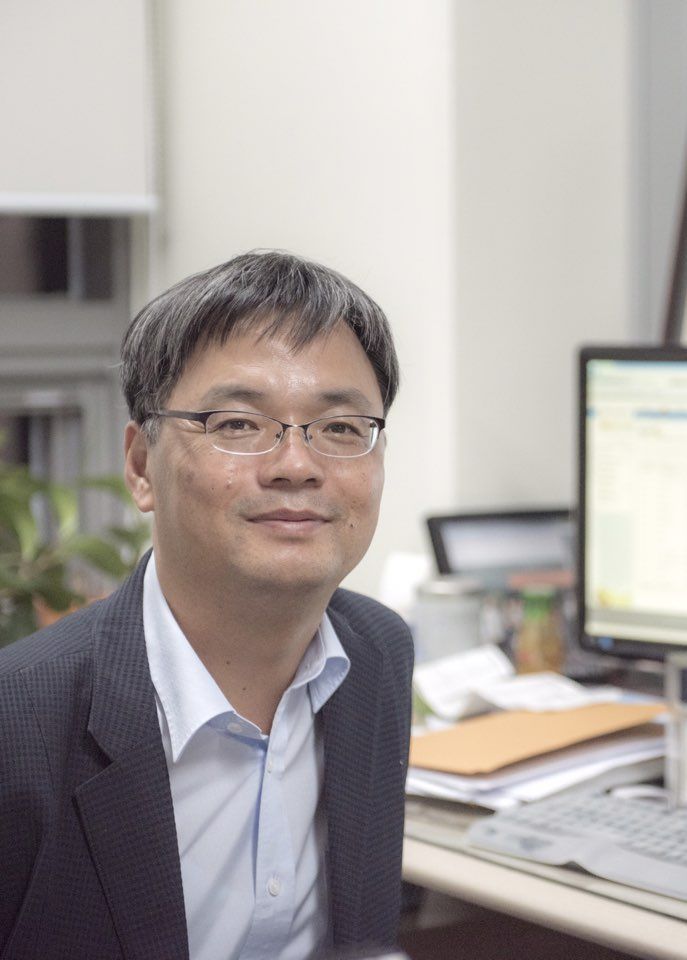
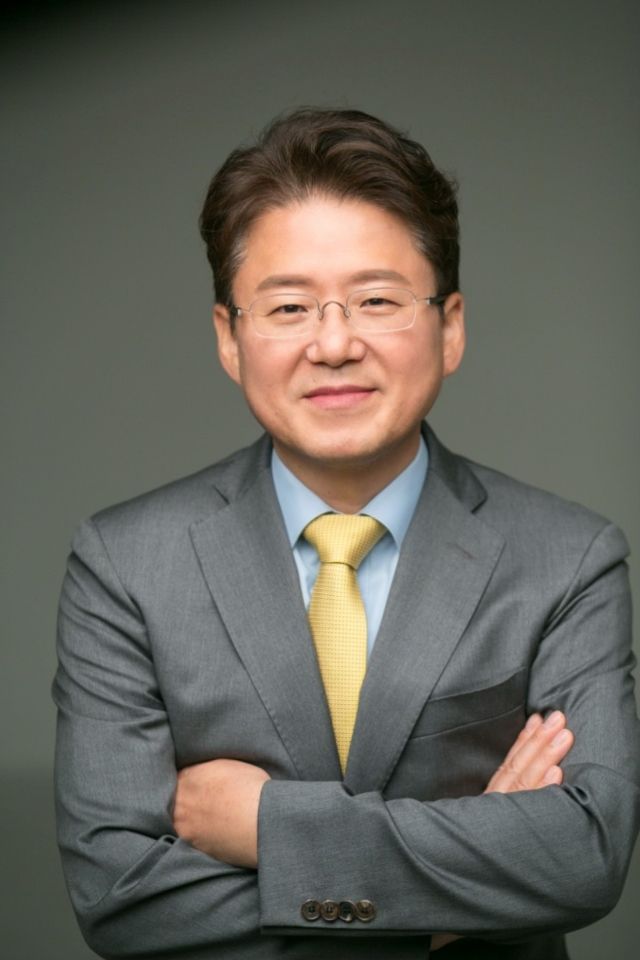
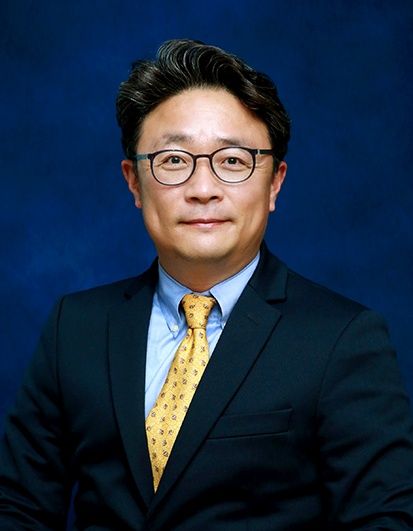
Sang-myeong Lee, professor of business administration at Hanyang University and former president of the Korea Automobile Industry Association, offered this assessment of South Korea’s auto industry as it faces an onslaught of Chinese EVs. Even after the government introduced an evaluation in July to determine which companies qualify for subsidies, Chinese-made vehicles accounted for 44.2% of newly registered EVs in South Korea in the third quarter. The 8% tariff on Chinese-made EVs is far lower than those imposed by the United States (up to 127.5%) and the European Union (EU; up to 45.3%). We asked four auto industry and policy experts what South Korea should do to respond, and how.
■ “Tariffs can’t stop them” ... but South Korea can’t simply shut its doors, either
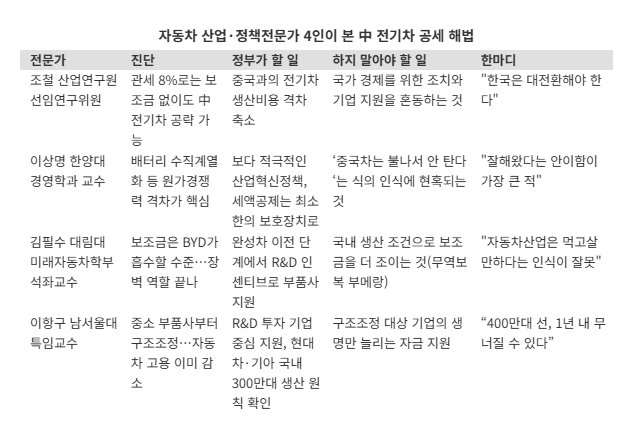
BYD, which failed to qualify for subsidies, has also increased sales by offering incentives of its own. “The fact that sales haven’t fallen even though BYD isn’t receiving subsidies means its models are highly price-competitive,” said Pil-su Kim, distinguished professor at Daelim University College’s School of Future Automotive Engineering and president of the Korea Electric Vehicle Association. “Its operating margin may shrink, but even after cutting prices it still has that much left over. That shows just how formidable its value for money is.” He added, “The subsidies are too small for BYD to absorb, so they have almost entirely ceased to serve as a barrier.”
Experts agreed that South Korea cannot simply raise import barriers without limit. “Most of our industries are highly dependent on exports, so it is difficult to adopt policies that block foreign-made products with tariff or non-tariff barriers,” Jo said. “Nor can we explicitly discriminate against foreign companies through subsidies; we can only make distinctions based on policy objectives such as technology, the environment and contributions to the domestic economy.” Kim warned, “If we say we won’t provide subsidies unless vehicles are made here, we’d be no different from the United States. China would do exactly the same, and we would suffer 10 or 20 times as much damage.”
■ The 4-million-vehicle threshold is under threat
Meanwhile, South Korea’s domestic production base is wavering. Over the past three years, domestic auto production has remained at around 4.1 million vehicles. “To maintain employment and the industry ecosystem, production of at least 4 million vehicles a year must continue domestically,” Lim Chae-uk, director of the automotive division at the Ministry of Trade, Industry and Energy, said at a National Assembly forum on the 18th of last month.But there are warnings that even this threshold is in jeopardy. “The 4-million-vehicle mark could be breached within a year,” said Hang-gu Lee, special appointment professor at Namseoul University and former head of the Korea Automotive Technology Institute. “If imports from China increase and foreign-owned companies scale back or pull out, the 4-million-vehicle mark could be at risk.”
The parts industry could feel the impact first. “Employment in the auto industry has been falling since April, according to employment insurance statistics, and was down 2% in August,” Lee said. “The decline will accelerate if finished-vehicle production falls or shifts to Chinese platforms, and restructuring will begin with small and midsize parts suppliers that have no ties to Hyundai Motor Company or Kia.”
Experts differed in their views on Chinese capital entering South Korea’s finished-vehicle industry. Hang-gu Lee called mid-sized automakers linked to Chinese capital, such as Renault Korea—which has China’s Zhejiang Geely Holding Group as its second-largest shareholder, with a 34.02% stake—and KG Mobility (KGM), which issued convertible bonds to China’s Chery Automobile, “a threat.” He said, “These companies will increase their use of Chinese-made parts to cut costs, and South Korean parts suppliers will ultimately lose their place in the supply chain to Chinese companies.”
Sang-myeong Lee said of Renault Korea and KGM, “Neither company is currently competitive in EVs, so this is unavoidable under the circumstances.” He added, however, “It will be harmful if they are allowed to become dependent on China in terms of supply chains or technology, or to serve merely as production bases and platforms for indirect exports, without any safeguards against that.”
Ultimately, the core issue is cost competitiveness. Analyzing BYD’s push, Sang-myeong Lee said, “Both its cost competitiveness—so strong that it is difficult for us to match, thanks in part to battery vertical integration—and its first-mover strategy have played a role, but cost competitiveness matters more.” He noted, “Cost competitiveness has to encompass parts suppliers and, at the far end of the chain, the competitiveness of materials. It is not easy to catch up with BYD and other Chinese companies.” He added, “Labor costs also need comprehensive reform, including greater employment flexibility.”
■ The solution: a “production tax credit”
Experts stressed that solutions should be sought at the production stage, not the purchase stage. In its tax reform proposal last August, the government did not include finished vehicles among those eligible for the domestic production tax credit. “One of the easiest mistakes to make is to misunderstand the domestic production tax credit as a policy to support the profits of specific companies,” Jo said. “Companies can produce overseas even if they don’t produce domestically, but if domestic production disappears, the national economy will suffer.” He stressed, “We need to recognize that a tax credit is a policy to encourage domestic production, not a form of corporate support.”Regarding the 4 million won per-vehicle tax credit sought by the industry, Sang-myeong Lee said, “An amount like this will not dramatically lower EV production costs.” He nevertheless expressed concern that “from the perspective of industrial policy, which has driven our economy, we may have neglected the auto industry for far too long.” He added, “We should see it as a minimum safeguard and respond with more active policies.”
There were also calls to expand the scope of production support. “We need to create a range of measures at stages before finished vehicles are produced, such as increasing R&D spending and offering incentives to small and midsize parts suppliers,” Kim said, criticizing the government for holding the mistaken view that “the auto industry is doing well enough to make a living.”
Some also pointed out that tax credits alone have their limits. “Hyundai Motor Company and Kia are also replacing some key parts with Chinese-made ones,” Hang-gu Lee said. “Even if a tax credit is introduced, it will be difficult to expect results if domestic production falls and, in particular, Hyundai Motor Company’s overseas production increases.” He added, “The support could end up benefiting the three mid-sized automakers with Chinese capital.” He said, “The government has continued to provide funding, but all it has done is prolong the lives of companies slated for restructuring. Support should focus on companies that invest in research and development.”
There are also few suitable institutional measures for screening Chinese capital’s entry into South Korea. “Foreign investment security reviews are intended to protect domestic industrial technology and national high-tech strategic industries, so they are unlikely to prevent Chinese EV companies from investing in stakes in South Korean companies,” Jo said. “Instead, we need to examine information and data leaks, as well as security issues, arising from the entry of connected cars.”
■ “Protection alone isn’t enough ... South Korea needs a major transformation”
Experts stressed that South Korea cannot rely solely on protecting its domestic market. “It would be a serious mistake to think that protecting the domestic EV market will solve the problem,” Jo said. “Our auto industry is highly dependent on overseas markets, so securing the competitiveness to win abroad must come first.” He said the government should immediately take “steps to narrow the gap between China and South Korea in EV production costs,” and avoid “confusing measures for the national economy with measures for individual companies.” He urged automakers to accelerate the development of autonomous driving and software-defined vehicles (SDVs), and to drive an AI transformation across the entire auto industry ecosystem.“This restructuring stems from competition with China, not the introduction of robots or AI,” Hang-gu Lee said. “Over the medium to long term, we need to reaffirm the principle, previously discussed, that Hyundai Motor Company and Kia produce 3 million vehicles domestically.”
Sang-myeong Lee said, “It has been rare over the past 20 to 30 years for countries to protect their domestic industries as part of industrial policy. We need more active industrial innovation policies alongside efforts to strengthen companies’ ability to compete on their own. The two sides need to move together, like a chick pecking from within as the mother hen pecks from outside.” He added, “China is formidable. The gap in autonomous vehicles is enormous, and the same is true of EVs.” He stressed, “We must not be swayed by claims such as ‘Chinese cars catch fire, so even people in China won’t drive them.’ Key decision-makers and government officials need to go to China and the United States themselves and see for themselves.”
Asked to sum up the current situation in one sentence, Jo replied, “South Korea needs a major transformation.”
[email protected] Kim Dong-chan Reporter