5,142 orders placed in 1-to-10-share lots... Supreme Court: Repeated small-lot buying also constitutes market manipulation
- Input
- 2026-10-27 14:07:28
- Updated
- 2026-10-27 14:07:28
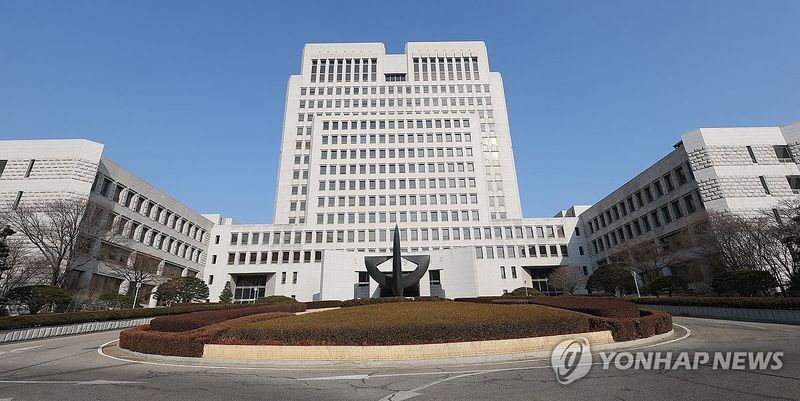
On the 27th, legal sources said the Supreme Court’s First Division, with Justice Cheon Dae-yeob as the justice in charge of the case, dismissed the appeals filed by A and B, who had been indicted on charges of violating the Financial Investment Services and Capital Markets Act, on the 1st of this month. As a result, A’s sentence of 1 year and 6 months in prison and a 300 million won fine, and B’s sentence of 2 years and 6 months in prison and a 500 million won fine, were finalized.
The two were indicted on suspicion of driving up the share price in 2020 during efforts to acquire control of a KOSDAQ-listed company. A gathered investors needed for the acquisition and acted as a link between B and the operator of a stock-tip chatroom, while B directly placed orders to raise the share price and prevent it from falling. They were also accused of repeatedly saying they would “bring in a group to push up the share price” and recommending the stock through the chatroom.
B placed a total of 5,142 orders from December 2020 through February of the following year. Of these, 1,754 were high-price buy orders offering to buy above the previous transaction price or the best ask; 3,373 were price-fixing orders intended to keep the share price at a certain level; and 15 were orders to exhaust available supply by removing pending sell orders. Most were small-lot orders for 1 to 10 shares.
There were three main issues. First, did repeatedly placing small-lot orders violate Article 176(2)(1) of the Financial Investment Services and Capital Markets Act? This provision prohibits transactions intended to induce trading that “give a false impression that trading is active or cause price fluctuations.” Second, did the price-fixing orders constitute “a series of transactions intended to fix or stabilize market prices,” which are prohibited under paragraph 3 of the same article? Third, could A, who did not place orders directly, be punished as a co-principal by conspiracy? Under this legal doctrine, when two or more people conspire to commit a crime, those who do not carry out the crime themselves can also be punished as principals. The provision in paragraph 2, subparagraph 2, which prohibits disseminating statements that market manipulation will cause price fluctuations, applied to the statements about bringing in a group.
The first trial found most of the charges proven. It concluded that even small orders, if repeated, could make other investors think trading was active. It also ruled that A qualified as a co-principal despite not placing orders directly, given A’s position and role in the case. The Seoul High Court, the second-instance court, upheld the same conclusion in January this year.
The Supreme Court upheld the lower courts’ rulings. The panel said, “There was no error in the lower court’s interpretation of the law concerning the establishment of co-principal liability by conspiracy, Article 176(2)(1), the main clause of paragraph 3, and paragraph 2(2) of the Financial Investment Services and Capital Markets Act.”
The operator of the stock-tip chatroom, who was indicted along with them, was acquitted at both the first and second trials, and the acquittal became final. Some of the charges against the two were also found not guilty in the reasoning. A reasoned acquittal is stated only in the reasoning, rather than in the operative part of a judgment, and is used when another part of a single offense is found guilty.
[email protected] Kim Dong-kyu Reporter