“Forced to work at a foundry at 19... Cut off contact with Mom for two years”: Lee Ho-cheol’s belated confession
- Input
- 2026-10-27 14:29:36
- Updated
- 2026-10-27 14:29:36
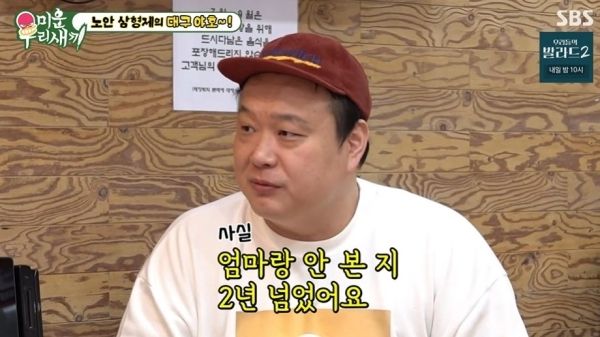
[Financial News] Actor Lee Ho-cheol, 39, who had gone more than two years without contacting his mother because of the wounds of a difficult childhood marked by poverty and his parents’ divorce, said he had overcome their long-standing rift and reunited with her.
On the SBS variety show “My Little Old Boy,” which aired on the 25th, Lee Ho-cheol shared how he traveled to his hometown of Daegu with fellow actors Bae Jung-nam and Hyun Bong-sik and visited his mother, whom he had not seen for more than two years.
Lee Ho-cheol calmly recalled the extreme hardship he endured as a child. “After my parents divorced when I was around five, my mother raised my younger sister and me while selling skewers at a market,” he said. “It was far from easy for her to raise two children on her own back then, so we were eventually left in the care of our grandmother in the countryside.”
His memories of living in a grandparent-headed household remain etched in his mind as scars of poverty. “My grandmother didn’t have much money either, and when we ran out of rice, we had to get through a week on one large packet of noodles that cost 300 won,” he said. “I ate them so often back then that I wouldn’t touch noodles again until I was in my mid-30s.”
Poverty’s grip continued even as he approached adulthood. When his grandmother’s health deteriorated, he returned to his mother’s care, but at 19, while his peers were thinking about going to college, he had to work at a foundry instead of continuing his studies.
The factory job he took to help make ends meet became a flashpoint for conflict between mother and son. “My mother wanted to manage the money we earned together herself, but I objected because I wanted to save my share on my own,” Lee Ho-cheol said. “We fell out over that, and I couldn’t even get meals from her. In the end, it was less like moving out on my own and more like being practically kicked out.” As resentment built, they remained estranged for more than two years, exchanging only perfunctory greetings during holidays and not seeing each other.
News of his mother’s worsening health brought the two back together. During a recent phone call, he learned that a polyp had been found in her colon. “I suddenly found myself worried and wanted to see her,” he said, and with help from his colleagues, he knocked on the door of his family home in Daegu.
When the mother and son met again after about two years, a bouquet and a handwritten letter helped melt away years of resentment. Seeing the plain words “I love you, Mom” in the letter Lee Ho-cheol handed her, his mother burst into tears she had been holding back. “This is the first time in my life I’ve ever received one. I’m so happy, and I love you more than words can say,” she said.
After the show aired, viewers expressed deep empathy for the structural poverty faced by single-parent and grandparent-headed families, and the family conflicts it can cause, seeing beyond mere celebrity gossip. Experts said the program served as a reminder of the importance of social safety nets and emotional support to prevent vulnerable young people’s early entry into the workforce and the pressure to support their families from leading to estrangement within the family.
[email protected] Mun Yeong-jin Reporter