Samuel Youn and Yang Joon-mo open Der Ring des Nibelungen (The Ring Cycle), a four-opera series: “It takes five times the energy, but Wagner has a certain magic” [Interview]
- Input
- 2026-10-27 18:20:02
- Updated
- 2026-10-27 18:20:02
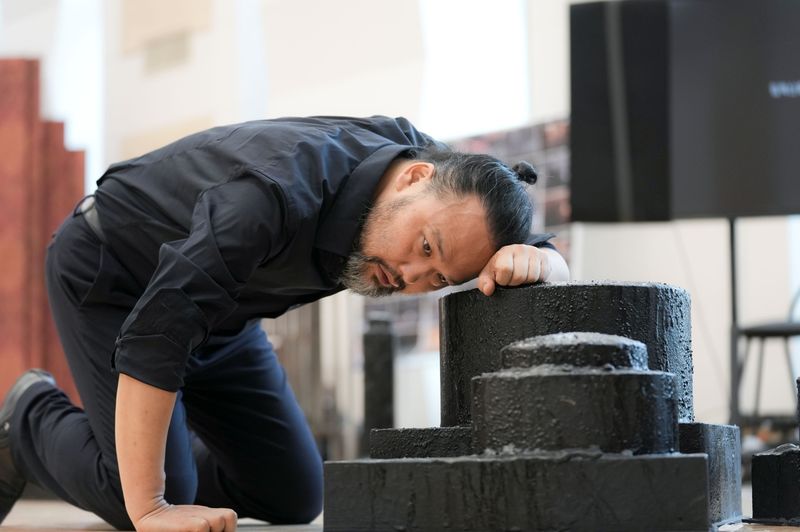
[Financial News] “I was healthy when rehearsals began, but as the weeks go by, I get more and more worn down. When I’m taking off my makeup at home, I think, ‘Why am I doing this again?’ But when I hear the orchestra from the stage, I think, ‘Right, this is why I do it.’ Wagner has that kind of addictive power.”
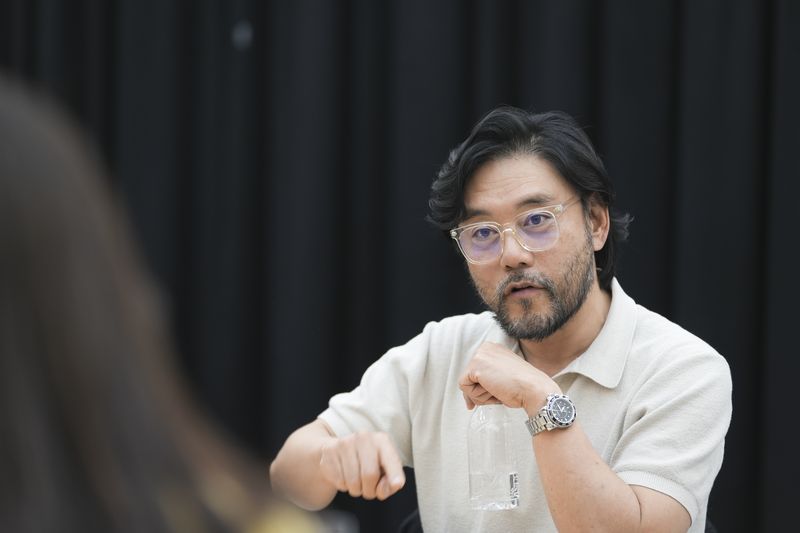
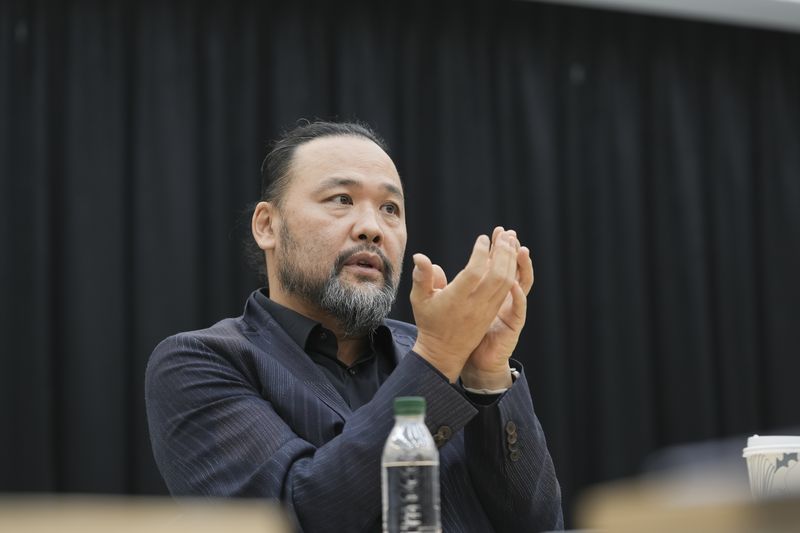
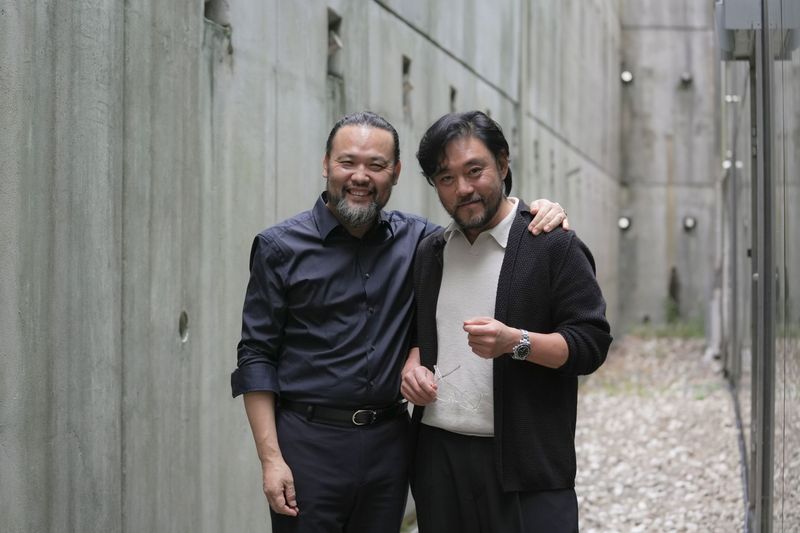
Bass-baritone Samuel Youn described the pain and exhilaration of staging Wagner operas this way. It is no different for baritone Yang Joon-mo. He called it “a work I truly love, but that has made things incredibly hard for me—a love-hate relationship.” The two alternate in the role of Alberich in The Rhinegold, the first opera in Wagner’s four-opera cycle The Ring Cycle. Alberich is a dwarf whose desire for absolute power sets a great tragedy in motion.
Korea National Opera will present The Rhinegold at the Opera House at Seoul Arts Center in Seoul from the 29th through November 1, taking on a significant challenge that will leave a mark on Korea’s opera scene. The first production in a long-term project launching on the 150th anniversary of the first complete staging of The Ring Cycle, it will bring all four works to the stage in sequence by 2029.
Bass-baritone Samuel Youn and baritone Yang Joon-mo, who share the role of Alberich, have built deep interpretations of Wagner’s works through regular performances on European stages. Youn, who spent 23 years as a permanent soloist at Cologne Opera in Germany, built a reputation as a Wagner specialist after taking the title role in The Flying Dutchman, the 2012 opening production of the Bayreuth Festival, which stages only Wagner’s works. He was then invited back in leading roles for four years. Yang was recognized for his talent after winning first prize and the Audience Prize at the ARD International Music Competition in Munich, as well as the Best Wagner Prize at the Nuremberg Meistersinger International Competition.
Alberich chooses power after being mocked ... the two singers’ ‘love-hate role’
The Ring Cycle is a monumental work that Wagner spent 26 years completing, drawing on Norse mythology and Germanic epics. It begins with The Rhinegold and continues with The Valkyrie, Siegfried and Twilight of the Gods. At the starting point of the four works, known as the Ring Cycle, is Alberich, who longs for love but is mocked by the Rhinemaidens. He steals the Rhine’s gold and forges a ring that grants absolute power. As the desires of gods, giants and humans collide over the ring, a tale of destruction unfolds.
Speaking ahead of the opening, Samuel Youn said, “Alberich is a very important character throughout the Ring,” explaining that “in The Rhinegold in particular, he experiences both success and failure in a short period of time.”
The two singers’ paths to first encountering Alberich were quite different. For Yang, it was an opportunity that came during a desperate period. “I was doing The Barber of Seville at a small theater in Austria when I kept failing auditions. The director then suggested I audition for The Rhinegold,” he recalled. “At the time, I didn’t even really know what kind of role Alberich was.”
He studied the score on his own and began rehearsals, but the journey was not easy. “At the first rehearsal, the conductor really laid into me. I studied incredibly hard for a month,” Yang said. “I think I am who I am today because I studied that hard back then.” He still has the score from that time. “It has kimchi stains on it, and I’ve taped up the torn parts. Even if someone told me to buy a new one, I don’t think I could,” he said.
For Samuel Youn, Alberich came along at a moment when he wanted to get away from Wagner, and became a turning point in his career. “I did The Flying Dutchman so many times. Since I kept getting offers for the same role, at some point I wanted to run away,” he said. “Even when I was offered Alberich and looked at the score, my first thought was, ‘This isn’t for me.’” But his mind changed after he took the role in 2016. “My feeling that I didn’t want to do Wagner anymore was actually overcome through Alberich. I discovered new possibilities within myself,” he said.
“Alberich is the graveyard of Wagner singers.”
Even with years of experience, Alberich is no easy role. It requires not only a wide vocal range and intense emotional expression, but also the ability to deliver the German clearly. Samuel Youn cited the language barrier as the reason Korean singers are not readily entrusted with Alberich on German stages. “You need to have an instinctive feel for German,” he explained.
In German, consonants play a major role in distinguishing words and conveying the meaning of sentences clearly. Wagner’s operas require singers to deliver long passages and intense emotions over the orchestra, making clear consonant articulation especially important.
“You have to project the consonants outward as if you were spitting,” Yang Joon-mo said. “I get told, ‘Spit them out more’ and ‘We can’t hear you.’” Samuel Youn also recalled that at Bayreuth, “Even after rehearsing for hours, when I was heading off for a break, the music coaches would stop me and talk about my pronunciation. It got to the point where it appeared in my dreams.”
Alberich is often known as “the graveyard of Wagner singers.” Yang Joon-mo said, “Even when Alberich laughs, he has to laugh roughly and spit out the sound,” adding, “Sometimes after singing the role once, it feels as though my vocal cords have been scraped with a knife.”
Samuel Youn said, “I feel it takes five times the energy I put into other operas.” He added, “I’ve done it many times, so I may be able to get through it wisely, but it’s still really difficult,” and said with enthusiasm, “I want to draw the audience in just as fully.”
Meanwhile, this production will be directed by Lorenzo Fioroni, who brought flexible imagination and a contemporary sensibility to the 2025 production of The Love for Three Oranges; under his direction, it will break out of the rigid mold of myth. The director sees Wagner’s myths as a “magnifying glass” reflecting a portrait of our times, bringing to the stage the intimate desires of modern society, including real estate, loans and contracts, labor exploitation, and an obsession with youth. The production will also use “live cameras” placed onstage to offer a bold staging that lets audiences examine the characters’ inner lives and the bare face of power more closely and from multiple angles.
[email protected] Shin Jin-a Reporter