China's Industrial Profits Surge 14.4% in September as 'Advanced Manufacturing' Races Ahead Alone Amid Sluggish Domestic Demand
- Input
- 2026-10-27 12:27:48
- Updated
- 2026-10-27 12:27:48
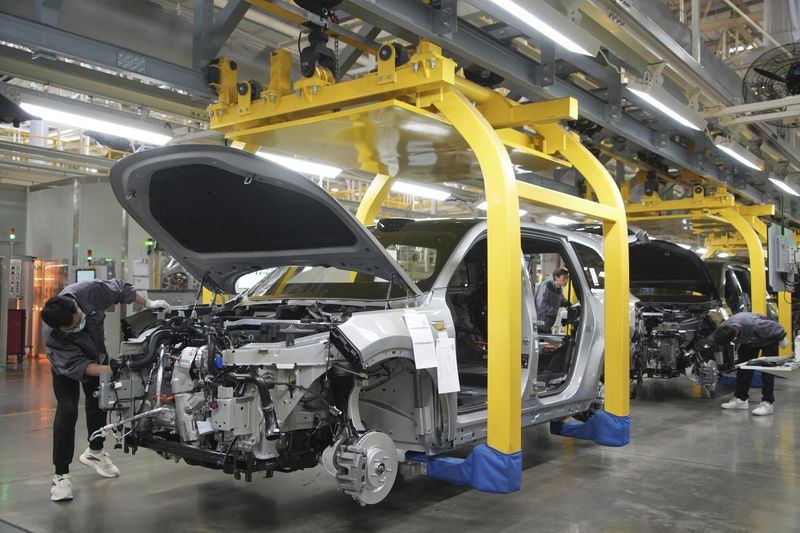
[Financial News] Last month, profits at China's large industrial enterprises recorded their steepest increase since June, buoyed by a boom in AI-related manufacturing. However, it was noted that polarization is deepening amid persistent, deep-rooted weakness in domestic demand.
According to data released by China's National Bureau of Statistics (NBS) on the 27th, profits at industrial enterprises (with annual revenue from their principal business of at least 20 million yuan, or about 4 billion won) rose 14.4% in September from a year earlier. As a result, cumulative industrial profits for January through September increased 15.5% year on year, slightly below the 15.7% growth rate for January through August, but still maintaining a robust double-digit pace.
After declining for three consecutive years, industrial profits rebounded slightly last year and returned to double-digit growth this year, buoyed by the authorities' policy efforts to ease excessive price competition and a surge in demand for AI-related equipment.
The global AI boom and rising raw-material prices in the wake of the Iran war boosted the performance of mining companies, semiconductor manufacturers and raw-material suppliers. Downstream manufacturers, by contrast, are struggling with the double burden of rising costs and weak domestic demand.
Profit growth in advanced technology fields such as AI and robotics far outpaced that in consumer-goods-related industries such as apparel, automobiles and furniture.
Wei Weining, a senior statistician at the NBS, said the growth was mainly attributable to a surge in profits in electronics and advanced technology manufacturing. From January through September, strong demand for AI computing and storage devices helped profits at manufacturers of specialized electronic materials at least triple, while profits at semiconductor equipment manufacturers surged 51.7%.
As data centers and AI computing infrastructure were rapidly built out, profits at optical fiber manufacturers rose at least sixfold and those at cable manufacturers at least doubled. In addition, profits at producers of nonferrous metal raw materials such as copper and aluminum expanded by about 45% on increased demand from the AI and renewable energy industries.
Oxford Economics senior economist Sheana Yue said, “Thanks to the global AI cycle and policy support from the authorities, investment in advanced manufacturing and capacity utilization in the electronics sector have remained robust, but overall investment and industrial capacity utilization remain subdued.”
Yue added, “The property downturn is suppressing home purchases and related durable-goods consumption, leaving household demand as the weak link,” and analyzed that “China's strong export momentum alone is unlikely to fully offset weak domestic demand.”
China's economy grew 4.5% year on year in the third quarter, bringing growth for January through September to 4.6% and just within the government's annual target range of 4.5% to 5.0%. However, retail sales growth was just 1.1% in September, with the recovery in consumption still very modest.
CNBC, a business news network, reported that despite concerns over local government debt and the diminishing effectiveness of subsidy policies, Chinese authorities have yet to announce a large-scale stimulus package for domestic demand and are maintaining a wait-and-see stance.
[email protected] Yoon Jae-joon Reporter