Requests for supplementary investigations surge 60% after Criminal Procedure Act revision... Police: “No case ping-pong”
- Input
- 2026-10-27 12:37:57
- Updated
- 2026-10-27 12:37:57
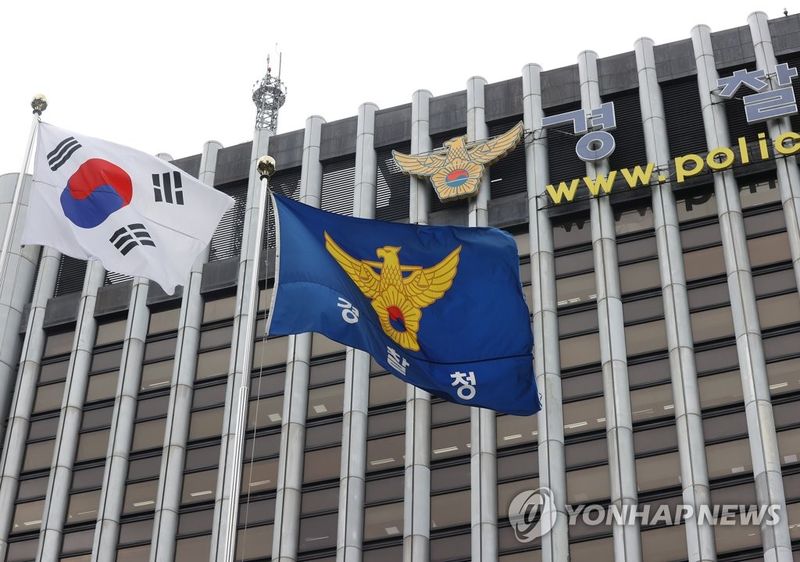
[Financial News] Since the revised Criminal Procedure Act took effect, the Prosecution Office’s requests for the police to conduct supplementary investigations have increased 60% from the same period a year earlier. More than 2,000 cases were reported to the Serious Crime Investigation Agency, but there was only one actual request to transfer a case.
Hong Seok-gi, chief of the National Office of Investigation at the National Police Agency, said at a regular press briefing held at the agency’s headquarters in Seoul’s Seodaemun District on the 27th that, as of the 26th, there had been 8,995 requests for supplementary investigations, up 60% from 5,615 in the same period a year earlier.
The main requests concerned additional witness interviews, the supplementation of physical evidence and verification of facts. In response to the rise in requests for supplementary investigations, the police are working to add 4,000 investigative personnel and have established cooperation units at each provincial and metropolitan police agency to support supplementary investigations in major cases.
As of the 23rd, 141 cases in which the Prosecution Service had opened investigations itself and then transferred them to the police had been recorded. Another 8,784 cases had been referred by police to the Prosecution Service but returned as requests for supplementary investigations because the Prosecution Service had not finished processing them. These overlap with the total of 8,995 supplementary investigation requests as of the 26th.
As of the 20th, police had reported 2,002 cases to the Serious Crimes Investigation Agency after identifying them; there had been just one actual request to transfer a case. The reported cases included Electronic Financial Transactions Act violations related to voice phishing, offenses related to the law on refunds for victims of telecommunications fraud, and drug crimes. However, exact counts by crime type were not available because the Korea Information System of Criminal Justice Services (KICS) was not yet fully operational.
In a recent AI-related hacking incident involving the financial sector, police reviewed whether the targeted system legally qualified as electronic financial infrastructure before notifying the Serious Crimes Investigation Agency. The agency replied that it would not open an investigation, taking into account that the police had already carried out a substantial portion of the investigative work.
Addressing concerns that investigative agencies might pass cases back and forth, Hong said, “Notifying the agency about a case doesn’t mean we stop investigating,” and stressed, “It’s simply a legal procedure, not a case of ping-pong.” Under the current arrangement, police continue investigating until the Serious Crimes Investigation Agency requests a transfer; if it does, police hand over the work completed so far.
Case transfers to the Serious Crimes Investigation Agency are made in accordance with criteria set out in the enforcement decree, and police must comply unless they have a legitimate reason not to. However, police may raise an objection if, for example, a case is nearing completion, officials explained.
It was also confirmed that the Prosecution Office had called for corrective action over judicial police assistants preparing suspect interrogation records on their own. Judicial police officers are those at the rank of inspector or above, while judicial police assistants are officers at the rank of sergeant or below. Current law stipulates that judicial police officers conduct investigations and judicial police assistants support them.
Hong said that the police were in discussions with the Prosecution Office after it had “asked us to correct the practice of judicial police assistants preparing suspect interrogation records on their own.” The police are drawing up detailed guidelines, taking into account case law indicating that such records may be prepared under the specific direction of a judicial police officer, as well as staffing levels on the front lines. They also plan to discuss with relevant ministries ways to increase the share of judicial police officers at inspector rank or above.
A nationwide, comprehensive review is also under way to address relationship-related crimes. As of the 26th, inspections had been completed in 28,396 of the 43,712 cases under review, or about 65%. In the course of the review, police applied for 203 arrest warrants, requested custody in 284 cases, and sought electronic monitoring orders in 203 cases.
The police are consulting with relevant ministries on legal amendments to strengthen penalties for perpetrators and keep them separated from victims. They are also building, with the Ministry of Justice, a real-time information-sharing system related to people subject to electronic monitoring for stalking. Measures are being prepared to increase the rate at which applications for electronic monitoring are granted.
To address crimes with seemingly random motives, including the knife rampage in Incheon, police are improving crime-prevention environments and strengthening cooperation with the private sector. A police official said police were analyzing reports of people carrying knives in public places and concentrating police resources in areas with high crime rates. For people with high-risk mental illnesses, police plan to work with the Ministry of Health and Welfare to improve rapid responses and links to treatment, and to cooperate on introducing a national public transfer team.
To combat cybercrime, police are expanding international cooperation to preserve evidence overseas and upgrading their generative AI analysis system. Hong said that, with relevant provisions strengthened in the revised Criminal Procedure Act, South Korea could join the Budapest Convention on combating cybercrime in the near future.
On controversy over the independence of investigations in connection with investigative agencies attending the State Council of South Korea, Hong expressed support for attendance on the condition that political neutrality is guaranteed. He said, “Rather than being a frog in a well, there seem to be advantages to attending the State Council and sharing the situation of state affairs,” and stressed the need for cooperation among relevant ministries on crime prevention and victim recovery.
However, he said that if the president intervenes in an investigation into an individual case, the necessary steps—including raising an objection—should be taken to safeguard neutrality. The advantages of attending the State Council, too, should be considered only on the condition that the political neutrality of investigative agencies is not compromised.
[email protected] Kim Ye-ji Reporter