“A full-fledged stock market rebound is unlikely until after mid-November” ... Uncertainty over US midterms remains
- Input
- 2026-10-27 12:03:08
- Updated
- 2026-10-27 12:03:08
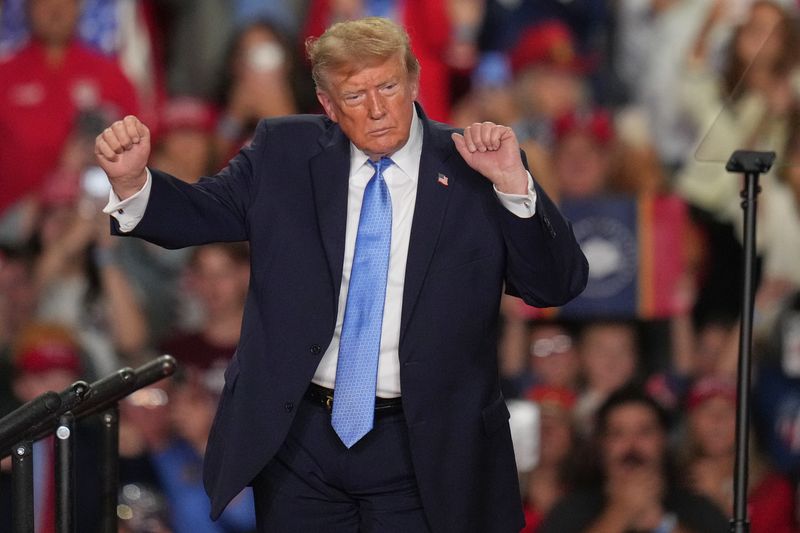
[Financial News] With volatility persisting in domestic and overseas stock markets ahead of the US midterm elections and major events, a full-fledged recovery in investor sentiment is unlikely until after mid-November.
Analysts say uncertainty over the balance of power in the US Congress and the direction of fiscal policy remains, while market supply pressures could also mount ahead of major initial public offerings (IPOs).
Hyundai Motor Securities said at a press conference held on the 27th at the Korea Exchange in Yeouido, Seoul, that investors need to assess the US midterm election results and how major external factors unfold before setting their investment strategies.
In particular, the possibility of a “blue wave”—with Democrats taking control of both the House and Senate—and the cost-of-living burden in the US were cited as factors that could affect future policy and financial markets.
Choi Jae-min, a researcher at Hyundai Motor Securities, said, “If a blue wave materializes in the US, the administration’s ability to push through its policies could weaken, potentially limiting its capacity for further fiscal expansion.”
The explanation was that, as the Trump administration has pursued tax cuts and expanded fiscal spending, stronger congressional checks could make new legislation difficult to pass.
However, he saw limited risk of a sharp reduction in fiscal spending. Choi said, “Republicans are calling for increased defense spending, while Democrats are seeking to restore Obamacare and Medicare subsidies, so fiscal spending could be maintained at a certain level through negotiations between the two sides.”
The cost-of-living burden felt by US voters was also cited as a key factor. Analysts said that if concerns over the cost of living, including prices and housing costs, become a political liability, they could also affect policy on tariffs and foreign affairs. They also raised the possibility that uncertainty over government debt and spending could intensify again if it coincides with debt-ceiling negotiations in the first half of 2027.
For stock market strategy, the advice was to wait for the results of the US midterm elections in early November rather than rush to anticipate an October rebound. Although markets typically show a seasonal tendency to rebound in October after weakness in September, past patterns may be harder to apply this year because policy uncertainty could shift depending on the election results.
Major events, including SpaceX’s listing expected in mid-November, were also cited as factors affecting market supply and demand. Ahead of a large-scale IPO, investors may seek to raise funds, potentially bringing selling pressure to existing market leaders.
Hyundai Motor Securities said that net selling pressure from foreign investors in domestic stocks could persist until these uncertainties are resolved, and that investors should look to the period after mid-November for a full-fledged recovery in sentiment.
By sector, Hyundai Motor Securities pointed to the possibility of short-term rotation as the US political landscape shifts. If expectations of a blue wave grow, sectors that have been relatively disadvantaged under the Trump administration’s policy stance, such as solar power and secondary batteries, could rebound, while traditional energy-related stocks could see a short-term correction.
However, because actual policy changes take time, the advice was to focus on short-term trading rather than a sustained upward trend.
The possibility of slower data center construction was cited as a headwind for the artificial intelligence (AI) data center and power equipment sectors. Analysts said that even if the AI industry continues to grow, delays in starting data center construction could temporarily slow the growth in demand for related materials, parts and equipment, as well as power equipment.
Defense stocks could see a short-term correction amid the possibility that Democrats will push back against increased defense spending, but their fundamentals were considered solid given long-term diplomatic and security needs. Hyundai Motor Securities also said the shipbuilding sector should be approached with a focus on its own industry cycle and earnings, including the US policy to rebuild its shipbuilding industry.
[email protected] Kang Jung-mo Reporter