'Post-facto martial law proclamation': 18-month prison sentence finalized for Kang Eui-gu, former Presidential Office annex chief
- Input
- 2026-10-27 11:35:20
- Updated
- 2026-10-27 11:35:20
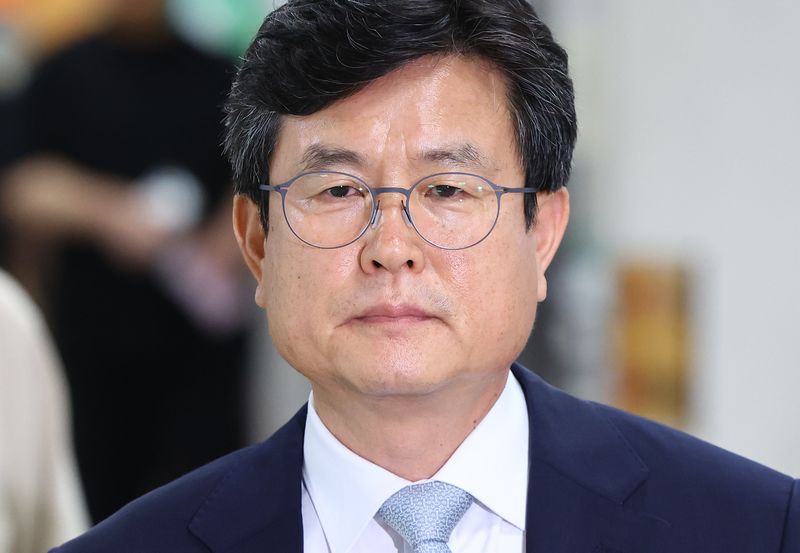
On the 27th, the Supreme Court’s First Division, with Justice Cheon Dae-yeob as the justice assigned to the case, dismissed the appeals filed by Kang and the special counsel team led by Special Counsel Min Joung-kie in the case in which Kang had been indicted on charges including preparing a false official document.
Kang acted after hearing from the senior secretary for civil affairs at the Presidential Office on December 4, 2024: “The President’s acts in matters of state must be in writing, but there is no document.” Two days later, he called former Prime Minister Han and received from him the “martial law proclamation” document that Han had received and kept at a Cabinet meeting before martial law was declared. Kang then used a computer to create a cover sheet stating, “Martial law is hereby declared as of 22:00 on December 3, 2024,” with signature lines for the President, Prime Minister and Minister of National Defense, and attached it to the document. He went to the Prime Minister’s official residence and the defense minister’s official residence to obtain the signatures of Han and former Defense Minister Kim Yong-hyun; the following day, former President Yoon signed it last.
The document was destroyed just two days later. On the morning of December 8, Han called and asked for it to be destroyed, saying, “If it becomes known that the document was made after the fact, it could give rise to another controversy, so let’s act as if I never signed it.” Three days later, Kang reported this to former President Yoon at the residence and, after receiving approval—“If that is the Prime Minister’s wish, then do so”—fed the document into a shredder.
The question was how much of the cover sheet should be considered false. Article 82 of the Constitution stipulates that the President’s acts in matters of state must be in writing and countersigned by the Prime Minister and the relevant members of the State Council. The first and second courts found the document false and ruled Kang guilty of the part that listed “December 3, 2024” at the bottom, making it appear that the countersignatures had been made before martial law was declared.
By contrast, the allegation that the cover sheet falsely suggested that the Minister of National Defense had recommended declaring martial law and that the Cabinet had deliberated on it resulted in an acquittal stated only in the reasoning of the judgment. The reason was that those details did not appear on the face of the document. Such a reasons-only acquittal is stated in the reasoning, rather than in the operative part of the judgment, and is used when another part treated as part of the same offense results in a conviction. The special counsel team appealed, arguing that this part was not subject to an acquittal ruling but was a fact explaining the circumstances of the crime. The Supreme Court rejected the appeal.
Kang also invoked the mandatory sentence-reduction or exemption provision in the special counsel law on insurrection. The provision requires a sentence to be reduced or waived when someone gives testimony that helps establish another person’s crime. The second-instance court found that the provision did not apply, citing, among other things, that the investigation into this document began with Han’s statements to prosecutors. The Supreme Court upheld that finding.
The Supreme Court also upheld the lower court’s finding that the cover sheet qualified as a presidential record even though it had not gone through procedures for reporting its creation or transferring it. The acquittal was finalized on the charge of using a falsely prepared official document, as keeping the cover sheet in the annex office did not constitute such use. The panel ruled, “There was no error in the lower court’s decision: it neither failed to conduct the necessary examination nor misapplied the law concerning the establishment of the offenses of preparing a false official document, violating the Presidential Records Act, or damaging official documents.”
[email protected] Kim Dong-kyu Reporter