[13th Busan Global Finance Forum] “Turning Dongbaekjeon into a stablecoin to globalize the financial and economic system”
- Input
- 2026-10-27 12:01:31
- Updated
- 2026-10-27 12:01:31
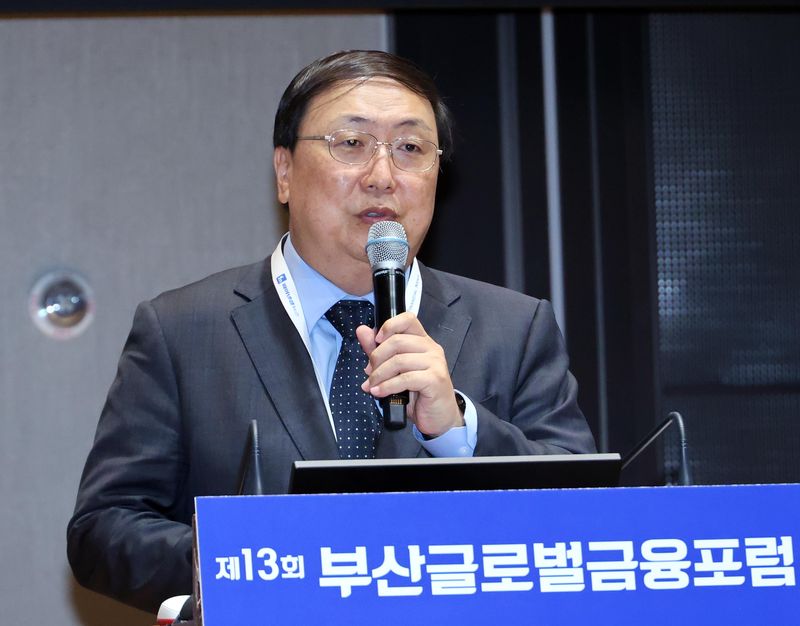
[Financial News] Hong Tae-ho, a professor in the Department of Business Administration at Pusan National University, proposed converting Dongbaekjeon, Busan’s local currency, into a won-backed stablecoin. He cited the need to globalize the financial and economic system as the number of overseas tourists increases.
Professor Hong cited Dongbaekjeon’s drawbacks as its being merely a local currency, restrictions on where it can be used, and its limited budget. He also stressed that, amid changes at home and abroad—including an increase in domestic and international tourists visiting Busan and the growing purchasing power of Koreans overseas—it is now necessary to turn Dongbaekjeon into a stablecoin.
According to Professor Hong, converting it into a stablecoin would allow tourists visiting Busan to buy goods without exchanging currency. Foreign workers could receive their wages in Dongbaekjeon, make overseas remittances without paying fees, and easily spend part of their wages in Korea.
He stressed, “By turning it into a stablecoin, Korean companies and domestic tourists will be able to make payments overseas,” adding, “It could be used to pay foreign workers living in Korea, create a new economic system for local currencies, and help stabilize exchange rates by reducing demand for dollars both in Korea and abroad.”
Professor Hong also proposed strategies for advancing digital finance, including intelligent customer segmentation and mass customization, the development of intelligent digital finance platforms, intelligent credit assessment systems, personalized services using chatbots, and AI-powered digital finance towns.
Professor Hong observed, “Global financial institutions are using generative AI and AI agents to expand the scope of AI applications across customer service and financial advice, risk management, and internal operations,” adding, “AX in the financial industry is focused less on adopting AI technology itself than on improving operational efficiency, innovating customer service, fostering collaboration between humans and AI, and generating tangible business results.”
He also noted, “In the Chinese market, digital wallets (mobile payments) account for 85% of payment methods overall.” He added, “Beijing Bank, together with Huawei, is the first among city banks to deploy a DeepSeek AI model on its own servers, where it is being used for data analysis, customer consultations, workflow automation, and code development,” stressing that Busan, too, needs to advance its digital finance.
[email protected] Baek Chang-hun Reporter