“Thank You, Doctor X” ... Amid May 18 Controversy: “It’s Not a Matter of Ideology or Political Factions”
- Input
- 2026-10-27 11:32:26
- Updated
- 2026-10-27 11:32:26

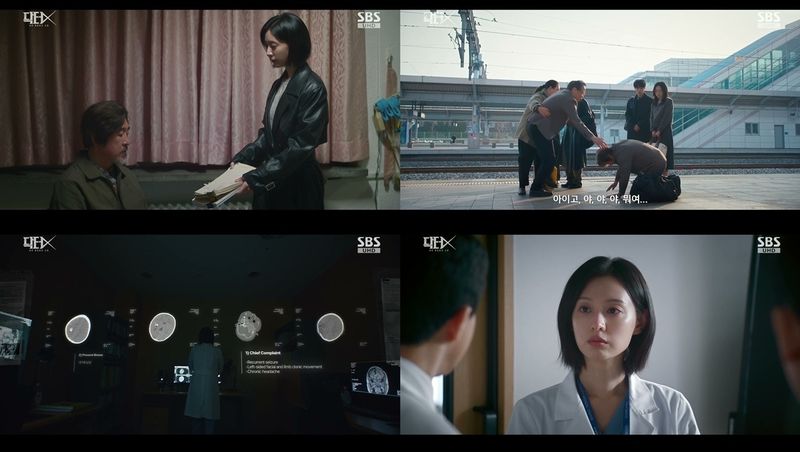
[Financial News] SBS’s Friday-Saturday drama Doctor X was swept up in a wave of backlash after directly addressing the May 18 Democratization Movement. While some criticized the show for forcing a political message into a medical drama, praise has poured in for bringing attention to the wounds suffered by victims of state violence.
The controversial sixth episode told the story of Oh Sang-beom (played by Ha Seong-gwang), who lost his older brother to gunfire by martial-law troops in Gwangju in May 1980 and has lived with a bullet lodged in his own head. After the episode aired, a petition calling for the drama to be taken off the air appeared on the National Assembly Public Petition with Citizen Consent System, and a complaint was filed asking for an investigation into whether a fictional bus stop sign installed for filming violated the Road Act.
Meanwhile, Lee Ok-gyu, a chief producer (CP) at production company Studio S, drew attention by posting the words “No fear” alongside a poster for the drama on social media.
Criticism: “Did you turn on the TV to be taught political beliefs?”
Looking at reactions online, Moon Ho-cheol, senior vice chair of the People Power Party’s Media Special Committee, strongly criticized the drama. On social media, Moon wrote, “I turned off the TV while watching episode 6 of Doctor X,” adding, “When May 18 suddenly appeared, followed by former President Ji Du-seok, a character reminiscent of former President Chun Doo-hwan, it was easy to predict what would happen next.”
Moon said, “How long are viewers and moviegoers supposed to put up with dramas and films turning into tools of factional politics? If it’s a medical drama, make it like one.” Moon added, “We should avoid the crude binary that divides doctors into ‘the powerful and the villains’ and patients into ‘the weak and the good.’ Viewers turned on the TV to watch a medical drama; they didn’t sit in front of it to be taught the production team’s political beliefs. Don’t pour cold water on a drama people were enjoying and make them turn off the TV,” Moon said.
One film director said the problem was not the fact that the drama dealt with May 18, but the sudden shift in tone and the way the story unfolded. On social media, the director wrote, “I think Doctor X became popular from the outset because it was fun and satisfying to watch without having to think too deeply,” adding, “I also thought the drama was entertaining.”
The director continued, “I have no objection to films or dramas dealing with the May 18 Democratization Movement, former President Yoon Suk Yeol’s martial law, or the Yushin system under the Park Chung Hee regime. Whether they distort history is something to judge afterward.” Still, the director said, “May 18 suddenly became the subject, the drama’s tone grew heavier, and the pacing began to drag.”
The director added, “Younger generations who did not experience May 18 firsthand may not take it as seriously as older generations. It was disconcerting to see a show that had been lighthearted and satisfying suddenly become as heavy as a historical drama, and I’m confused about what the writer and director intended. I’m not sure whether I should keep watching the next episodes.”
“A meaningful attempt to remind the public of the contemporary significance of May 18”
Others also praised the drama as a meaningful attempt to remind the public of the contemporary significance of May 18.
One Facebook user interpreted the episode this way: “When the ratings came close to 20%, it seemed clear what the writer wanted to say through episode 6: a message to those who deny or disparage May 18—‘No BS.’” The user also understood CP Lee Ok-gyu’s “No fear” in the same context.
The user said, “The production team probably wanted to tell people who are uncomfortable with the drama addressing May 18, ‘We’re actually more uncomfortable with you.’ If the Japanese original was a hit drama representing Japan, the Korean version has done something meaningful by bringing what happened in Gwangju in May 1980 to the world through Netflix.”
The user also shared personal memories, saying, “I wasn’t in Gwangju that day either, but someone very close to me was wounded there and eventually died young. I was once held in solitary confinement for four months after being charged with spreading false rumors for shouting, ‘Punish Chun Doo-hwan, the mastermind behind the Gwangju Massacre.’” The user added, “So many emotions were colliding that I couldn’t watch the broadcast all the way through in one sitting. But after watching to the final scene, I wanted to leave one message: ‘Thank you, Doctor X.’”
Another Facebook user said the controversy prompted them to seek out episode 6 of Doctor X. “I used to enjoy medical dramas, but the plots were similar and the endings predictable, with only the subject matter changing, so I’ve barely watched them for the past few years,” the user said. “This episode portrayed the pain of victims of the May 18 Democratization Movement in a moving way without resorting to clichés.”
The user said, “It’s a new attempt that breaks free from the conventional medical-drama mold and expands the genre’s horizons. It’s hard to understand why a story based on historically and legally established facts has caused such controversy. The regressive behavior of our society surrounding this is disappointing.”
“May 18 is not a matter of ideology or political factions”
Some reactions focused on the drama’s use of helicopter gunfire as a central part of the story. One Facebook user said, “Unlike earlier works that covered the May 18 Democratization Movement as a whole, Doctor X is distinctive in making a direct victim of helicopter gunfire by martial-law troops the protagonist. It is significant that a medical drama near the top of the ratings has dealt with this event head-on.”
The user noted, “It took 38 years for the martial-law troops’ helicopter gunfire to be officially acknowledged. The fact that shots were fired has been confirmed, but questions remain: who ordered them, what chain of command led to their execution, and who suffered what harm as a result? These details must be established and those responsible held accountable.” The user emphasized, “May 18 is still unfolding.”
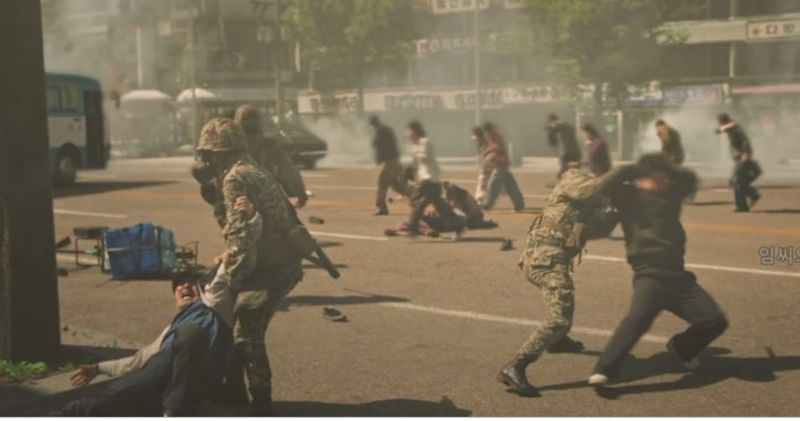
Park Hong-keun, Minister of Planning and Budget, also publicly voiced support for the Doctor X production team. Park likewise said, “It is highly significant that Doctor X made the issue of helicopter gunfire by martial-law troops—which creative media have rarely addressed—one of its central subjects.”
Park said, “May 18 cannot be a matter of ideology or political factions. It is a tragedy that occupies a page in our history and a great record of democracy.” Park criticized calls to stop the airing of a work dealing with clear historical facts as “a narrow-minded, politically motivated stance.” Park cited claims of North Korean involvement, of civilians shooting at one another, and of shots being fired first at martial-law troops as prominent examples of distortion, and argued, “If people are prevented from addressing historical facts, distortion and fabrication can fill the void. In the end, the truth will be overturned, and those who seek to destroy democracy and dream of dictatorship will instead be emboldened.”
Park added, “The Republic of Korea has built prosperity on the sacrifices of Gwangju’s citizens. It is a responsibility we must all share to properly remember and record the truth about May 18 and pass it on to the next generation. I thank the drama’s production team for reminding us of that responsibility.”
Meanwhile, episode 6 of Doctor X posted a nationwide household rating of 19.5% and a peak rating of 21.3%, setting a new record for the drama.
[email protected] Shin Jin-a Reporter