Samsung Bioepis Confirms Similarity in Clinical Trial of Keytruda Biosimilar
- Input
- 2026-10-27 17:49:04
- Updated
- 2026-10-27 17:49:04
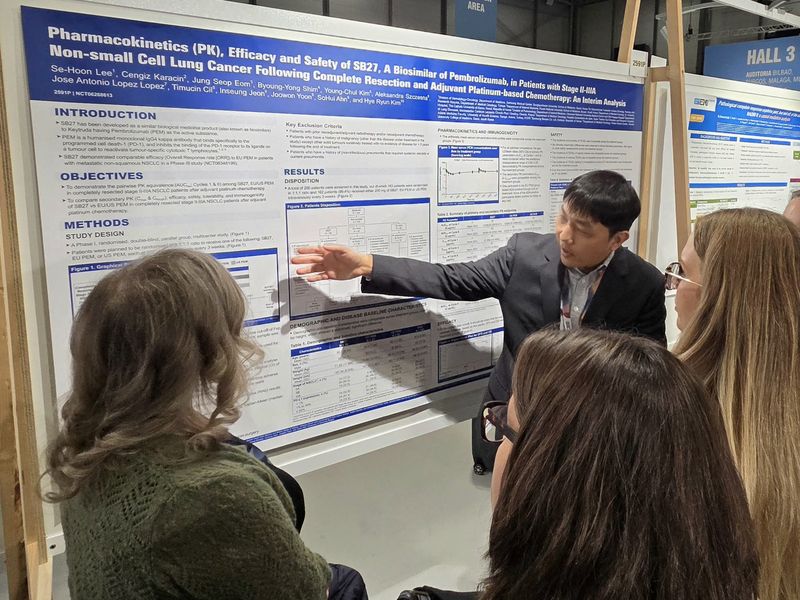
Samsung Bioepis said on the 27th that it had presented the Phase 1 results for its Keytruda biosimilar candidate SB27 (ingredient: pembrolizumab) at the 2026 European Society for Medical Oncology (ESMO) congress, held in Madrid, Spain, on the 26th.
The trial was conducted starting in 2024 in four countries around the world, including South Korea, with 163 patients with non-small cell lung cancer. Researchers divided the patients into a group receiving SB27 and a group receiving the original Keytruda, which is approved in the United States and Europe, and compared pharmacokinetics, efficacy and safety.
The primary endpoint was the area under the blood concentration-time curve (AUC) after dosing at a prespecified time point. AUC indicates how much a drug is present in the blood over a given period and is used to assess pharmacokinetic equivalence between a biosimilar and the reference drug. The analysis showed that SB27 demonstrated pharmacokinetic equivalence to the reference drug, with similar results in efficacy and safety as well.
Keytruda is an immuno-oncology drug developed by the U.S. multinational pharmaceutical company Merck Sharp & Dohme (MSD). It binds to the immune checkpoint receptor PD-1, preventing cancer cells from evading attack by the immune system and helping the body’s immune cells attack cancer cells. It has broad indications across a wide range of cancers, and its global sales last year totaled about $31.7 billion (about 46 trillion won).
Developing biosimilars for high-revenue cancer drugs such as Keytruda has drawn attention because it could broaden the existing biosimilar market’s growth beyond treatments for autoimmune diseases to include cancer drugs. However, these results were established in a Phase 1 trial, and actual market entry will require further development and regulatory approval.
Donghoon Shin, head of the Clinical Medicine Division at Samsung Bioepis and a vice president, said, “In the Phase 1 trial of SB27, we confirmed pharmacokinetic equivalence to the reference drug and similarity in efficacy and safety.” He added, “We will continue to develop cancer biosimilars that patients and healthcare professionals can trust, based on high analytical and clinical standards.”
[email protected] Sang-hee Jeong Reporter