After 12 weeks of red ginseng, deep sleep increased by 12.5 minutes ... Study of 900 people
- Input
- 2026-10-27 11:30:00
- Updated
- 2026-10-27 11:30:00
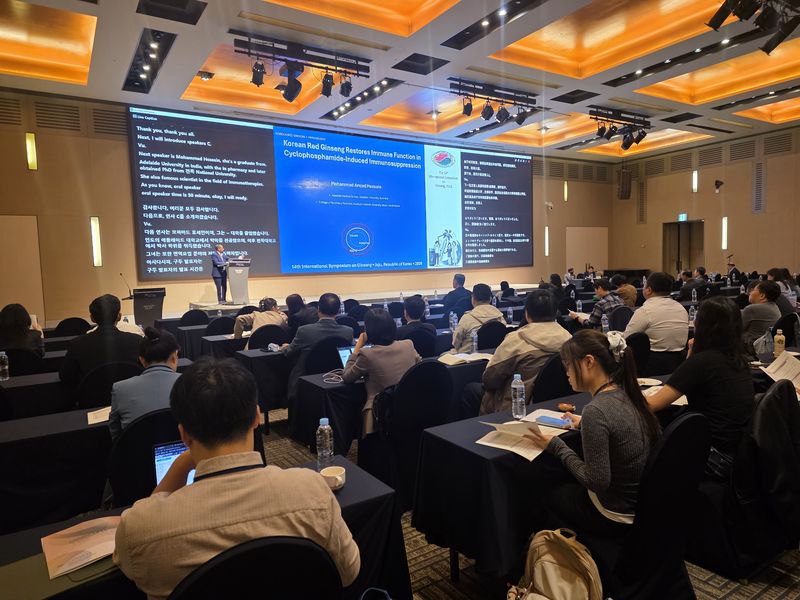
Middle-aged and older adults who regularly took red ginseng for 12 weeks showed reduced oxidative stress, which accelerates aging, and spent more time in deep sleep. The findings come from a study of 900 people aged 40–75 experiencing chronic fatigue and weakened immune function.
A team led by Professor Hong-Sheng Tan of the School of Medicine at Shanghai Jiao Tong University in China presented the findings at the 14th International Ginseng Symposium, hosted by the Korean Society of Ginseng and held at Maison Glad Jeju from the 26th to the 29th.
The research team divided 900 adults in a pre-disease stage—who had no clearly defined illness but experienced chronic fatigue and weakened immune function—into two groups. For 12 weeks, they took either 3 g of red ginseng capsules a day or a placebo. The study was double-blind, meaning neither the participants nor the researchers knew who was receiving the placebo. The researchers said it was the largest study of its kind on the efficacy of red ginseng.
Oxidative stress markers decline ... Effects pronounced among people aged 40–60
Oxidative stress damages cells in the body and accelerates aging; levels of MDA, a marker of it, fell significantly in the red ginseng group. In contrast, levels rose in the placebo group. The antioxidant effect was more pronounced among people aged 40–60, and a correlation was found between higher antioxidant capacity in the body and a greater drop in oxidative stress levels.
Quality of life also improved. An analysis of the eight domains of the standard quality-of-life scale (SF-36) found an average improvement of 10.68 points in the red ginseng group, compared with 7.13 points in the placebo group. The difference was statistically significant in the role-physical and vitality domains in particular.
Deep sleep up 11.5%, total sleep up 8.8%
An objective analysis of sleep data from 512 people using wearable devices found that the red ginseng group slept 12.5 minutes (11.5%) longer in deep sleep and 35.9 minutes (8.8%) longer overall than the placebo group. Sleep variability also decreased, and participants slept more steadily without interruptions. These improvements in sleep also led to better mental health and vitality.
Professor Tan said, "We confirmed that red ginseng can alleviate oxidative stress and improve sleep and quality of life in multiple ways," adding, "It could be a tailored option for middle-aged and older adults at risk of declining health."
Kim Jong-hoon, president of the Korean Society of Ginseng, said, "The mechanisms of action of ingredients derived from red ginseng are being clarified in detail—not only in relation to alleviating oxidative stress and improving sleep quality, but also in managing sarcopenia and chronic metabolic diseases."
[email protected] Medical correspondent Jung Myung-jin Reporter