“EU to Expand Emergency Import Restrictions on Chinese-Made Products Early Next Year” ... Trade War Fears
- Input
- 2026-10-27 11:08:42
- Updated
- 2026-10-27 11:08:42
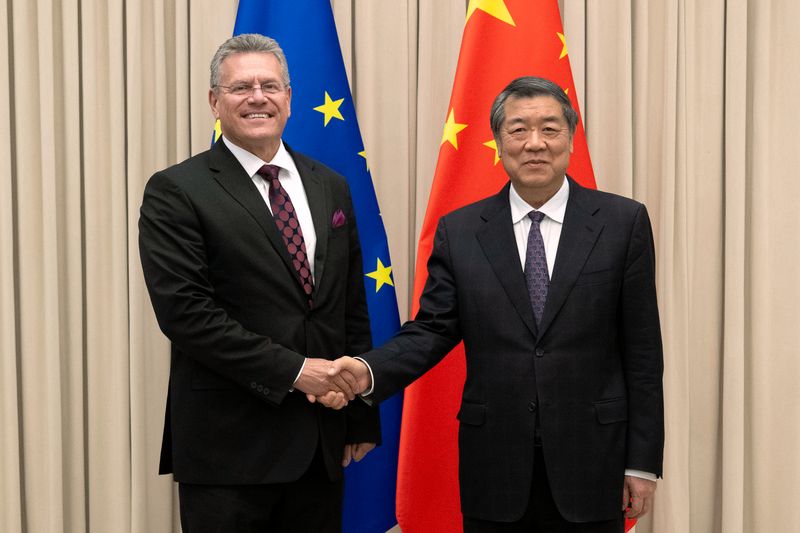
[Financial News] The European Union (EU), which has decided to cap imports of Chinese-made hybrid vehicles, plans to extend import restrictions to other Chinese-made products early next year.
The EU is discussing plans to reduce imports of Chinese chemicals, furniture, machinery and other products, it emerged on the 26th (local time). Foreign media reported that the measures, which would take the form of safeguard measures, could be announced around the first quarter of next year.
Under safeguard measures, the EU can restrict imports of products in a particular sector if imports in that sector surge. Measures may include import quotas or tariffs on imports exceeding a set volume.
The EU is seeking to expand import restrictions beyond Chinese-made hybrid vehicles to correct its serious trade imbalance with China. Last year, the EU’s trade deficit with China reached 360 billion euros (about 533 trillion won).
A European Commission spokesperson declined to comment on the possibility of further import restrictions by Europe. However, European Commission President Ursula von der Leyen told reporters earlier this month, “Our industry has been calling for action, and we have listened. We will respond, including with additional safeguard measures.” The measures are also expected to apply to countries outside the European Economic Area (EEA).
The EU recently agreed with China to limit imports of Chinese-made hybrid vehicles to 350,000 a year to protect the bloc’s automotive industry. If the EU introduces additional trade barriers beyond hybrid vehicles, trade tensions with China are expected to rise again.
In a statement earlier this month, China’s Ministry of Commerce warned, “(The EU) should not harbor the illusion that it can benefit from exerting pressure, and should not underestimate China’s ‘resolve and ability to protect its national interests.’”
Under agreements reached so far, China is set to lower tariffs on some auto parts, olive oil and ice cream. The EU is asking for improved market access in China and streamlined export procedures for critical minerals and permanent magnets.
Meanwhile, sales of Chinese cars, which are rapidly gaining market share in Europe, have surpassed those of Japanese cars for the first time.
According to data from market research firm Dataforce on the 26th, Chinese cars accounted for 12.7% of the European market in the third quarter, ahead of Japanese cars at 11.9%. From July to September, new registrations of Chinese cars in Europe also rose to about twice the level of the same period a year earlier, driven by strong hybrid vehicle sales.
The EU is considering new rules that would favor cars produced locally in Europe when subsidies and other incentives are granted, in an effort to curb the growing market share of Chinese automakers.
[email protected] Lee Seok-woo, International Affairs Correspondent Reporter