Will the ruling party take a step back on virtual asset taxation? ... “We’ll convey the party’s position to the government today”
- Input
- 2026-10-27 09:50:14
- Updated
- 2026-10-27 09:50:14
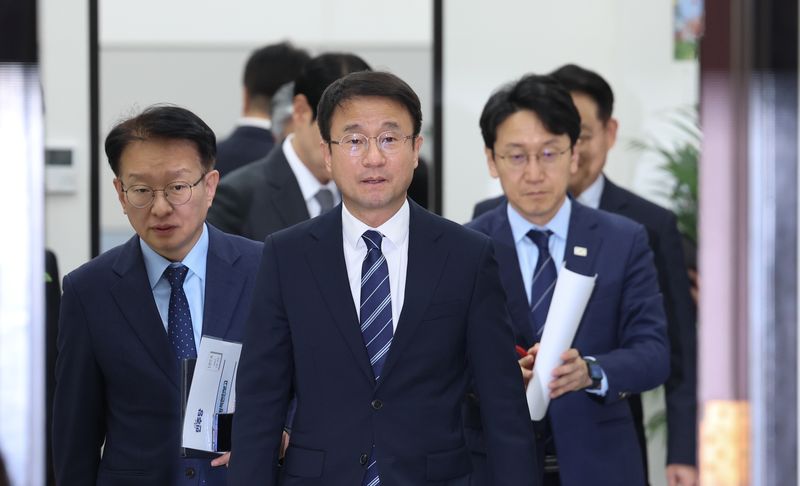
Han Byung-do, the Democratic Party’s floor leader, said, “The party has listened carefully to public opinion on (the taxation of virtual assets), and we plan to hold a parliamentary caucus meeting today (the 27th), gather final views from within the party, and convey the results to the government. We will consider various views, including deferring the implementation date, and discuss the necessary supplementary measures.”
Han said, “With taxation of income from virtual assets set to take effect next January, concerns have been raised about whether sufficient information on overseas transactions needed for taxation can be obtained and whether the burden will fall solely on users of domestic exchanges. We need to thoroughly examine whether the system can properly reflect actual transactions and whether it could impose unreasonable burdens. We will carefully consider tax fairness and predictability, as well as the practical conditions for implementation,” he stressed.
He also said, “To establish the institutional foundations for fair taxation, we will clarify the legal status of virtual assets and step up efforts to swiftly pass the General Act on Digital Assets, which will form the backbone of industry regulation,” adding, “We will responsibly develop a solution that benefits the public as much as possible.”
Kwon Chil-seung, chair of the party’s policy committee, said, “With a little over two months until virtual asset taxation is due to take effect, there are diverse views on implementation and deferral. Opinions are divided, and with only a little over 60 days left before taxation takes effect, we will resolve policy uncertainty at an early stage.”
Kwon said, “We will do our utmost to establish a reasonable system that balances tax justice with the revitalization of the virtual asset market,” adding, “We will also accelerate the enactment of the General Act on Digital Assets and the creation of an institutional framework to enhance the global competitiveness of digital assets.”
As Han and Kwon explained, views on virtual asset taxation remain divided within the Democratic Party of Korea.
Those within the party who advocate a further deferral of virtual asset taxation are focused on the potential side effects of pushing ahead with taxation before the necessary basic systems, including the General Act on Digital Assets, are in place. In addition, the Blue House has also said it will consider deferring virtual asset taxation, and for now the momentum is toward another deferral.
By contrast, those who support proceeding with virtual asset taxation as scheduled emphasize tax justice, in keeping with the ability-to-pay principle that taxes should be levied where actual income is generated. They also argue that the three previous deferrals provided sufficient time for a soft landing for virtual asset taxation.
[email protected] Kim Hyeong-gu Reporter