Seoul steps up preparations to launch the “Youth AI Growth Pass” next year; winning city council backing is key
- Input
- 2026-10-27 10:30:00
- Updated
- 2026-10-27 10:30:00
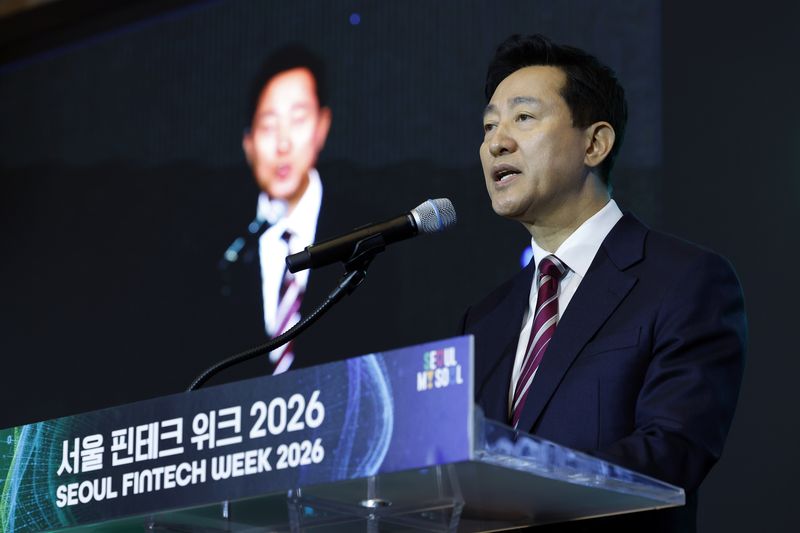
[Financial News] The Seoul Metropolitan Government is accelerating preparations to launch the “Youth AI Growth Pass” next year, after the project’s entire budget was cut during this year’s supplementary budget deliberations. Initially focused on providing passes for paid AI services, the project has been revised to link access with education, hands-on training, and employment and startup support. On the 27th, the city held a briefing session and open discussion on its “Youth AI Growth Pass Pilot Project” at Seoul City Hall in Jung District, Seoul. Attended by about 100 people, including Mayor Oh Se-hoon, university students, job seekers, AI experts, and representatives of businesses and universities, the event unveiled a detailed implementation plan.
The project fleshes out the “Youth AI Ladder” policy announced in July. Its key feature is providing one year of access to high-performance AI services for 500,000 young people living in Seoul. The city will go beyond simply subsidizing subscription fees, offering tailored assignments and educational programs to help young people use AI in their studies, job searches, and startups.
Participants will choose assignments based on their interests and abilities and gain experience solving them with AI. The assignments will cover a range of tasks, from organizing study materials and improving résumés to analyzing workplace data, automating processes, and prototyping products and services. The city also plans to work with universities, businesses, and public institutions to develop assignments that address real-world needs.
In particular, an “AI feedback agent” will suggest ways to improve participants’ work and recommend relevant training as they complete assignments. The program will offer courses from beginner to advanced levels based on participants’ AI skills, as well as opportunities to gain practical experience through expert mentoring, business collaboration projects, and hackathons.
To develop this implementation plan, the Seoul Metropolitan Government surveyed 14,215 people, including young people, in two rounds between August and October. Among respondents aged 19 to 39, 85.1% said they intended to participate in the project. Of the young respondents who did not subscribe to paid AI services, 75.4% cited the cost as a reason.
To narrow the gap in AI use caused by financial circumstances, the city plans to prioritize access passes for young people requiring social support, including recipients of basic livelihood benefits, people in the near-poor bracket, young people preparing for independent living, and young people caring for family members. It will also provide them with tailored training in practical AI skills, from setting up an account to preparing job application documents.
Mayor Oh said, “We will expand access to AI and learning opportunities so that young people can use AI to take on new possibilities,” adding, “Through the Youth AI Growth Pass, we will help them turn their ideas into tangible results and support them so that the experience can lead to employment, startups, independence, and growth.”
Earlier, at a parliamentary audit on the 15th, Mayor Oh also said he would work to move forward next year with the youth AI support project, whose pilot program did not go ahead this year.
However, the city needs to win the Seoul Metropolitan Council’s support to move forward with the project. In September, the council cut the entire 5.625 billion won budget for the project during supplementary budget deliberations, citing insufficient preparation. The city has revised its project plan, but must obtain the council’s approval to secure funding in next year’s budget.
[email protected] Seong Chorong Reporter