Regional currency spending up 14.7%, but Jeju card sales down 3.7%
- Input
- 2026-10-27 09:17:43
- Updated
- 2026-10-27 09:17:43
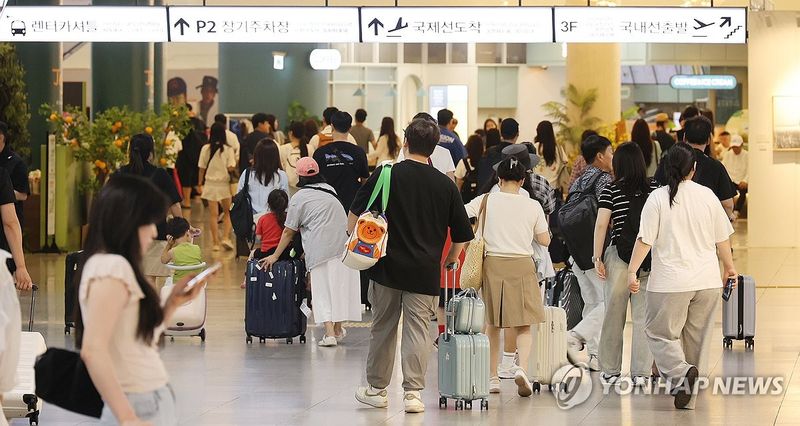
【Financial News, Jeju = Jung Yong-bok】 Jeju’s third-quarter card sales fell 3.7% from the same period a year earlier, marking a decline for the second consecutive year. Spending on the local currency Tamna Jeon increased 14.7%, but tourism and local consumption remain sluggish, with domestic tourist numbers in October down 12.7%.
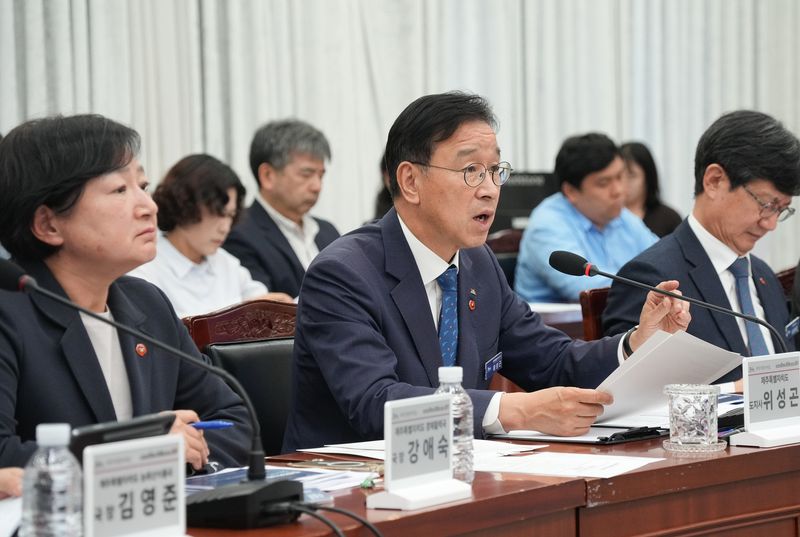
According to Jeju Special Self-Governing Province on the 27th, the Jeju Research Institute analyzed and reported on local consumption trends and Tamna Jeon spending at the October meeting of the Livelihood Economy Situation Room, held the previous day at Tamna Hall in the provincial government office and chaired by Jeju Governor Wi Seong-gon.
The analysis found that Jeju’s third-quarter card sales fell 3.7% from the same period last year. They had also dropped 4.6% year on year in the third quarter last year, marking two consecutive years of decline. Although the rate of decline has narrowed, it is difficult to conclude that local consumption has recovered.
By contrast, general spending on Tamna Jeon rose 14.7% in the third quarter of this year from the same period a year earlier. Jeju Province is supporting the use of the local currency by increasing this year’s operating budget for Tamna Jeon to 73.6 billion won and temporarily raising the cashback limit from 700,000 won to 1 million won.
The decline in domestic demand is also pronounced in tourism, a major pillar of the local economy. According to figures compiled by Jeju Province and the Jeju Tourism Association, 796,943 domestic tourists visited Jeju from the 1st to the 25th of this month, down 12.7% from the same period last year. Foreign tourist numbers over the same period rose 10.6% to 192,790.
The cumulative number of domestic tourists from January 1 through October 25 this year also fell 0.5% from the same period last year, to 9,295,780. The number of foreign tourists rose 14.4% to 2,188,488. Domestic tourist numbers had been rising through May, but continued to decline thereafter, leaving the cumulative total below last year’s level as well.
The difference was evident not only in tourist numbers but also in spending. According to the Jeju Tourism Big Data Platform, domestic tourists’ card spending in Jeju from January through September this year totaled 1.5311 trillion won, down 4.8% from the same period a year earlier. Foreign tourists’ card spending rose 38.7% to 520.1 billion won.
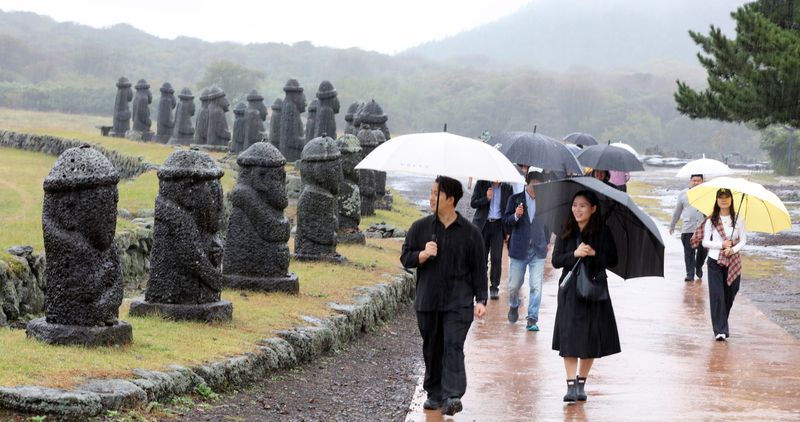
Although spending by foreign tourists is increasing, the decline in spending by domestic tourists, whose numbers are larger, is weighing on local businesses. This is why it is necessary to examine actual sales at local businesses—including restaurants, lodging establishments and traditional markets—in addition to visitor-arrival figures.
Small businesses are also facing difficult financial conditions. An analysis by the Jeju Credit Guarantee Foundation of 13,039 small businesses using its guarantees found that 5,238 businesses (40.2%) were classified as being at risk of business difficulties and 683 (5.2%) as being at risk of insolvency. In total, signs of deteriorating business conditions or insolvency risk were identified at 5,921 businesses, or 45.4% of those analyzed.
Based on the findings, Jeju Province plans to identify at-risk businesses early and connect them with business counseling, financial assistance and support to get back on their feet.
Delinquency rates at financial institutions are also higher than the national average. According to the Bank of Korea’s Jeju branch, the loan delinquency rate at deposit-taking banks in Jeju stood at 1.13% at the end of July, 0.5 percentage points above the national average of 0.63%. The figure shows that local businesses and households continue to face a burden in repaying their debts.
Despite improvements in some indicators, conditions on construction sites remain sluggish. Through August this year, construction orders in Jeju totaled 1,026.5 billion won, up 238% from the same period a year earlier. However, the 549.9-billion-won Dongjeju Combined-Cycle Power Plant project drove the increase. Over the same period, the area of buildings for which construction began fell 2.7%, and unsold homes totaled 3,268 units at the end of August. Of these, 2,336 were homes still unsold after construction had been completed.
Prices received by producers and production costs were identified as key concerns in agriculture, livestock, fisheries and related industries. In the third week of October, the trading price of open-field mandarins was 9,775 won per 3 kilograms, down 3.5% from the same period a year earlier. Cumulative hairtail auction volume through the end of September also fell 16% year on year to 14,311 tonnes. Jeju Province is working to manage the distribution of mandarins, balance supply and demand for winter vegetables, and provide support for tax-exempt fuel for fishing vessels.
To address the tourism off-season, Jeju Province plans to promote tourism, cultural and sporting events, along with local festivals, under a joint campaign called “The Jeju Four Seasons” from the end of this year through next March.
The province aims to encourage tourists to visit and stay by linking events such as the “Jejuya Festa” in late October, the “Romantic Jeju Antre Festival” in November, and “Beach Christmas” at Hamdeok and Pyoseon beaches in December. It is also considering increasing support for participants in domestic conferences and exhibitions from 10,000 won to 20,000 won per person.
Jeju City and Seogwipo City plan to connect visitors’ spending with local businesses by operating cultural events, nighttime tourism and local-product sales programs in their old downtown areas and neighborhood shopping districts.
In the construction sector, the province is moving to bring forward public works contracts and increase the share awarded to local companies. By the end of September, Jeju Province had put 25.9 billion won, or 57.2%, of the 45.2 billion won in small-scale public works out to tender. It plans to put the remaining projects out to tender sooner and expand the practice of dividing large projects into smaller contracts to increase opportunities for local construction companies to participate.
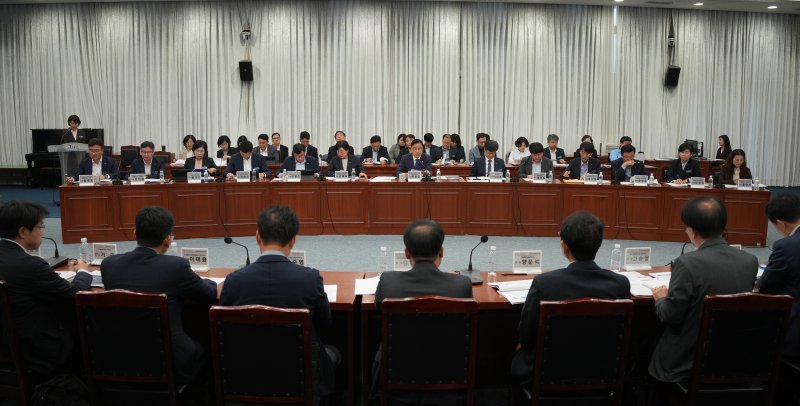
Strategies to revitalize the livelihood economy next year were also discussed. Jeju Province set “easing the burden on residents” and “boosting small businesses and companies” as its two main strategies, and identified easing the cost of living and household burdens, expanding local consumption and improving employment as key priorities.
“Some economic indicators have improved recently, but residents and small business owners still face considerable difficulties on the ground,” Governor Wi Seong-gon said. He went on to call for a review of how existing measures have changed people’s daily lives and local commercial districts, and for next year’s priorities to be set and developed into actionable measures.
The meeting was attended by officials from relevant institutions and business organizations, including Lee Chang-heum, Jeju Province’s deputy governor for climate and economy; the Bank of Korea’s Jeju branch; the Jeju Chamber of Commerce and Industry; the Jeju Research Institute; the Jeju Tourism Organization; the Jeju Tourism Association; and the Jeju Credit Guarantee Foundation.
Jeju Province plans to incorporate measures to address the tourism off-season and its 2027 strategy to revitalize the livelihood economy into each department’s action plans. Next year’s detailed projects and budget will be finalized after review of the budget proposal by the Jeju Special Self-Governing Provincial Council, among other steps.
[email protected] Jung Yong-bok Reporter