“15% melted away on the spot”: Korean retail investors who returned to U.S. stocks hit hard by a “1,350-won exchange rate”
- Input
- 2026-10-27 09:06:04
- Updated
- 2026-10-27 09:06:04
[Financial News] As the won continues to strengthen, individual investors who left the domestic stock market for the U.S. market are facing a double whammy of falling share prices and foreign-exchange losses. Losses are expected to be even greater for Korean retail investors in U.S. stocks who invested in U.S. 3x leveraged semiconductor ETFs instead of domestic semiconductor stocks.
Retail investors steadily increased their U.S. stock holdings from June ... exchange rate at the time: 1,550 won per dollar
On the 27th, according to SEIBro, the securities information portal of the Korea Securities Depository, domestic investors’ net purchases of U.S. stocks totaled $4.90582 billion (about 6.5 trillion won) from the start of this month through the 23rd. This was the largest monthly total since January, when net purchases reached $5.00299 billion (about 6.62 trillion won). With trading days still remaining this month, the total could set a new annual high.
Having appeared to be returning to the domestic market on the back of the KOSPI’s rise in the first half of this year, Korean retail investors in U.S. stocks shifted back to net buying in June and have steadily increased their U.S. stock holdings since. The problem is when they began increasing their purchases of U.S. stocks.
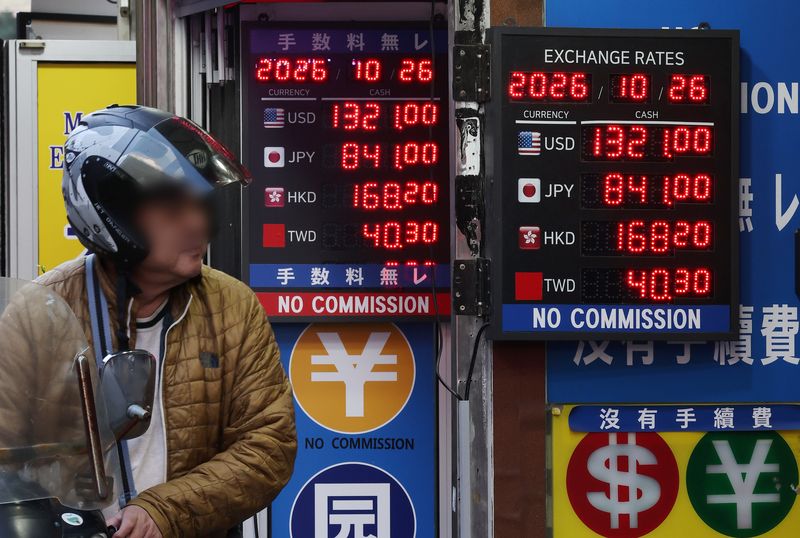
The exchange rate, which topped 1,550 won per dollar last June, fell to the 1,440-won range at the end of July. It then declined to the 1,360-won range in August and the 1,350-won range in September, before falling to the 1,320-won range this month and reaching its lowest level of the year.
The sharp decline in the won-dollar exchange rate has also affected domestic investors in U.S. stocks. Even if U.S. share prices remain unchanged, foreign-exchange losses occur because the value of assets converted from dollars into won falls.
According to News1, for investors who bought U.S. stocks in June when the exchange rate was 1,550 won per dollar, the loss in won terms due to exchange-rate movements is currently about 14.8%. If they had converted 10 million won into dollars and invested it at the time, its value in won would have fallen to about 8.52 million won, even if share prices had not changed.
SOXL plunges 43.5% this month amid weakness in global semiconductor stocks
Losses are expected to have grown further as U.S. semiconductor leveraged ETFs, which have drawn heavy investment from Korean retail investors in U.S. stocks, also fell. So far this month, domestic investors have made the largest net purchases of Direxion Daily Semiconductor Bull 3X Shares (SOXL), which seeks to deliver three times the daily return of the Philadelphia Semiconductor Index (SOX). SOXL has plunged 43.5% this month amid weakness in global semiconductor stocks.
SOXL’s net purchases this month totaled $3.35377 billion (about 4.44 trillion won), or about 68.4% of all net purchases of U.S. stocks, making substantial losses unavoidable. An analysis suggests that investors who bought the ETF during this period may have seen the value of their investment cut in half once foreign-exchange losses from the strengthening won are factored in.
Fourth-quarter exchange-rate forecast lowered to 1,320 won
As the won has strengthened faster than expected, exchange-rate forecasts are also being lowered. Moon Da-un, a researcher at Korea Investment & Securities Co., Ltd., lowered the forecast for the average won-dollar exchange rate in the fourth quarter of this year by 30 won, from 1,350 won to 1,320 won.
“Investors in U.S. stocks now have to consider not only falling share prices but also exchange-rate fluctuations,” a source in the financial investment industry said. “If the won continues to strengthen, foreign-exchange losses could eat into returns even if the U.S. stock market rebounds.”
[email protected] Kim Hee-sun Reporter