Proceeds from a new drug fund the next one... Onconic’s virtuous cycle in biotech
- Input
- 2026-10-27 08:38:37
- Updated
- 2026-10-27 08:38:37
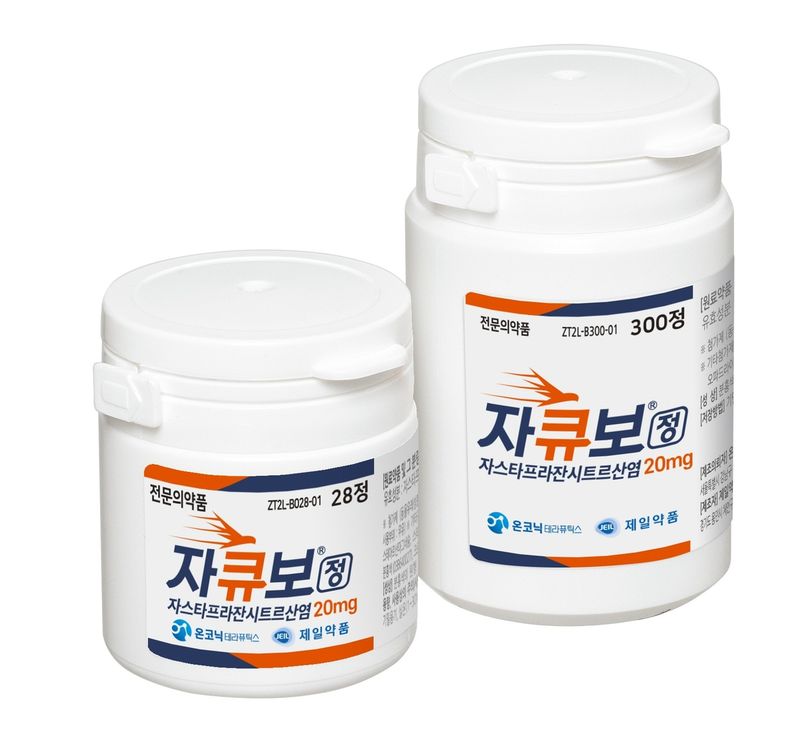
[Financial News] Onconic Therapeutics is accelerating development of follow-on drugs, building on the commercial success of its gastroesophageal reflux disease treatment Zaqbo.
Unlike many established biotech companies that rely on funding for clinical development and licensing deals, Onconic stands out for being able to reinvest revenue from commercialized products in R&D for cancer and obesity treatments.
On the 27th, IBK Securities initiated coverage of Onconic Therapeutics with a “Buy” rating and a target price of 22,500 won. That represents 82.2% upside from the previous day’s closing price of 12,350 won.
IBK Securities analyst Jeong Isu highlighted that expanded prescriptions for Zaqbo and overseas expansion would strengthen the company’s cash-generating capacity, enabling it to advance clinical development of its follow-on pipeline and generate meaningful data.
The analysis said investors should focus less on short-term changes in profit margins and more on the business structure, in which commercialized drugs provide in-house support for the development of follow-on candidates.
Zaqbo, launched by Onconic Therapeutics in October 2024, is the third potassium-competitive acid blocker (P-CAB) in South Korea. In its first full year on the market, last year, it recorded 48.1 billion won in outpatient prescription sales.
The drug is gaining a foothold in the market through a co-promotion arrangement that leverages the manufacturing and sales infrastructure of Jeil Pharmaceutical Co., Ltd. and Dong-A ST. A domestic Phase 3 trial is also underway to secure additional indications.
IBK Securities forecast that, boosted by expanded prescriptions for Zaqbo, Onconic Therapeutics’ revenue this year would rise 101.4% from the previous year to 107.5 billion won. It estimated operating profit would increase 68.0% to 21.2 billion won. In the first half of 2026, the company recorded revenue of 47.4 billion won and operating profit of 7.4 billion won.
Overseas operations are also a factor in the company’s medium- to long-term growth. In 2023, Onconic Therapeutics signed a licensing-out deal with China’s Livzon for the rights to develop and commercialize Zaqbo in Greater China. The deal was worth a total of 160 billion won, including an upfront payment of 20 billion won.
The product is under review for approval in China, and IBK Securities expects approval sometime between the end of this year and the first quarter of next year. It also expects milestone payments of about 6 billion won if approval is granted. In India, the drug received marketing authorization in August, with a launch expected early next year.
The key follow-on pipeline candidate is the cancer drug candidate nesuparib. It works by simultaneously inhibiting PARP, which blocks DNA repair in cancer cells, and tankyrase, which regulates cancer-cell growth signals.
Because existing PARP inhibitors are used mainly in patients with certain genetic mutations and can encounter resistance, the potential to expand the pool of eligible patients is central to the drug’s development.
Interim results from a Phase 1b pancreatic cancer trial presented at this year’s American Society of Clinical Oncology (ASCO) meeting showed an objective response rate of 53.8% and a disease control rate of 92.3% in the group receiving nesuparib in combination with gemcitabine and nab-paclitaxel.
However, given that these are results from a small, early-stage trial, they are difficult to interpret as conclusive evidence of therapeutic efficacy. It will be important to see whether the efficacy and potential for improved survival are confirmed through further patient follow-up and subsequent trials.
Analyst Jeong particularly highlighted the follow-up observations from the pancreatic cancer trial and interim Phase 2 data expected in the first half of next year. The outlook is that nesuparib’s value as a new drug could rise if its initial anticancer activity is sustained in later data and the potential to extend survival is supported.
The obesity drug candidate OCN-501 is another source of optimism. In November, the company plans to present OCN-501’s mechanism of action and preclinical data for the first time at ObesityWeek, a conference focused on obesity.
IBK Securities said expectations for the follow-on pipeline could rise if OCN-501 is shown to have the potential to reduce muscle loss that can occur during weight loss with GLP-1-based obesity treatments. However, as the candidate is still at the preclinical stage, its actual clinical efficacy and safety require further validation.
[email protected] Kang Jung-mo Reporter