Kori Units 3 and 4 could get a restart decision as early as today; NSSC to hold second review
- Input
- 2026-10-27 08:24:50
- Updated
- 2026-10-27 08:24:50
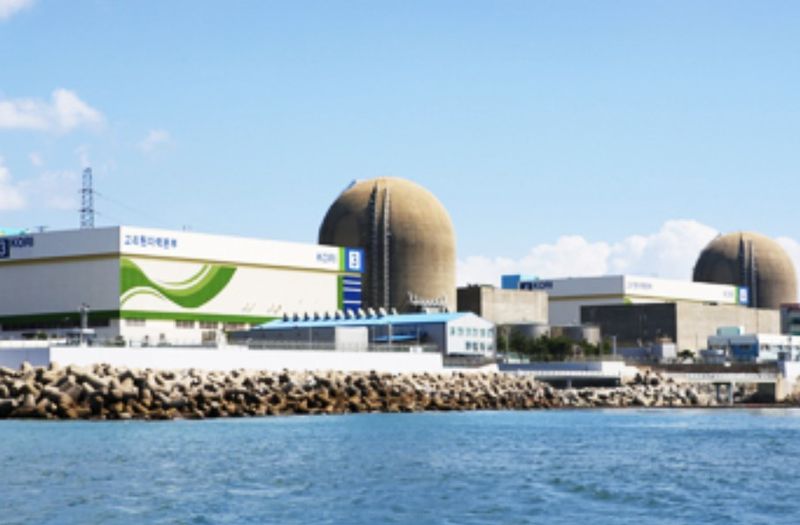
[Financial News] A decision on whether to restart Kori Nuclear Power Plant Units 3 and 4, which have been shut down for more than a year, could come as early as the 27th. The passage of the key hurdle—the accident management plan—in the middle of this month has strengthened the likelihood of approval. However, major agenda items are typically discussed around three times, prompting speculation that the decision could be pushed to the next meeting.
The Nuclear Safety and Security Commission (NSSC) will meet on the 27th to conduct its second review of the proposed continued-operation permits for Units 3 and 4 at Kori, in Gijang County, Busan. They are the second pair of reactors to be reviewed among the 10 for which Korea Hydro & Nuclear Power has applied for continued operation. Unit 3 reached the end of its design life on September 28, 2024, and Unit 4 on August 6 last year, and both were shut down. They have been unable to generate power for 2 years and 1 month and 1 year and 2 months, respectively.
The NSSC previously approved the accident management plan for Kori Units 3 and 4 on the 15th, after three rounds of discussion. The plan is a document setting out management equipment, response strategies and training plans for dealing with design-basis accidents, multiple failures, external hazards that exceed the design basis, severe accidents and other scenarios. It serves as a comprehensive manual for responding to nuclear power plant accidents. The proposed continued-operation permits were also submitted for the first time that day, but because they came up near the end of the meeting, the commissioners managed only one round of questions each.
The nuclear industry is cautiously predicting that the permits could be approved at this meeting. Although the accident management plan and the continued-operation permits are separate agenda items, they share many elements, including responses to severe accidents, leading to the assessment that a substantial portion of the key issues has already been resolved.
The voting procedure is another factor. The NSSC, a nine-member consensus-based body, reaches decisions by consensus in most cases. However, an item can be put to a vote if at least two-thirds of the members present agree, and it passes if at least five members—a majority of the full membership—vote in favor. Eight members will take part in this meeting, with Lee Kang-geun absent. Park Jong-un and Jin Jae-yong, members recommended by the Democratic Party of Korea (DPK), have raised issues with the review and voiced opposition. Even if both oppose the permits, a vote can still be held and the measure can still pass. Park, who has drawn controversy over remarks at recent meetings, has reportedly notified the commission that he will attend this meeting online.
If continued operation is approved, Kori Unit 3 could operate until September 2034 and Unit 4 until August 2035. Since preparations for restarting the reactors take several months, their actual operating periods would be about seven years for Unit 3 and about eight years for Unit 4. Under the current system, the shutdown period counts toward the operating permit, meaning that even with a 10-year extension, the time they can actually be used is reduced by the same amount.
The lengthy continued-operation reviews also came under scrutiny at the National Assembly’s government audit the previous day. At a comprehensive audit of the Climate, Energy, Environment and Labor Committee on the 26th, People Power Party lawmaker Park Su-min pointed out that reviews can take nearly four years at most and that four of the nine reactors under review are shut down. Minister of Climate, Energy and Environment Kim Seong-hwan replied that the reviews fall under the NSSC’s jurisdiction, but that he would work to ensure they proceed swiftly.
Environmental groups, meanwhile, continue to criticize the review, saying it was conducted inadequately and failed to ensure safety. Controversy is expected to continue even if the permits are approved.
[email protected] Lee You-beom Reporter