Japan Academy and Korea’s National Academy of Sciences: The Crucial Difference Behind the Nobel Prize Gap [Opinion]
- Input
- 2026-10-27 07:00:00
- Updated
- 2026-10-27 07:00:00
Every October, when the season for Nobel Prize announcements arrives, Korean society tends to look toward the Japanese archipelago with a mixture of envy and impatience. Behind Japan’s strength—it has produced 28 Nobel laureates in the natural sciences alone—is the academic pillar known as the Japan Academy (Nihon Gakushiin), which, alongside its full-throated support for basic research, cherishes eminent scholars who have devoted their lives to academia.
But what about our own reality? Rather than becoming a towering force that drives a virtuous cycle in the academic ecosystem, the National Academy of Sciences of the Republic of Korea, regarded as the country’s leading academic institution, is a regular fixture at the annual parliamentary audit and often finds itself at the center of controversy over privilege and insularity. The difference that determines success or failure in producing Nobel laureates in the basic sciences is not simply the scale of research funding, but the philosophy and social values that guide the operation of academic institutions.
Although the National Academy of Sciences of the Republic of Korea is made up of eminent scholars recognized for their outstanding academic achievements, public opinion remains decidedly cool. Its biggest problems are its closed selection process and the concentration of members from certain universities. Since members are, in practice, elected based on recommendations and assessments by existing members, the academy cannot escape criticism that members are looking after their own. The fact that more than half of its members come from a particular university is a major reason for the decline in diversity and trust across academia.
The system of paying members a fixed lifetime allowance worth several million won each month is also criticized for having devolved into a mere “pension handout,” given its unclear purpose and results. With support for early-career researchers struggling in the field remaining inadequate, it is difficult to win public support for spending taxpayer money on retired eminent scholars without tangible academic achievements or contributions to society.
The Japan Academy also provides members with lifetime honors and pensions. But it is respected because it continually creates “substantive academic value” befitting its standing. As with Hideki Yukawa, Shinya Yamanaka and many other Japanese Nobel laureates who are members of the academy, membership itself is public recognition of world-class research achievements that have undergone rigorous evaluation. Even after retirement, Japan Academy members draw on their pensions to remain actively engaged in writing, advising the nation on academic matters and international scholarly exchanges, while sustaining an academic tradition of passing their expertise on to younger scholars. In other words, they are not simply beneficiaries of welfare but fulfill their role as a central pillar of the nation’s academic enterprise.
A Nobel Prize is not the product of exceptional individual genius alone. It is the culmination of a society’s patience in allowing scholars time to take risks and fail, and of an honorable, transparently run system that values researchers who have devoted their lives to scholarship.
A sweeping overhaul of the National Academy of Sciences of the Republic of Korea is urgently needed for it to regain the trust of academia and become a pillar of Korean basic science. It must ensure transparency by introducing third-party verification and external reviews into the member selection process, and create a structure through which eminent scholars can put their knowledge and experience back into society through national policy advice, the training of early-career researchers and other contributions.
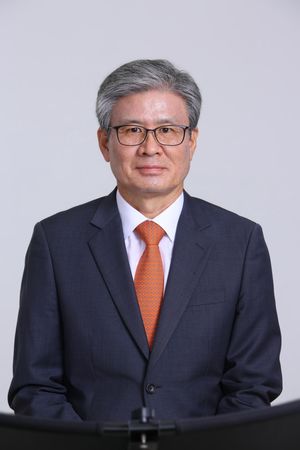
Expecting a Nobel Prize while leaving an academic institution mired in the inertia of privilege untouched is nothing short of trying to catch fish by climbing a tree. The National Academy of Sciences of the Republic of Korea must now shed the stigma of being an “exclusive club” and take the lead in creating the real foundations that allow researchers to deepen their scholarship throughout their lives with peace of mind. Yun Seon-hee, Professor Emeritus at Hanyang University Law School and Director of the Intellectual Property & Information Research Institute