“Had a C-section 46 years ago” ... What was found inside a 74-year-old woman? [Abnormal Signs]
- Input
- 2026-10-26 20:56:53
- Updated
- 2026-10-26 20:56:53
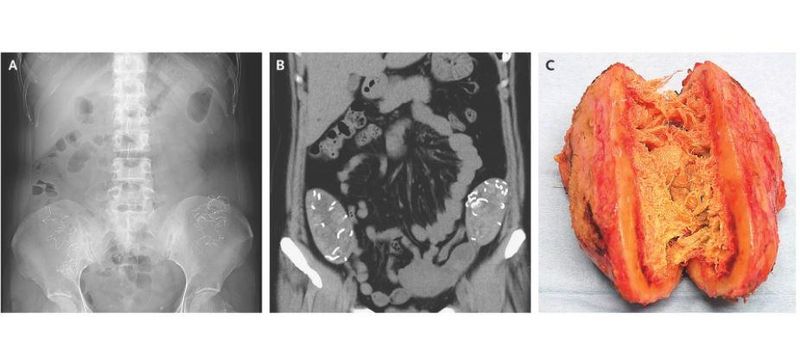
[Financial News] A trace of a “medical accident” that had been hidden inside the body for nearly half a century unexpectedly came to light during cancer surgery. The case involved surgical gauze from a C-section 46 years ago, discovered inside a 74-year-old woman in Japan.
It began with a diagnosis of appendiceal adenocarcinoma (colon cancer). To determine how far the cancer had progressed, doctors performed a computed tomography (CT) scan and incidentally found a round mass measuring 4 cm in diameter near the top of the uterus. The mass’s outer wall was hard and calcified like an eggshell. Because its interior was not clearly visible, doctors believed it was a degenerative change in a common benign tumor, a uterine fibroid.
But after removing the mass during surgery for appendiceal cancer, a shocking turn of events followed. When doctors cut through the rock-hard outer wall, a tangled clump of thread-like fibers—not tumor tissue—came pouring out.
Microscopic examination confirmed that the material was foreign fibers, not human tissue. The medical team’s final diagnosis was “gossypiboma.” It is a fibrous mass that forms around foreign objects, such as gauze or sponges, left inside the body during surgery.
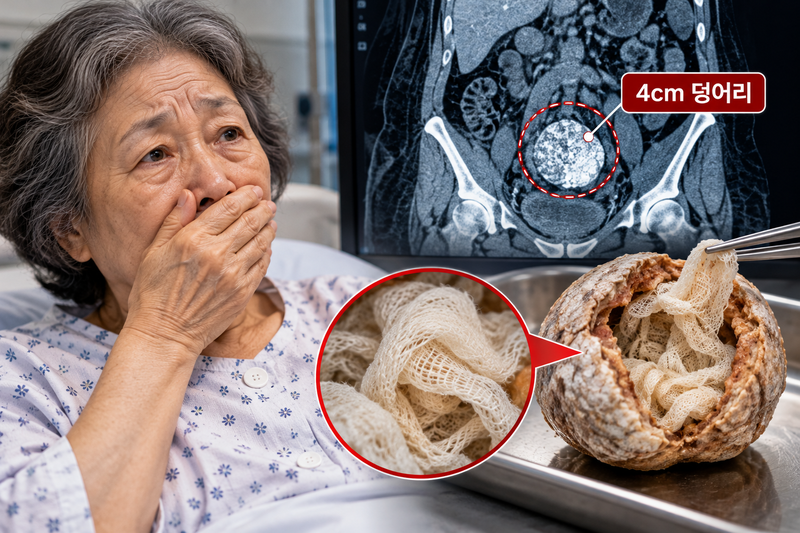
After reviewing the woman’s medical history, doctors determined that the cause was a C-section performed 46 years earlier. The body had recognized the surgical gauze left inside her at the time as a foreign object, gradually surrounding it with fibrous tissue and calcification until it hardened into a rock-like mass.
This is an extremely rare case even in the medical field. In general, 78% of gossypibomas are discovered within a year of surgery, and the previous record for the longest time before discovery in a case related to a C-section was 29 years. The discovery after 46 years is likely the longest-duration case reported in the medical literature.
Researchers at the Japanese Red Cross Kochi Hospital, who reported the case, said, “After a long time has passed, the typical bubble-like or reticular CT findings may no longer appear, making the condition easy to misdiagnose,” and pointed out, “Even when a patient had surgery decades ago, gossypiboma should always be included in the differential diagnosis if an abdominal mass of unknown cause is found.” The study was published on the 22nd in the international journal Journal of Surgical Case Reports.
[email protected] Jeon Sang-il Reporter