[Editorial] President Lee Must Decide on CPTPP in the Interest of the Nation as a Whole
- Input
- 2026-10-26 19:12:37
- Updated
- 2026-10-26 19:12:37
The CPTPP is a major multilateral free trade agreement (FTA) joined by 12 countries, including Japan and Australia. With major agricultural and fishing nations among its members, there are concerns about harm to those sectors. According to a government analysis, over the 15 years after the agreement takes effect, its spillover effects on manufacturing production are expected to increase by an annual average of 6.3 trillion to 6.7 trillion won, while real gross domestic product (GDP) is expected to rise by 0.38 percentage points 10 years after it takes effect. By contrast, production in agriculture, fisheries and forestry is estimated to decline by an annual average of 850 billion won.
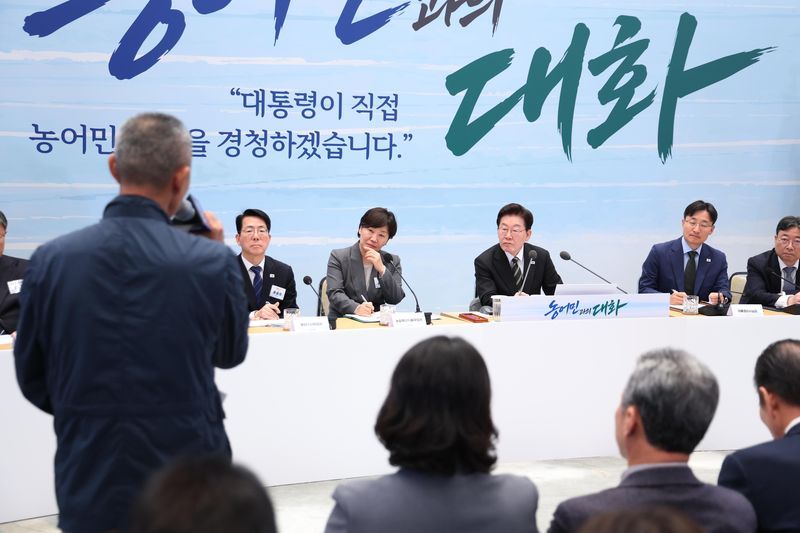
Amid opposition from farmers and fishers, the Korea Development Institute (KDI) has argued that Korea should hurry to join the CPTPP to move away from trade overly concentrated in the United States and China. The Ministry of Trade, Industry and Energy also supports making membership a reality as soon as possible. The issue is the decision of the president, who has the final say. After stating that Korea would not join this year, President Lee said, “We should not impose one-sided losses just because the numbers are small,” but also said, “For the sake of the country as a whole, we have to get it done, even if it draws criticism, so we can move on to the next stage.” He did not reach a clear-cut conclusion.
With the farmland survey issue also erupting, President Lee’s position has become even more difficult as he faces a choice. The decision continues to be put off. But our economic circumstances are not comfortable enough for us simply to say, “We cannot sacrifice cattle under any circumstances.” Political and economic coercion by the two great powers, the United States and China, is becoming increasingly blatant, to the point that it is hard to tell friend from foe.
The current examples make it clear what kind of damage can result when the United States and China, the two leading powers, manipulate trade and supply chains. The United States is coercively demanding investment on its soil even when its profitability is not guaranteed. China, whose “THAAD retaliation” may not even have ended, frequently uses critical resources such as rare earths and urea solution as weapons to pressure South Korea, a country poor in natural resources.
It is self-evident that Korea’s agriculture and fisheries will be hit after it joins. But the standard for any decision must always be the national interest as a whole. Even if Korea applies, member countries will not necessarily approve its application right away. The review process is rigorous and lengthy. Hesitation could mean losing only opportunity costs. Canadian Prime Minister Mark Carney’s remark last January—“If you are not at the (negotiating) table, you will end up on the (great powers’) menu”—was a call for middle powers to unite. Canada is already a member and has somewhere to turn. Even though its position is better than ours, it is expressing a sense of urgency as a relatively weaker country.
The anger among farmers should be addressed not with words alone, but by presenting the best possible measures to protect and develop agriculture and fisheries. We must not waste time merely watching the political winds because we cannot make up our minds. If some of the money earned in manufacturing were invested in supporting agriculture and fisheries, there would be no reason that could not help persuade them.
The leader will, of course, bear responsibility for the decision, and criticism could also fall on President Lee. But the judgment of that decision belongs not to the present generation but to generations to come. Positive assessments of former President Roh Moo-hyun’s decision to conclude the United States-Korea Free Trade Agreement (KORUS FTA) also came much later. President Lee, too, should put aside his concerns about the political burden, make a bold decision and await the judgment of future generations.