Won’s rally lifts its nominal effective exchange rate to a two-year high
- Input
- 2026-10-26 18:26:52
- Updated
- 2026-10-26 18:26:52
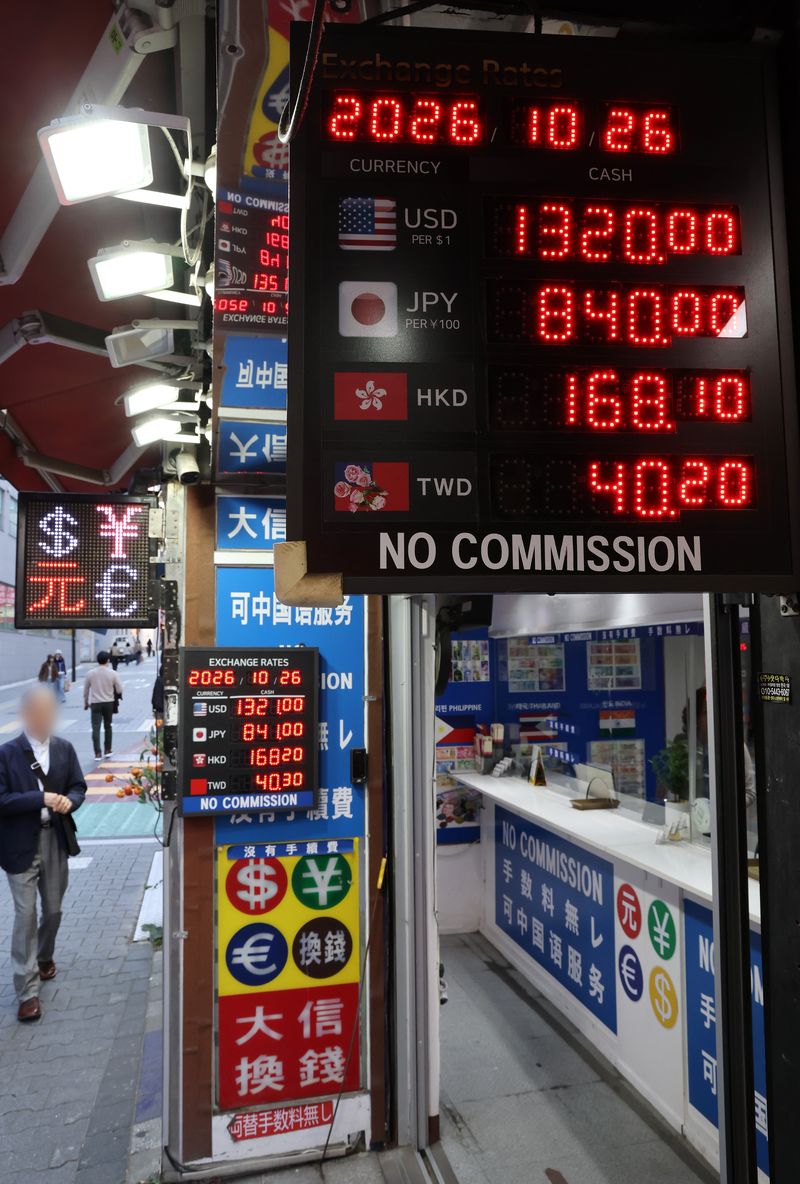
According to the Bank of Korea and the Bank for International Settlements (BIS), among others, the cumulative average won-dollar exchange rate for the fourth quarter stood at 1,336.34 won as of the 26th. The exchange rate had remained high, averaging 1,467 won in the first quarter, 1,502 won in the second quarter and 1,419 won in the third quarter, but is now falling steeply. As of 3:30 p.m. that day, the won-dollar exchange rate was 1.5 won lower than the previous trading day, trading at 1,323.1 won per dollar.
In terms of the effective exchange rate against major trading partners, the won’s nominal effective exchange rate stood at 94.83 (2020=100) as of the 20th. This was its highest level since Oct. 9, 2024, when it was 94.91.
The won’s nominal effective exchange rate fell as low as 81.99 in June this year, when the won-dollar exchange rate surged to the 1,560s and the effects of foreign investors’ stock rebalancing and other factors coincided. It then rebounded sharply as demand from semiconductor exporters to convert dollars into won surged. The nominal effective exchange rate measures a currency’s value by reflecting trade weights with major trading partners; a higher index means a stronger won.
The real effective exchange rate, which adjusts the nominal exchange rate for price differences with trading partners, also rose 3.2% to 92.73 in September from 89.88 the previous month. This was its highest level since November 2024 (93.43). The monthly average won-dollar exchange rate (based on weekly closing rates) has been falling steeply since peaking in June at 1,528.0 won. It averaged 1,488.9 won in July, 1,404.4 won in August and 1,358.8 won in September, and has recently traded in the low 1,320s. This is its lowest level since September 2024 (1,332.8 won).
Some analyses say that the won in the 1,300s is at an “equilibrium” level that fits the Korean economy’s conditions and growth rate. However, hawkish tightening messages from Federal Reserve Chair Kevin Warsh or continued net selling of stocks by foreign investors could push the won-dollar exchange rate back into the mid-to-upper 1,300s. At a press conference on the monetary policy direction on the 22nd, Bank of Korea Governor Hyun Song Shin cited the BIS effective exchange rate, which accounts for trading partners’ weights and stood at 89 at the end of August, below its average of 101. He said, “The recent downward stabilization of the won-dollar exchange rate is part of a process of reversing an abnormal situation, and the won remains weak.”
The won is expected to continue strengthening on its own for the time being. After holding in the 1,300s through the end of this year and early next year, favorable supply-and-demand conditions—such as strong semiconductor earnings and exporters’ dollar sales—are expected to push up its value. It could enter the 1,200s as early as the end of the year.
[email protected] Jung Sang-gyun Reporter