From tourist stays to bus routes... Jeju uses data to assess five administrative issues
- Input
- 2026-10-26 17:26:20
- Updated
- 2026-10-26 17:26:20
【Financial News, Jeju = Reporter Jeong Yong-bok】 Jeju Special Self-Governing Province is conducting data analyses on five administrative issues, including the living population, public transit routes and traditional markets. It plans to review the potential for sharing data held by different departments and opening up nonpublic information, and to use the results in policy decisions.
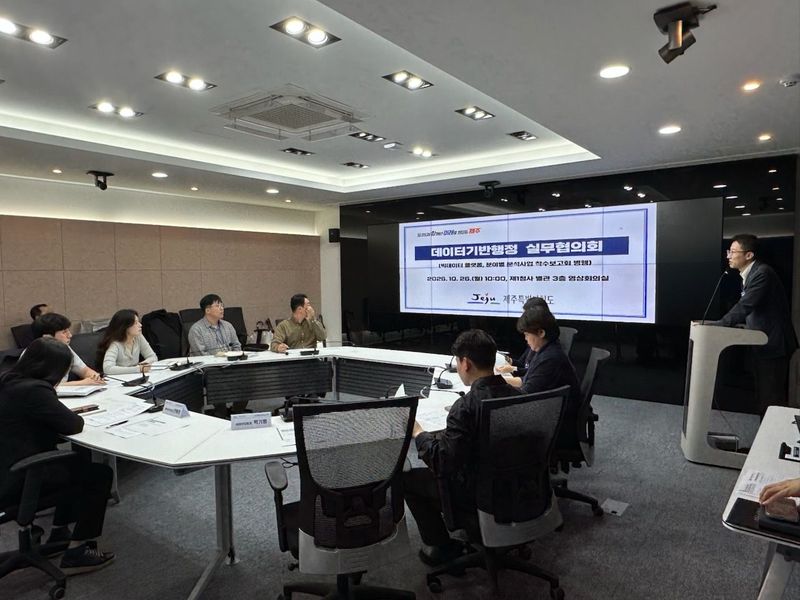
According to Jeju Special Self-Governing Province on the 26th, the Second Working-Level Council on Data-Based Administration and the 2026 Big Data Project Midterm Report Meeting were held that day in the video conference room of the annex to the provincial government's First Office Building.
At the meeting, participants reviewed progress on data analysis projects launched since the first working-level council meeting on June 30 and discussed ways to expand data sharing among departments. The focus was on broadening cooperation so that data held by each department could also be used by other departments in developing policies.
The analysis projects reviewed this time covered five areas: expanding indicators related to the living population, the public transit route network, conditions in traditional markets and shopping districts, changes in Jeju's economy, and online product sales.
Analysis of the living population is particularly relevant to Jeju, where many tourists and people stay for short or extended periods. Registered-resident figures alone make it difficult to determine how many people actually stay in and move through a particular area.
The living population is a concept that takes into account not only residents who live in an area and have an address there, but also people who stay for a period of time for tourism, work or other purposes. In Jeju, the population staying in the area, estimated using mobile carrier movement data and other sources, is analyzed alongside the registered population and used to examine population activity by region.
Jeju Special Self-Governing Province provides information on registered residents, registered foreign residents and the population staying in the area through a separate integrated population-policy platform. The current analysis project is considering adding indicators related to the living population.
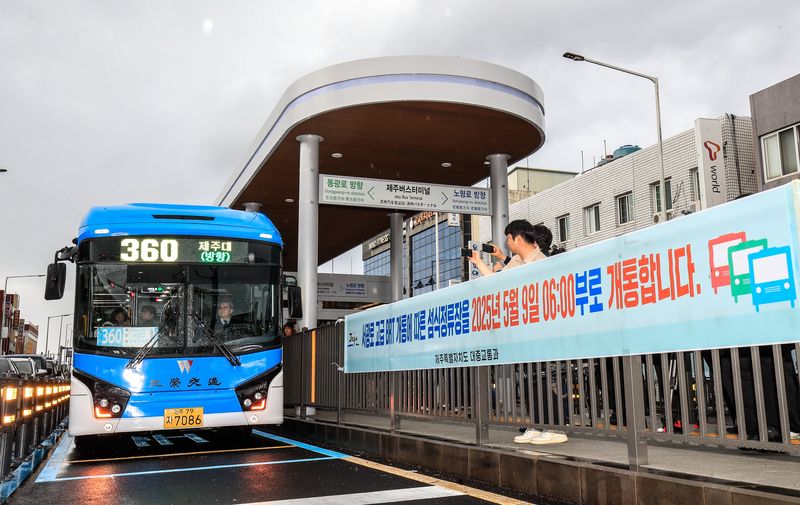
Analysis of the public transit route network is also a key project. In Jeju, the travel needs of tourists must be considered alongside residents' daily trips. Analyzing population distribution by region together with actual travel patterns can help assess the suitability of bus routes and operating systems.
In the regional economy sector, the projects are analyzing conditions in traditional markets and shopping districts, changes in Jeju's economy, and online product sales. The work examines the characteristics of local commercial districts and patterns of consumption and sales to determine whether the findings can inform policy development by relevant departments. In Jeju, where tourism and services account for a large share of the economy, it is important to examine the spending of both residents and visitors.
The meeting also discussed expanding data sharing between departments. Jeju Special Self-Governing Province's AI Innovation Promotion Task Force identified the data each department needs in developing policies and shared examples of analyses already conducted as well as projects requiring additional support.
Participants also reviewed restrictions on using data held by other departments and the possibility of opening up nonpublic data. Measures discussed included processing information so that specific individuals could not be identified and providing some data, starting with items that can be made public.
Data-based administration refers to analyzing data held by government agencies or obtained from external sources and using it to develop policies and make decisions. The Act on the Promotion of Data-Based Administration, which took effect in 2020, established an institutional basis for public agencies, including central and local governments, to share data.

However, sharing administrative data between departments must be distinguished from making it generally available to the public. Even when departments share data, they must consider personal information protection, the purpose of use and restrictions under relevant laws.
The midterm report meeting that day also reviewed progress on improvements to the Jeju Big Data Platform, an internal work system operated by Jeju Special Self-Governing Province. The platform is an administrative system that analyzes information from various fields, including tourism, transport, the environment and general administration, and displays it in charts and graphs.
Jeju Special Self-Governing Province is updating existing data with the latest information and improving visualization features to make analysis results easier to understand. The meeting also examined whether the system provides enough information for actual work and whether officials responsible for the work can conveniently use the results in making policy decisions.
The project is still in progress, with analysis and system improvements underway. Jeju Special Self-Governing Province plans to incorporate feedback from the meeting into refinements to the analysis projects and system improvements during the remainder of the project period, and to continue providing follow-up support so departments can use the results in their day-to-day work.
Ahn Hye-young, head of Jeju Special Self-Governing Province's AI Innovation Promotion Task Force, said, “We will strengthen data sharing between departments and field-oriented analysis so that data can serve as a basis for policy decisions.”
[email protected] Jeong Yong-bok Reporter