Water outage alerts in Jeju’s Yongdam-dong delayed by 5 hours 50 minutes... Governor Wi orders comprehensive review of water supply network
- Input
- 2026-10-26 16:33:03
- Updated
- 2026-10-26 16:33:03
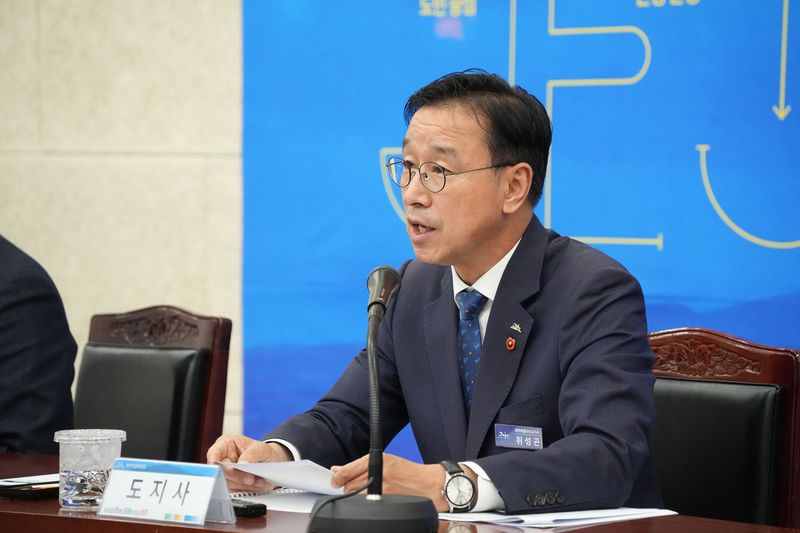
【Financial News, Jeju = Reporter Jeong Yong-bok】 It took 5 hours and 50 minutes from the time a failure of an intake pump in Yongdam-dong, Jeju City, was detected to the first text alert being sent to residents. With water supply disruptions affecting areas served by more than 4,700 water meters, Jeju Governor Wi Seong-gon issued a formal apology and ordered a comprehensive review of the water supply system.
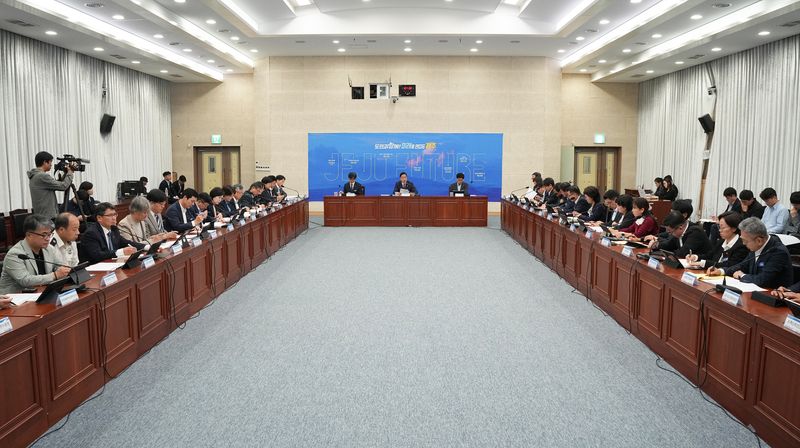
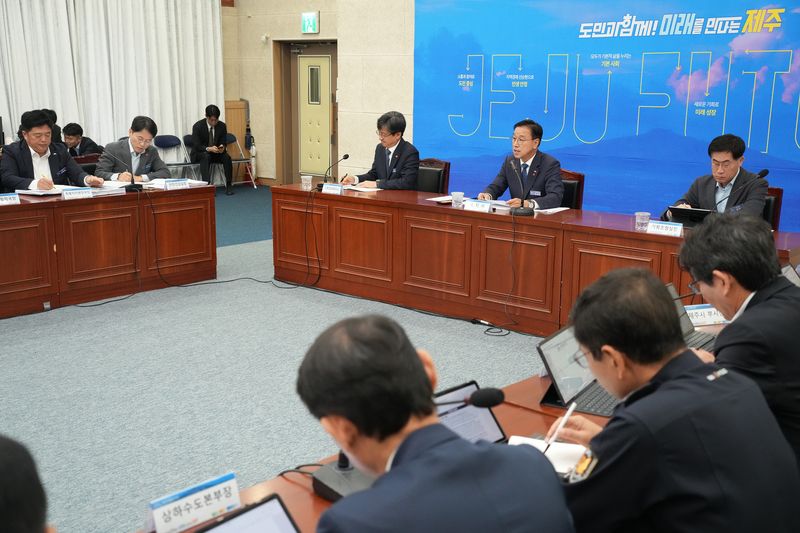
According to Jeju Special Self-Governing Province, Governor Wi chaired the 12th Weekly Policy Meeting at Tamna Hall in the provincial office on the 26th and instructed the Water and Sewerage Headquarters to draw up measures to prevent a recurrence of the water outage in Yongdam-dong.
The incident began when a failure of the intake pump at Yongdam Reservoir in Jeju City was confirmed at around 11:30 a.m. on the 23rd. The water supply from Yongdam Reservoir to Ora Reservoir was cut off, and disruptions were confirmed at around 3 p.m. among approximately 4,700 water meters in the Yongdam 1-dong and Yongdam 2-dong areas.
The problem was that residents were notified late. Jeju City sent its first text alert at around 5:20 p.m., about 5 hours and 50 minutes after the pump failure was detected. Jeju Province’s disaster and safety text alert was delivered at around 5:50 p.m.
The notices also did not reach enough people. Since texts were sent mainly to the meter account holders registered in the water-bill management system, some leased commercial properties—where the building owner and the actual business operator were different—did not receive timely notice of the outage. Restaurants, hair salons and other businesses that use a lot of water experienced disruptions and inconvenience.
Repair work was completed at around 10:30 p.m. on the 23rd, and tap-water service began to resume in stages from 11 p.m. As water pressure recovered across different areas, service was mostly back to normal by around 3 a.m. on the 24th.
Governor Wi said, “I sincerely apologize to residents for causing inconvenience because we did not manage the situation properly,” and called for fundamental measures to prevent a recurrence.
He called for a review of the coordination and management system linking individual water sources and treatment plants with the regional water supply network, and for a plan to switch water systems so that water can be sent through another supply network if a particular facility fails.
He instructed the Water and Sewerage Headquarters to update its response manual, including procedures for emergency water supply and notifying residents, and to report on problems with the water supply system and plans to address them. However, no specific plan or timeline for improving the resident notification system was announced that day.
Governor Wi also pointed to the problem of road markings being difficult to see on wet roads during recent Typhoon Champi. Taking into account Jeju’s frequent wind and rain and the large number of tourists using rental cars who are unfamiliar with local roads, he called for improvements to make lane markings easier to see at night and in rainy weather.
He asked the relevant departments to consider ways to improve lane visibility and road lighting. He instructed the two administrative cities to work with their towns, townships and neighborhoods to inspect damaged sections of road and develop repair plans.
With the main harvest season for field-grown mandarins beginning, the meeting also discussed managing early market prices and boosting consumption. Governor Wi said, “Early prices are very important in shaping prices overall,” emphasizing the need to manage distribution practices and promote consumption at the start of the shipping season.
Jeju Province plans to step up enforcement against the distribution of mandarins that do not meet quality standards. It also plans to have not only its agricultural affairs departments but each division and bureau take part in promoting the quality of Jeju mandarins and the places where they are grown, using social media and other channels.
The Jeju Future Growth Fund, which aims to raise a cumulative total of 1 trillion won by 2030, was also on the meeting agenda. Governor Wi called on each department to identify and develop projects eligible for investment so that funding would actually flow to business growth and the development of future industries such as renewable energy, biotechnology and space.
In the marine sector, officials were asked to consider expanding the collection of marine litter along Jeju’s coast and developing measures to protect Indo-Pacific bottlenose dolphins. The meeting also discussed designating marine leisure zones and responding to the ban on swimming and other water activities inside fishing ports.
He also instructed officials to prepare information for residents ahead of the designation of a tertiary general hospital in the Jeju region, review the operation of the civil complaint notification service, and examine key projects for the 2027 budget. He called for stepped-up efforts to bring the 2028 G20 Summit and public institutions under the second phase of relocation to Jeju.
Governor Wi urged officials to fully reflect residents’ views and voices from the field in major policy decisions.
[email protected] Jeong Yong-bok Reporter