53 Trillion Won Invested Despite the Downturn; Lee Jae-yong's Four Years Bear Fruit in AI Semiconductors
- Input
- 2026-10-26 16:48:38
- Updated
- 2026-10-26 16:48:38
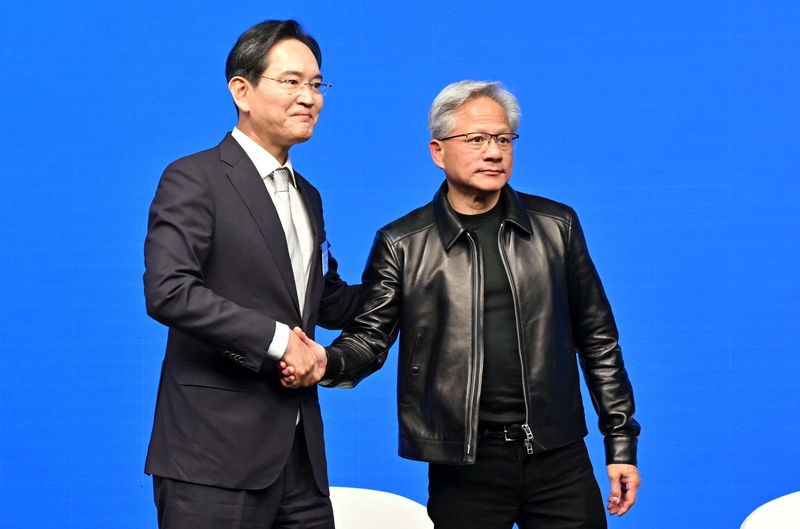
[Financial News] Lee Jae-yong, chairman of Samsung Electronics Co., Ltd., marks the fourth anniversary of his appointment on the 27th, having navigated a rapidly changing business environment shaped by a downturn in the semiconductor industry and the expansion of the artificial intelligence (AI) market.
As investment maintained even through the downturn and expanded supplies of next-generation high-bandwidth memory (HBM) coincided with a recovery in the industry, Samsung Electronics Co., Ltd.'s operating profit—which had fallen to the 6-trillion-won range annually in the year after Lee took office—exceeded 100 trillion won on a quarterly basis this year. A key challenge for Lee is expected to be effectively reinvesting the gains secured during the current boom to make profits more sustainable.
■Investment through the downturn bears fruit
According to Samsung Electronics Co., Ltd. on the 26th, preliminary third-quarter revenue this year was 195 trillion won and operating profit was 107.4 trillion won. These figures were up 126.59% and 782.50%, respectively, from the same period a year earlier.
Lee's past four years can be summed up as a period of weathering unstable industry conditions while maintaining the capacity to invest.
In 2023, the year after Lee took office, Samsung Electronics Co., Ltd. recorded revenue of 258.94 trillion won and operating profit of just 6.57 trillion won. Even that year, however, Lee oversaw 53.1 trillion won in capital investment and allocated 48.4 trillion won to the Device Solutions (DS) division, which handles semiconductors. The company continued investing in projects including its Pyeongtaek plant and in responding to demand for advanced products such as HBM and DDR5.
The company also expanded its research and development. R&D spending rose from 35 trillion won in 2024 to 37.7 trillion won last year. A total of 72.7 trillion won was invested over the two years alone. This is seen as a significant management move, as funds were allocated to developing next-generation processes and products separately from the immediate recovery of profits.
Samsung Electronics Co., Ltd., which also focused on ensuring a stable supply of the products it developed, announced mass-production shipments of HBM4 this past February. Its performance also began to change as the company secured an opportunity to leverage its business structure—which combines memory and foundry technologies—to build competitiveness in AI semiconductors.
In the second quarter of this year, the DS division recorded revenue of 127.5 trillion won and operating profit of 89.2 trillion won. Samsung Electronics Co., Ltd. responded to demand for server products and expanded HBM4 supplies, and also shipped HBM4E samples.
■A broad global push also played a role
Lee's extensive efforts to win orders from major global customers are also seen as having contributed to these results. Last year, Samsung Electronics Co., Ltd. signed a foundry supply contract with Tesla. The contract is worth approximately 22.8 trillion won and runs through the end of 2033. Securing this long-term volume is expected to have a positive impact on production-facility utilization and follow-up orders.
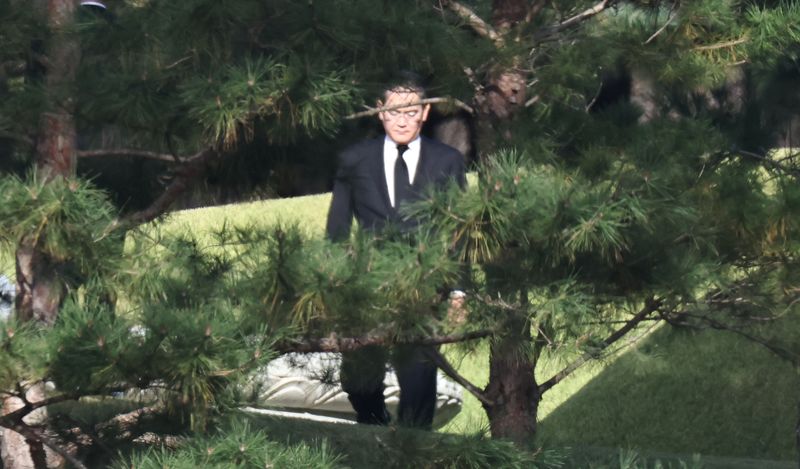
On the 23rd, after conducting on-site management in the Middle East, including the United Arab Emirates (UAE), Lee also set out on his return to Korea and visited the family burial site ahead of the sixth anniversary of the death of Lee Kun-hee, the late former chairman of Samsung Group.
A key challenge for management going forward is seen as balancing the pace of capacity expansion with the shift to new technologies. Continued AI investment could drive greater demand for advanced memory, but the company will also need to prepare for fluctuations in supply volumes as customers change their investment schedules.
An industry source said, “I believe Lee Jae-yong's next report card will be determined by repeat orders for next-generation HBM, competitiveness in foundry mass production, and improved profitability of finished products,” and assessed, “The challenge is to turn the investment foundation sustained over his four years in office into a structure that continues to generate profits after the boom.”
[email protected] Kim Hak-jae, Park So-hyun Reporter