Neither “Industrial” nor “Cheoyong”... Ulsan Reconsiders from the Ground Up Whether It Needs a Flagship Festival
- Input
- 2026-10-26 16:23:06
- Updated
- 2026-10-26 16:23:06
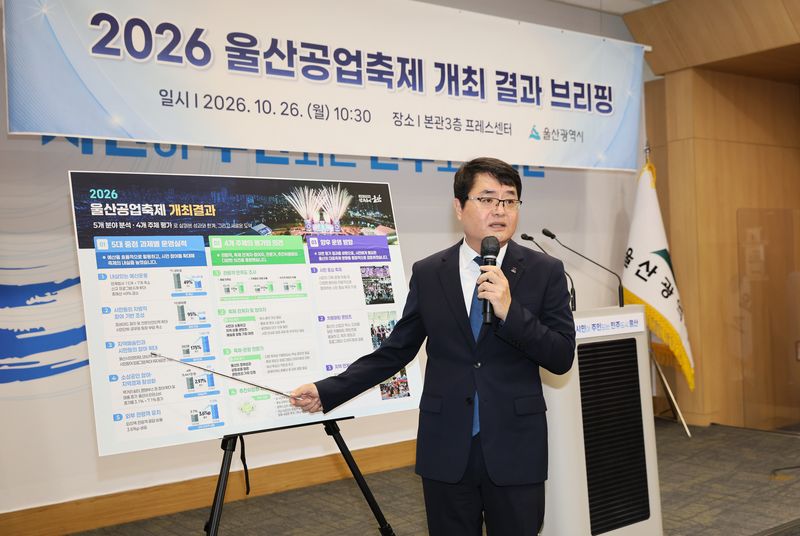
【Financial News, Ulsan = Reporter Choi Soo-sang】 Ulsan City has decided to comprehensively reconsider the future direction of its flagship festival based on a performance review of the recently concluded 2026 Ulsan Industrial Festival. The aim is to establish a new festival model that will remain unchanged regardless of who becomes mayor.
Ryu Jae-gyun, head of Ulsan City’s Economic Bureau, announced this at a media briefing on the 26th, saying, “We will continue to consider how to reflect Ulsan’s identity and future in a way that brings Ulsan and its citizens together.”
Ryu said that fundamental questions had been raised at an earlier festival steering committee meeting about whether a flagship festival at the metropolitan-city level was really necessary.
He explained that the city plans to examine whether festivals directly hosted and organized by Ulsan City should continue and whether they are necessary, and, depending on the findings, to reconsider from the ground up even the option of scrapping the existing flagship festival and expanding festivals in individual districts and counties.
The city will also take an open-minded approach to the festival’s name. He said it would seek a distinctive name and core content that could encompass both Ulsan’s identity and its forward-looking vision, rather than retain the existing name, “Industrial Festival.”
Ryu said, “Nothing has been decided specifically about what name to use, whether the Industrial Festival, the Cheoyong Festival or something else,” adding, “We will find a new festival name that fully captures Ulsan and remains steady despite changes in the city administration.”
Meanwhile, this year’s Ulsan Industrial Festival strengthened its substance by reducing its budget by 49% from last year to 3.643 billion won. The analysis found that measures such as eliminating the street parade prevented the forced mobilization of public officials and civic groups and laid the groundwork for voluntary participation, while also helping revitalize the local economy, with sales at small-business booths and overall tourism spending both increasing.
[email protected] Choi Soo-sang Reporter