Two months after European Union packaging rules took effect, 83% of Korean exporters are “in the dark”
- Input
- 2026-10-27 06:00:00
- Updated
- 2026-10-27 06:00:00
[Financial News] More than two months after the European Union’s (EU) environmental regulations on packaging took effect, eight out of 10 South Korean exporters were found to have failed to properly understand the rules. Only 16.7% had assessed whether the rules applied to their own products. Companies are also finding it difficult to reflect the additional costs of compliance in export prices, raising concerns about weaker profitability and declining export competitiveness.
On the 27th, the Korea International Trade Association said it had released a report titled “The Status and Challenges of Corporate Responses to the EU Packaging and Packaging Waste Regulation (PPWR),” based on a survey of 610 companies that currently export to or plan to export to the EU. The survey was conducted from August 21 to September 2.
The survey found that 82.5% of respondents said they were either completely unaware of the PPWR or knew only its general outlines. Just 16.7% of companies had completed or were conducting an assessment of whether the rules applied to their products.
The PPWR is an EU regulation that took effect on August 12 to reduce packaging waste and expand recycling. Restrictions on heavy metals in packaging and per- and polyfluoroalkyl substances (PFAS) in food-contact materials have become mandatory, as have requirements to prepare technical documentation and declarations of conformity. Regulations on recyclability, recycled-material content and packaging minimization will also be tightened in stages.
Companies were found to be particularly unprepared when it came to obtaining materials to prove compliance with the rules. More than half of the 356 companies that use plastic packaging said they had not secured documents from suppliers of recycled materials, recyclability assessments or reporting materials for Extended Producer Responsibility (EPR). This means that even companies familiar with the rules are not adequately prepared to prove they are complying with them in practice.
The main difficulties cited by companies were a shortage of in-house specialists (32.3%) and the burden of testing, certification and consulting costs (30.3%). The share of companies unable to estimate one-time investment costs and recurring annual expenses reached 49.3% and 54.1%, respectively.
Companies are also finding it difficult to reflect the cost burden in product prices. Of the 577 companies that anticipated additional costs, 81.6% said they would be unable to pass any of the costs on in transaction prices or could pass on less than 25%. This means the cost of complying with the rules is likely to weigh on corporate profitability.
The Korea International Trade Association said tailored support is needed to match each company’s level of preparedness. This would include assessing whether the rules apply for companies in the early stages of responding, and supporting testing, evaluation and the acquisition of supporting documents for those that have begun preparations. It also proposed vouchers for companies facing cost pressures, practical training to develop specialists, and stronger cooperation with packaging suppliers.
Park So-young, a senior researcher at the Korea International Trade Association, said, “Responding to the PPWR involves not only changing packaging materials but also proving conformity and managing the supply chain.” She added, “If companies identify their business partners’ requirements in advance, systematically prepare supporting documentation, and strengthen their competitiveness in quality and price alongside their local distribution networks, they could turn regulatory compliance into an opportunity to boost their competitiveness in the EU market.”
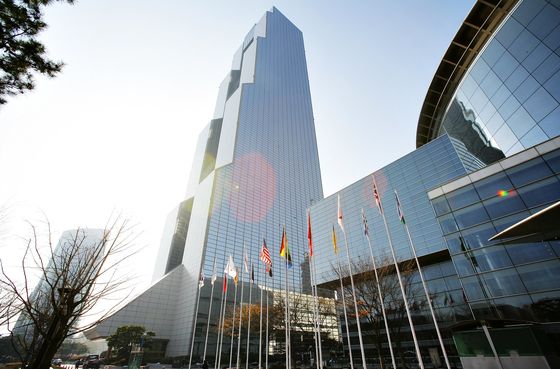
The Korea International Trade Association plans to hold a seminar titled “Corporate Strategies for Responding to the Implementation of the EU PPWR” on the 29th at the Trade Tower in Samseong-dong, Seoul, where participants will discuss industry-specific certification procedures, response case studies and support measures.
[email protected] Kim Dong-ho Reporter