KOFR OIS Central Clearing Reaches 492 Trillion Won in Cumulative Volume; Daily Clearing Amount Up Tenfold in One Year
- Input
- 2026-10-26 15:09:08
- Updated
- 2026-10-26 15:09:08
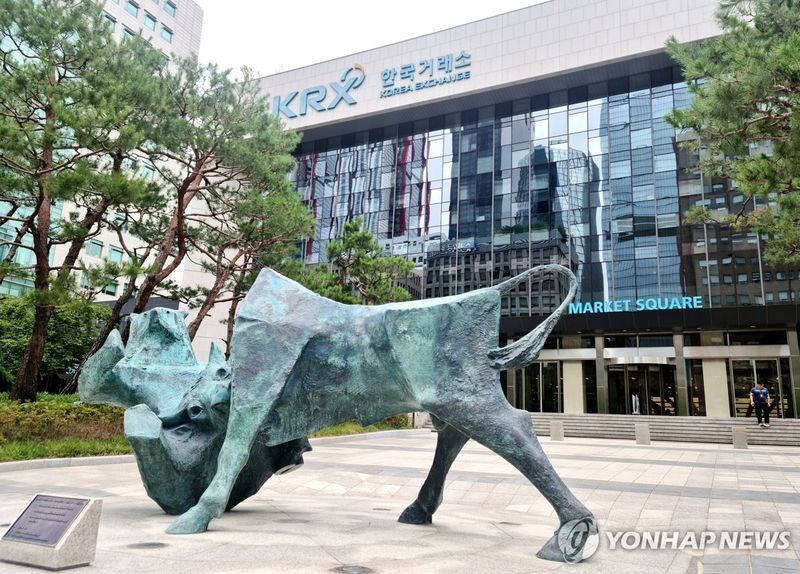
[Financial News] Cumulative clearing of interest rate swaps based on the Korea Overnight Financing Repo Rate (KOFR)—overnight index swaps (OIS)—reached 492 trillion won in the year since central clearing was introduced. The average daily clearing amount has increased about tenfold from the early days. The Korea Exchange (KRX) plans to support market growth by extending the maximum maturity eligible for clearing from 20 years to 30 years in the first half of next year.
According to the Korea Exchange on the 26th, from the launch of central clearing for KOFR OIS on October 27 last year through the end of September this year, the cumulative cleared notional totaled 492 trillion won across 2,052 transactions. At the end of September, outstanding cleared positions stood at 140 trillion won across 1,333 transactions.
KOFR is a rate calculated from actual transactions in the overnight repurchase agreement (repo) market, where Korean Treasury Bonds and Monetary Stabilization Bonds are used as collateral. KOFR OIS are interest rate swaps that use this rate as the floating rate. In central clearing, an exchange acts as the counterparty to both sides of a trade, guaranteeing settlement and managing risk.
The average daily clearing amount rose about tenfold, from 300 billion won in November last year to 3.2 trillion won in September this year. The average daily clearing amount over the entire analysis period was 2.2 trillion won, about 33% of the 6.5 trillion won average for interest rate swaps (IRS) based on the certificate of deposit (CD) rate over the same period.
KOFR OIS account for about 25% of all swaps by clearing amount. This exceeds the 10% target set by the Financial Supervisory Service for the first year of its administrative guidance. Thirty-seven of the 53 clearing members, or about 70%, are participating; nine firms outside the 28 subject to the guidance have also joined voluntarily.
Trading in longer-dated instruments has also expanded. By amount, one-week maturities accounted for 69.9%, while maturities of one year or less made up about 82%. However, the share of maturities longer than one year rose more than fivefold, from 3.3% at the start of the year to 18.1%; the share of ultra-long maturities longer than five years also increased more than fivefold, from 0.4% to 2.3%.
In the first half of next year, the exchange will extend the maximum maturity eligible for KOFR OIS clearing from 20 years to 30 years. It also plans to broaden the methods for day-count calculations and holiday treatment to accommodate a wider range of market practices.
The exchange will also lay the groundwork for the transition to benchmark rates. It will develop a plan for clearing basis swaps so that risks arising from interest rate differences between CD IRS and KOFR OIS can be managed, and flesh out plans to standardize the discount curve used to value cleared IRS at KOFR. It also plans to review compensation for resulting changes in value and preparations for switching existing contracts to KOFR if calculation of the CD rate is discontinued.
An exchange official said, “We plan to continue refining the relevant framework to help promote trading in longer-dated KOFR-based instruments and accelerate the establishment of KOFR-centered financial transactions.”
[email protected] Joo Won-gyu Reporter