Went for seasonal seafood, fell for autumn forest trails... Rediscovering Uljin
- Input
- 2026-11-05 13:13:56
- Updated
- 2026-11-05 13:13:56
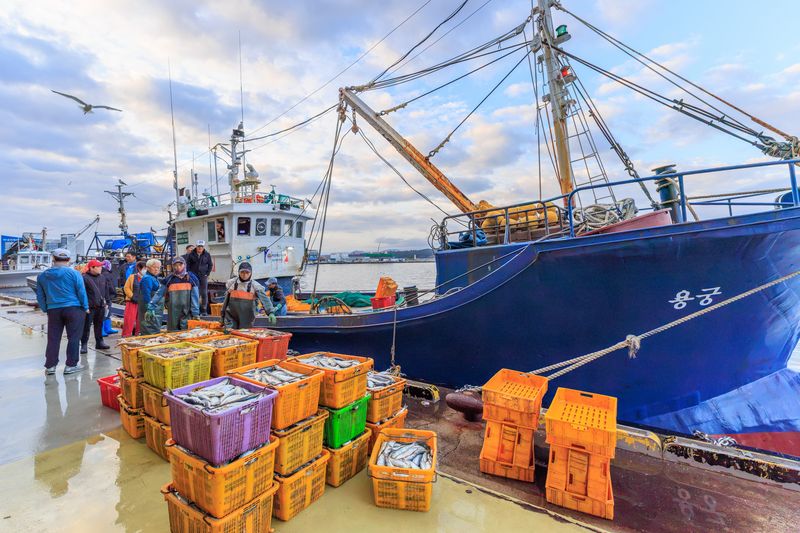
【Uljin, Gyeongsangbuk-do—Reporter Sun-Min Jung】 Uljin County in Gyeongsangbuk-do is famous for its red snow crab, but fresh seafood—including octopus, shrimp, flounder, flatfish, sea squirts and sea cucumbers—is available year-round. In particular, when the cooler breezes begin to blow, the waters abound with large yellowtail, prized for its firm texture and rich flavor, as well as mackerel, Spanish mackerel and Konosirus punctatus. That is why a large-scale seafood festival is held as autumn gives way to winter. I visited Uljin late last month, ahead of the 2026 Jukbyeon Port Seafood Festival.
■ First things first: Seafood festival kicks off on the 6th
Jukbyeon Port, the northern gateway to Uljin County, is one of the East Coast of Korea’s best-known fishing ports. Along with Hupo Port to the south, it is a major snow crab fishing ground. As visitors enter the harbor, seafood freshly hauled from the sea greets them. The name Jukbyeon comes from the abundance of bamboo that once grew wild in the area. Even today, bamboo grows thickly on the low hill where Jukbyeon Lighthouse stands.
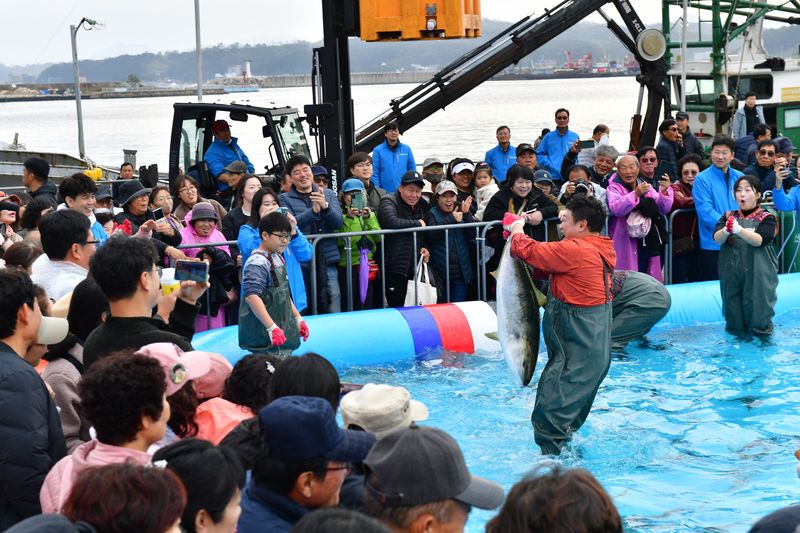
The 2026 Jukbyeon Port Seafood Festival will be held at Jukbyeon Port for three days, from the 6th through the 8th. Under the theme “Let’s go to Jukbyeon Port! Let’s eat seafood!”, the festival will feature a variety of seafood caught in the pristine East Sea, including yellowtail, squid and Konosirus punctatus.
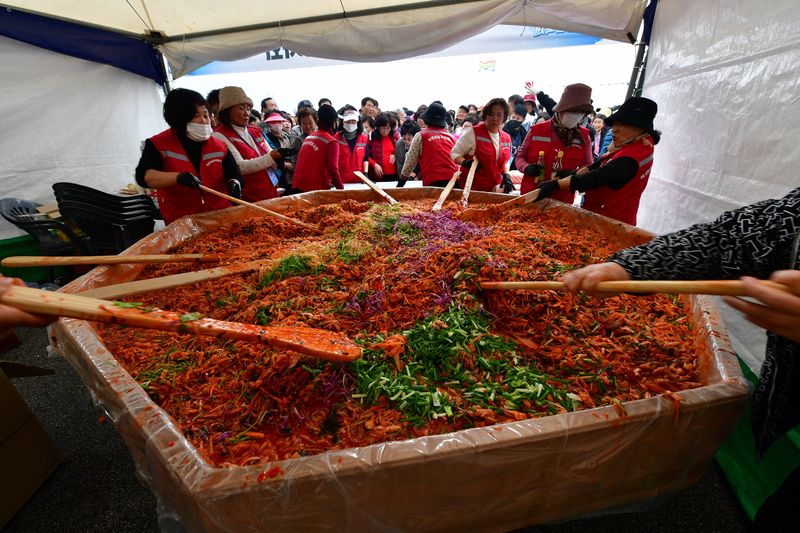
A market selling fresh and dried seafood will open, and events will include bare-handed live-fish catching, instant seafood auctions and a large-yellowtail butchering show. There will also be a performance in which people make mulhoe together, as well as free tastings, offering a chance to enjoy the East Coast’s abundant food. It is a great opportunity not only to buy seafood or sample it on-site, but also to experience the lively atmosphere of a fishing port.
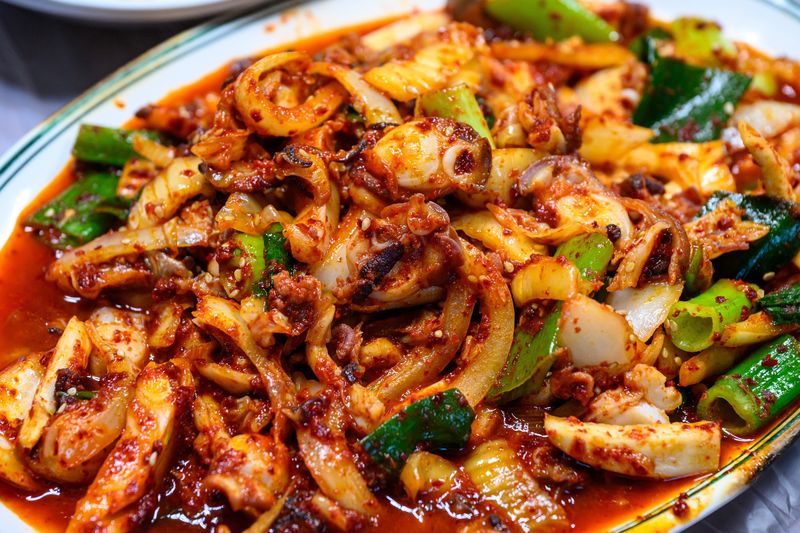
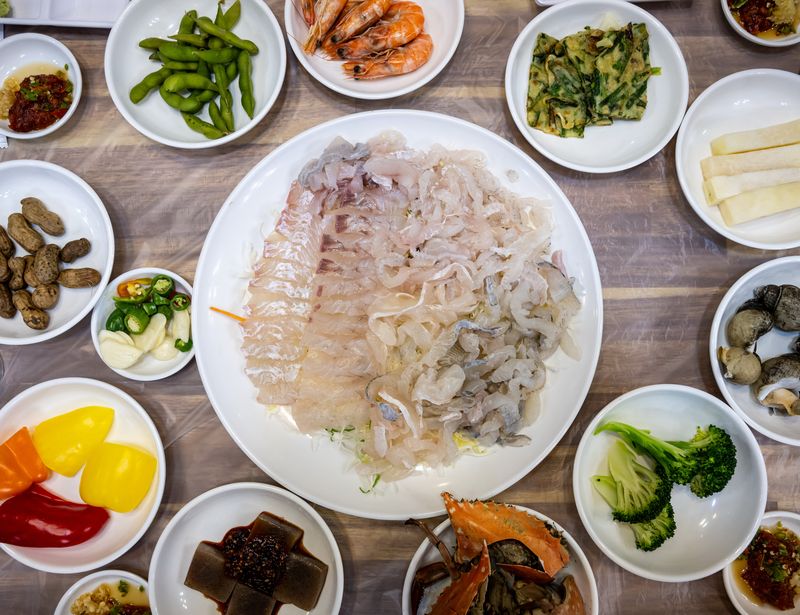
Jukbyeon Port has plenty to offer beyond the festival period. Shops and restaurants selling seafood line the area around the harbor, where visitors can sample freshly caught seafood. If you would like to enjoy a plate of fresh sashimi while looking out at the sea, take your time exploring the harbor.
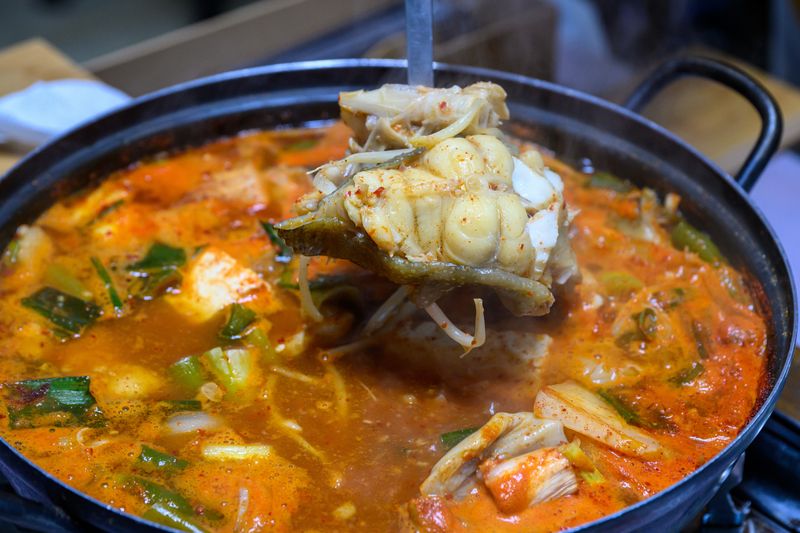
At Dolsom Restaurant in Jukbyeon Port, visitors can try jangchi-tang, a local specialty of Uljin. Jangchi is a deep-sea fish caught in the depths of the East Sea. Its long body and rugged appearance may seem unfamiliar, but its flesh is soft yet firm. Other popular dishes include mul-gom-tang (moray eel soup), a favorite among seafarers; clear soup made with freshly caught cod; and octopus stir-fried in a spicy sauce.
A short distance from Jukbyeon Port stands Jukbyeon Lighthouse. First lit in November 1910, it has long guided ships traveling between Jukbyeon Port and the East Sea. Set on a seaside hill, it also offers fine views of the surrounding scenery. The walking trail through the bamboo grove around the lighthouse is not to be missed. Walking along the path between the green bamboo offers a peaceful atmosphere quite different from the bustle of the harbor.
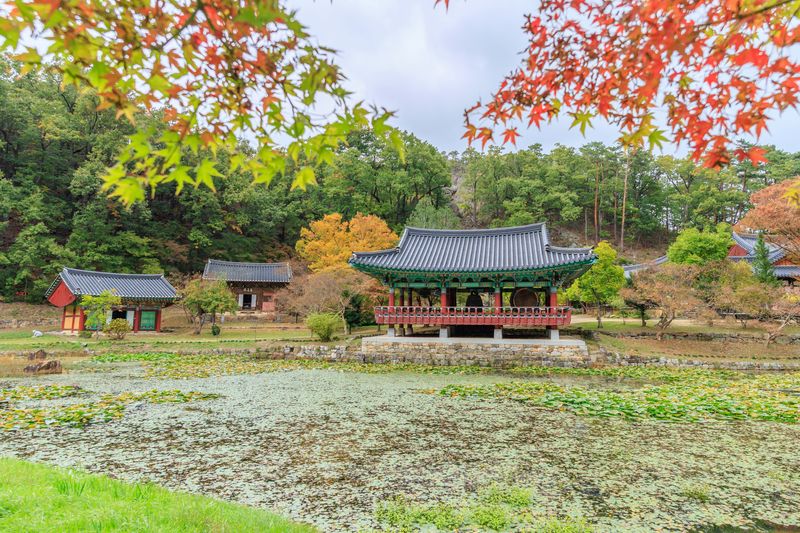
■ Northern Uljin: From Bulyeongsa Valley to Mangyangjeong Pavilion
Autumn in Uljin is not something to be found only by the sea. Inland, mountains and valleys unfold in a striking landscape. Follow National Route 36 from Uljin-eup toward Bonghwa, and you will come to Bulyeongsa Valley.
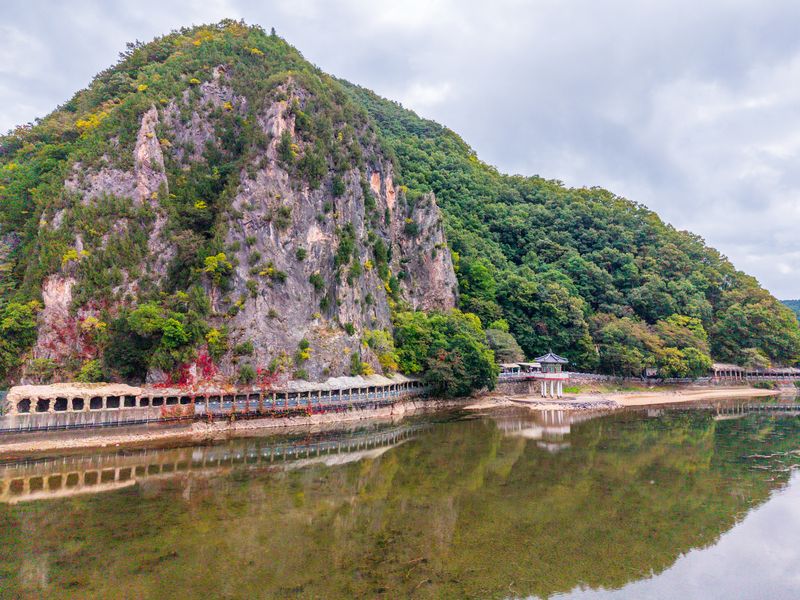
Stretching about 15 km from Haenggok-ri in Geunnam-myeon to Hawon-ri in Geumgangsong-myeon, Bulyeongsa Valley is a place where unusual rock formations and clear water come together. The valley winds along the road, displaying different colors with each season. In autumn, the trees on the mountain slopes gradually change color, adding a seasonal touch to the scenery shaped by the rocks and water.
For a view of the valley at its most scenic, stop by one of the overlooks. The valley can be seen from Bulyeongjeong and Seonyujeong. Seonyujeong is particularly well suited to taking in the sweeping view of the valley as it bends in an S shape. The valley’s striking scenery can also be spotted at various points along the drive, making this a route well worth taking by car.
Following the valley to Bulyeongsa Temple, visitors can experience the tranquil atmosphere of a mountain temple. The temple stands at the point where Bulyeongsa Valley begins. Its name is said to come from the shadow of a rock shaped like Buddha appearing in a pond. Exploring the temple’s history and legends alongside the valley’s natural scenery is part of the pleasure of the trip.
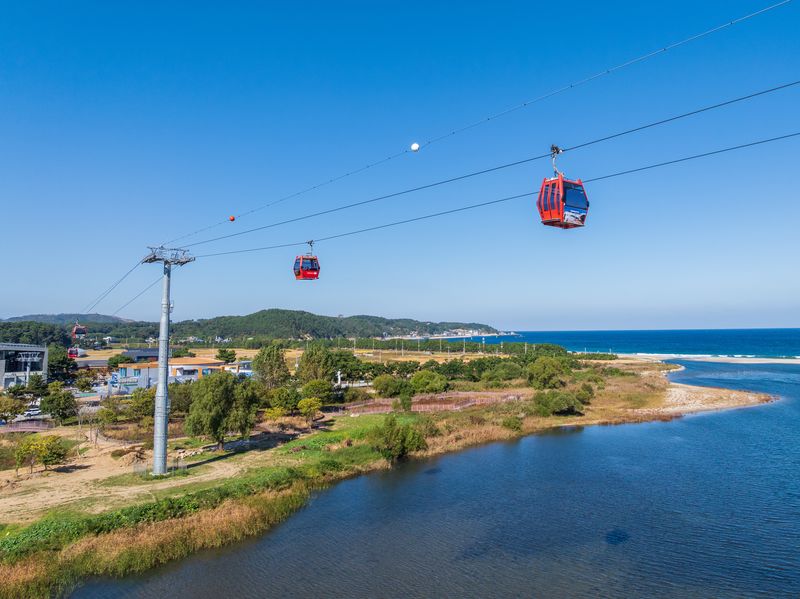
After exploring the mountains and valleys, head to Wangpicheon Park. Located at the estuary where Wangpicheon meets the East Sea, the park offers a close-up look at Uljin’s natural environment. With facilities including Uljin Aquarium and the Uljin Insect Exploration Center, it is also a good destination for families. Visitors can observe seasonal changes in the river ecosystem, including sweetfish and salmon.
Visitors can take the cable car from Wangpicheon Park to Mangyangjeong Pavilion. It offers views of both Wangpicheon and the blue East Sea, making the ride itself part of the sightseeing experience. Choose a crystal cabin with a transparent floor for a more vivid view of the scenery unfolding below.
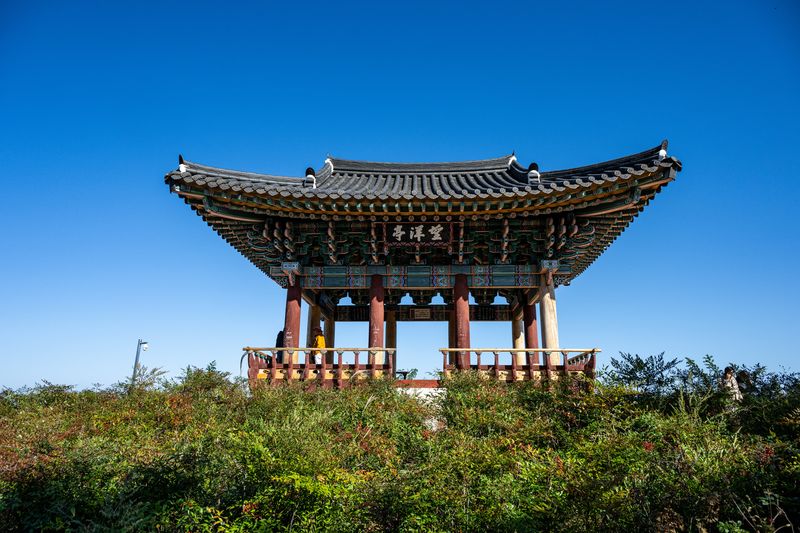
Cross Wangpicheon by cable car to reach Mangyangjeong Pavilion. Set on a seaside hill, the pavilion is a good place to look out over the East Sea. King Sukjong of Joseon is said to have bestowed a plaque bearing the words “Gwandong Jeillu,” meaning “the finest pavilion in Gwandong,” because he considered the scenery here the best among the Eight Scenic Views of Gwandong. Seongnyugul Cave nearby is another must-see on a trip to Uljin. Formed about 250 million years ago, the limestone cave is also called the “Underground Geumgang” for the beautiful scenery created by its stalactites and stalagmites.
■ Southern Uljin: From Wolsongjeong Pavilion to Pyeonghae Sand Dune Wetland
In southern Uljin, visitors can find landscapes where the sea, pine groves and wetlands come together. Wolsongjeong Pavilion, Gusan Beach and Pyeonghae Sand Dune Wetland Ecological Park, all in the Pyeonghae-eup area, are close to one another and easy to visit together. If you have focused on mountains and valleys in northern Uljin, consider planning a leisurely walk along the coast in the south.
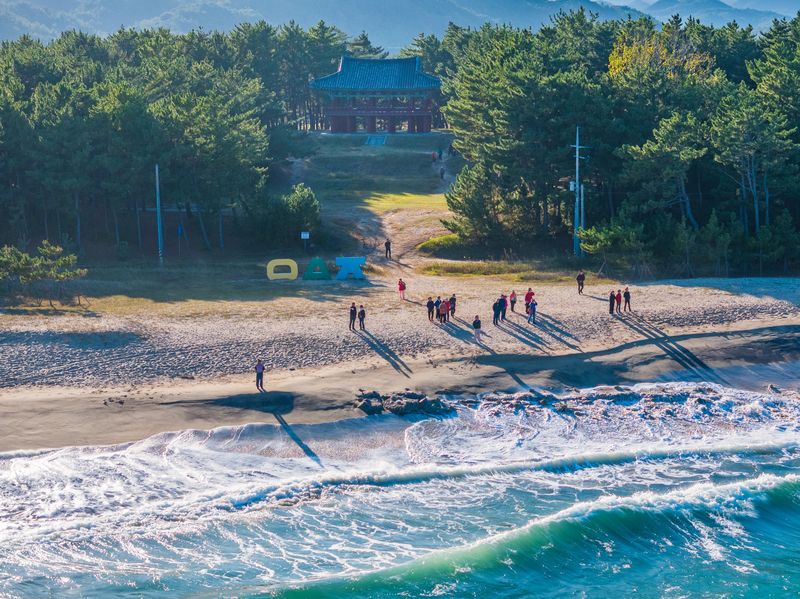
Start at Wolsongjeong Pavilion, one of the Eight Scenic Views of Gwandong. Said to have been first built during the Goryeo period, the pavilion offers an impressive view of the East Sea beyond a dense pine grove. Two stories are told about the name Wolsong: one interprets it as “moonlit pines,” while the other says it refers to immortals flying over the pine grove, or “crossing the pines.”
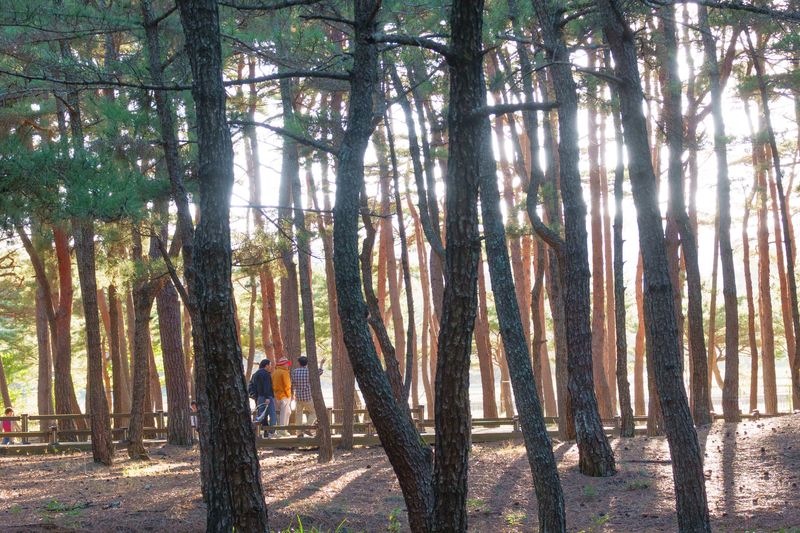
Gusan Beach, close to Wolsongjeong Pavilion, is a peaceful place to enjoy the sea. It is known for its broad, 500-meter-long white-sand beach and clear water. A pine grove runs along the back of the beach, making it a pleasant place to walk among the trees after taking in the sea view. The beach is used for swimming in summer, but visitors can also stroll along the shore and enjoy the atmosphere of the East Sea in other seasons.
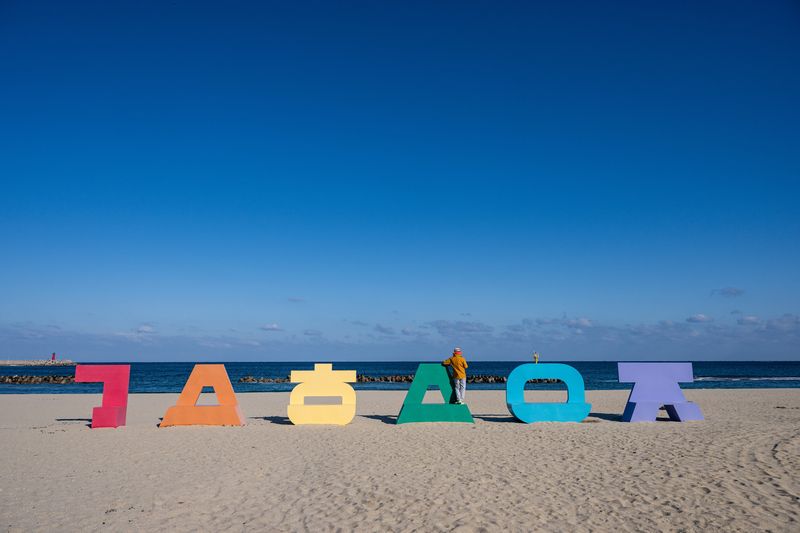
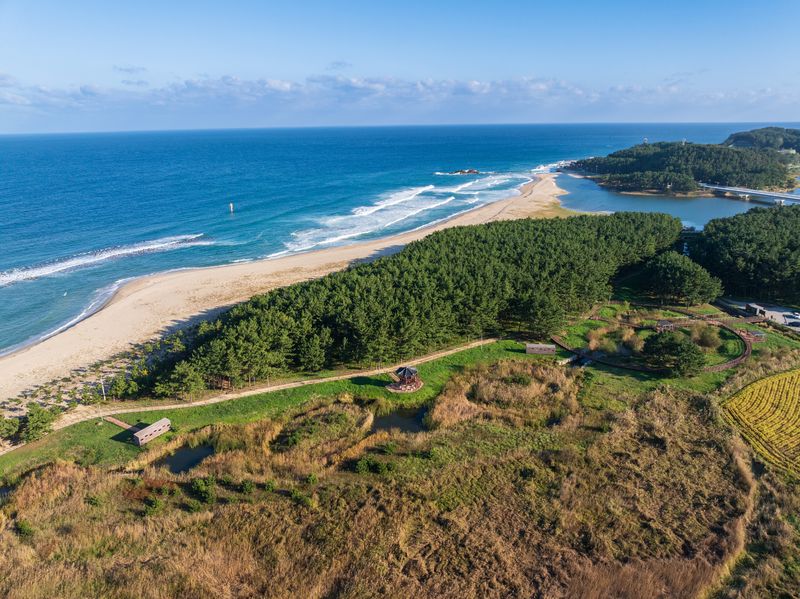
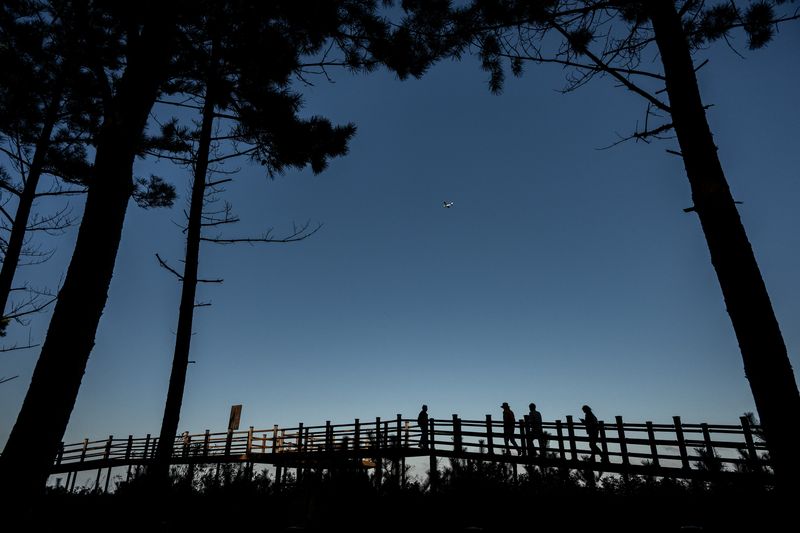
Continue a little farther down the coast to reach Pyeonghae Sand Dune Wetland Ecological Park. The ecological park was created using the coastline and backshore wetlands around Gusan Beach and Wolsongjeong Pavilion. A variety of observation facilities, including a coastal lookout, a bird-watching platform and a dune observatory, are connected by trails, making it a pleasant place to walk while exploring nature.
The appeal of this place lies in the way the sea and wetlands come together. Coastal dunes are landforms created when windblown sand accumulates, and parts of the Pyeonghae area remain where visitors can observe how these dunes develop. Black pine groves and wetland plants grow around the dunes, while a variety of living things inhabit the estuary of Namdaecheon, where fresh and seawater meet.
At first glance, the area may look like a broad open plain, but its ecological value is considerable. A detailed survey conducted in the past confirmed that it provides habitat for a range of birds, fish and plants, as well as endangered wildlife such as Eurasian otters, falcons and leopard cats.
Pyeonghae Sand Dune Wetland Ecological Park does not boast the spectacular attractions of a famous tourist destination. Instead, amid a landscape where the sea, sand, pine groves and wetlands unfold in succession, visitors can take their time observing the varied coastal ecosystem.
[email protected] Sun-Min Jung Reporter