Lee: “CPTPP unlikely to be finalized during my term ... We have to get it done for the country, even if it draws criticism”
- Input
- 2026-10-26 14:35:41
- Updated
- 2026-10-26 14:35:41
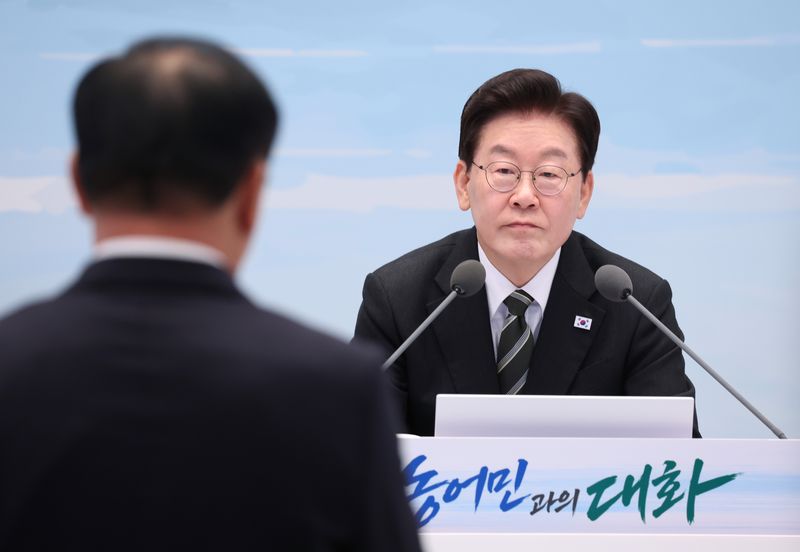
[Financial News] President Lee Jae-myung said on the 26th, regarding South Korea’s accession to the Comprehensive and Progressive Agreement for Trans-Pacific Partnership (CPTPP), “It is far more likely that it will not be finalized during my term,” but added, “For the country as a whole, we have to get it done, even if it brings some condemnation and criticism, so that we can move on to the next stage.” He reaffirmed that South Korea would not apply to join this year, while signaling that it should still take the necessary steps in the country’s long-term interests.
In his opening remarks at the “Conversation with Farmers and Fishers” event at the Cheong Wa Dae State Guest House that day, Lee said, “The CPTPP issue I’m most interested in is one where applying to join does not necessarily mean the application will be approved. So many countries are involved, and every country has to agree. If we apply to join, we have to obtain individual consent from all 12 countries. It could take several years to complete.”
He continued, “In fact, the easiest choice for a politician is simply not to do something like this. Because even if I do, it is far more likely that it won’t be finalized during my term. Even if we start right now, if we’re talking about doing it next year or the year after, we have to assume it will almost certainly not be completed during my term,” he explained.
He stressed, “There is a very high likelihood that it will ultimately end with nothing to show for it except criticism. Even so, for the country as a whole, we have to get it done, even if it brings some condemnation and criticism, so that we can move on to the next stage.”
Lee made clear, however, that the farming and fisheries sectors should not be forced to make one-sided sacrifices in the course of pursuing trade policies, including CPTPP accession. “South Korea is an open trading nation that depends on exports and trade, so it is very important to expand the global export markets we call our economic territory,” he said. “We cannot live on semiconductors alone, but, on the other hand, we cannot live on agriculture alone either. All of this has to coexist in harmony.”
He noted, “As we have developed export markets, up to now, in my view, many sacrifices have been imposed on our country, particularly on its agriculture and fisheries sectors. I think that until now, we have in effect been asking them to endure hardship and sacrifice for everyone simply because they are small groups with little voice.”
He stressed, “The country’s national strength and objective circumstances have both improved considerably, so we have become a country capable of pursuing policies that benefit the nation as a whole without making someone unfairly bear those losses. We must not impose losses and harm unilaterally on people just because they lack power or are few in number.”
He again addressed the need to compensate for harm caused by policies. “A normal, common-sense society provides special compensation commensurate with special sacrifices,” Lee said. “The aim of every policy in the Republic of Korea is to ensure that no sector, person, or region is treated unfairly. If special sacrifices are made for everyone’s benefit, it is only right to provide sufficient compensation—commensurate with those sacrifices, or more. That is the fundamental premise.”
He also said, “When it comes to compensating for losses caused by the commitments the state makes in the future or by policies it adopts, this must not be handled on the basis of ‘if it works out, that’s fortunate; if not, so be it.’ It must be clearly fulfilled as an obligation.” He asked rhetorically, “Only when that kind of trust has been built can people believe the promises and make concessions or accept what is proposed, can’t they?”
Regarding the timetable for CPTPP accession, Lee reaffirmed the existing policy, saying, “I have instructed that we not apply to join this year, and that we decide on a course after communicating fully with all of you.” He pledged, “Our government will do its utmost to ensure that our agriculture, fisheries, forestry, and livestock industries do not suffer unforeseen harm, and that these sectors, which are essential to the survival of the Republic of Korea, are not hit or weakened.”
He added, “We will debate, discuss, respect, coordinate, consult, and seek agreement as much as possible, but there will ultimately be areas where we cannot reach agreement. Those final gaps, where interests do not align, will ultimately have to be addressed by someone with the authority taking responsibility for a decision and then bearing all the responsibility that comes with it. I think that is my role.”
[email protected] Choi Jong-geun, Seong Seok-woo Reporter