Jeju accounts for just 0.4% of venture investment... Province plans 1 trillion won fund with 100 billion won in provincial funds
- Input
- 2026-10-26 14:15:11
- Updated
- 2026-10-26 14:15:11
【Financial News | Jeju=Jung Yong-bok】 Jeju, which accounts for just 0.4% of venture investment nationwide, is planning to establish an investment fund worth 1 trillion won by 2030, with 100 billion won from the provincial budget. Half of the target—500 billion won—will be allocated to industrial infrastructure such as offshore wind power, space and biotechnology, while securing the remaining 900 billion won from government, public and private sources remains a key challenge.
According to the Jeju Special Self-Governing Province on the 26th, Kang Ae-suk, head of the province’s Economic Vitality Bureau, held a briefing that day in the press room at the provincial government office and announced the “Basic Strategy for Establishing the Jeju Future Growth Fund (2027–2030).” The medium- to long-term plan will use provincial finances as seed money to attract government policy financing and private investment, and provide funding for business growth and investment in industrial facilities.
The strategy is prompted by the concentration of venture investment in the Seoul metropolitan area. According to figures from the Ministry of SMEs and Startups for the first half of this year, based on venture investment companies and associations, investment in Jeju totaled 20.1 billion won, or about 0.4% of the overall 4.5291 trillion won. The Seoul metropolitan area received 3.0972 trillion won over the same period, accounting for 68.4%.
Investment in Jeju rose about twofold from 10 billion won in the same period last year. However, despite a nationwide increase in investment, the share of funding flowing to regional businesses remains low. A structural problem persists: even businesses with growth potential that secure early-stage startup funding can struggle to attract follow-on investment needed to expand production facilities and enter markets.
The financing plan presented by the Jeju provincial government combines 100 billion won from the provincial budget with 300 billion won from government policy funds and policy financing, and 600 billion won from public institutions and private capital. The plan is to attract outside funding equivalent to nine times the province’s contribution and expand total investment resources to 1 trillion won.
The 1 trillion won is not funding or investment money that has already been secured. It is the cumulative target for multiple funds and industry-specific investment projects to be established in stages by 2030. The amounts will count as funds actually raised only once investors have been recruited and investment commitments secured for each fund.
The annual targets are 99.25 billion won in 2026–2027, followed by 247 billion won in 2028, 275 billion won in 2029 and 378.75 billion won in 2030. About 65% of the overall target is concentrated in 2029–2030, making it important to secure government funding and attract private investment in the latter part of the plan.
Half of the funding will go to industrial infrastructure, not direct equity investments in companies.
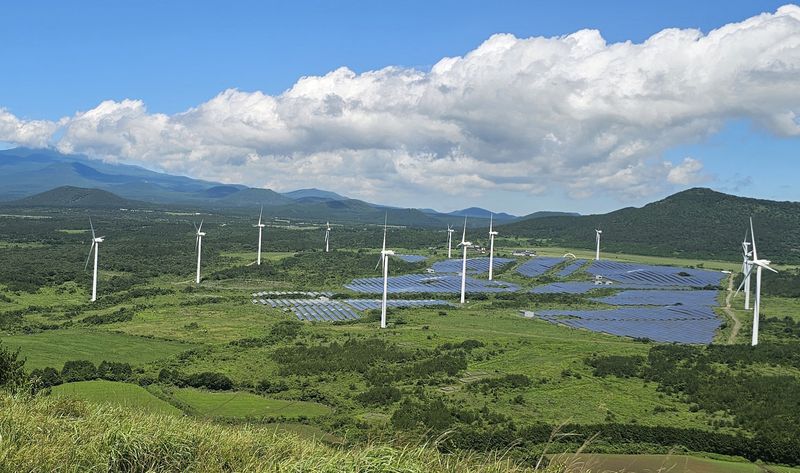
The provincial government has allocated 500 billion won of the 1 trillion won to an infrastructure and strategic investment account. Investment targets include renewable energy and energy storage systems (ESS), manufacturing and testing facilities for small satellites, biotechnology production and demonstration facilities, and artificial intelligence (AI) data centers.
An ESS stores electricity and supplies it when needed. It is used to address fluctuations in power generation from renewable sources such as solar and wind. In Jeju, investment is needed in related facilities, given the need to consider both the expansion of renewable energy and power grid operations.
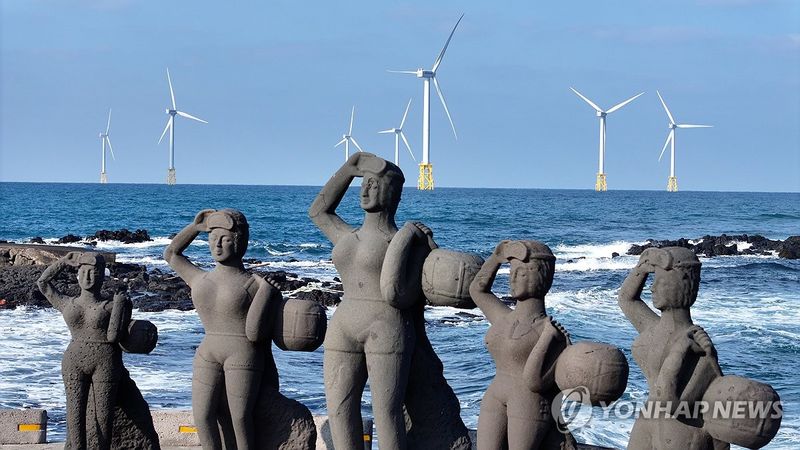
The infrastructure investment project the provincial government is giving priority consideration to is the Handong-Pyeongdae offshore wind project in Gujwa-eup, Jeju City. It plans to link the project with the government’s Regional Revitalization Investment Fund, establish an investment vehicle for the project and attract private capital. However, no decision has yet been made to invest Future Growth Fund money in the project. A review of its feasibility, permits and approvals, investor recruitment, and financial structure must come first.
Legal restrictions are also a challenge to be addressed. Under the current system, the provincial government faces limits on directly investing in large-scale infrastructure projects. It plans first to work with government policy funds that it is permitted to invest in under current laws and regulations, while also considering revisions to the Jeju Special Act to expand its ability to invest directly.
A total of 250 billion won has been allocated for investments tailored to companies’ growth stages. Eligible businesses range from early-stage startups to growth-stage companies expanding production and operations, as well as companies preparing for an initial public offering (IPO). An IPO is the process through which a company lists its shares on a securities market to raise funds from outside investors.
A total of 150 billion won has been allocated for investments in regional value and content. Investments will go to businesses and projects in agriculture and food, tourism, cultural content, and the social and solidarity economy, including local businesses that use Jeju specialties and regional resources.
The remaining 100 billion won is planned for a strategic investment fund of funds led by Jeju. Rather than investing directly in companies, a fund of funds invests in multiple individual investment funds. Specialized managers in each field select and manage the companies that receive the actual investments.
The principle the provincial government has particularly emphasized is mandatory investment in the region. It plans to require business investment funds to invest at least twice the province’s contribution in Jeju companies. For example, if the province contributes 5 billion won to a particular fund, the fund would commit to investing at least 10 billion won in Jeju companies.
This requirement does not mean that the entire 1 trillion won will be invested directly in Jeju companies. The infrastructure account will invest in projects in Jeju, while the business investment account will be managed under a separate regional investment requirement.
The regional ties of companies receiving investment will also be assessed. Eligible companies may include not only those headquartered in Jeju, but also those that operate a branch, factory or research and development center there, as well as companies planning to relocate to Jeju.
However, companies that move only their registered address to Jeju will not count toward regional investment results. The provincial government plans to verify actual business operations, ongoing employment and research and development activities. Companies that receive investment on the condition that they relocate to Jeju will count toward final results only if they meet the agreed relocation and employment conditions.
The performance of existing funds will provide a benchmark for assessing the impact of the new strategy. Since 2023, the provincial government has contributed 11.5 billion won from its budget to establish five funds with a total value of 319.6 billion won. The funds secured commitments to invest 32.15 billion won in Jeju under their regional investment requirements.
To date, 65% of the committed amount has been disbursed, with investments made in 23 Jeju companies. There is a substantial gap between the total amount raised by the funds and the amount actually invested in Jeju companies. This is why the size of the funds established must be distinguished from actual regional investment results for the new Future Growth Fund as well.
The 319.6 billion won in the five existing funds is excluded from the new 1 trillion won fundraising target. The new investment plan began with the 20 billion won Jeju Local Business Growth Fund No. 1, established on September 28. The provincial government contributed 1 billion won to the fund, which was tasked with investing at least 2 billion won in five or more local businesses in Jeju. That 20 billion won is included in the new 1 trillion won target.
In 2027, the provincial government plans to establish a regional growth fund and specialized funds for agriculture and food and cultural content. However, uncertainty remains over securing government funding.
Last March, the Ministry of SMEs and Startups selected the Daegu-Gyeongbuk and Gwangju-Jeonnam regions, Daejeon and Ulsan as priority areas for establishing regional growth funds. Jeju was designated a secondary-priority area, along with South Gyeongsang, North Jeolla and North Chungcheong provinces. The government made it possible to establish funds without an additional call for proposals if funding, including the relevant 2027 budget, is secured. Although Jeju is on the list of secondary-priority areas, government investment funding has not yet been secured.
The provincial government is also considering setting up a specialized organization to manage the funds. In 2027, it plans to compare three options through a feasibility study: establishing a new technology business finance company, using existing investment- and contribution-funded institutions, or setting up a local public corporation.
A new technology business finance company is a financial institution that invests in or lends to companies with technological capabilities and growth potential. Unlike a general administrative organization, it has specialized investment review and fund management functions.
Until a specialized management system is in place, the provincial government plans to use external professional fund managers and centrally track investment and exit results for each fund. Its performance evaluations will also take into account changes in companies’ employment and sales after investment, their ability to attract follow-on investment, and whether they maintain business operations in Jeju.
“We will connect Jeju companies with capital so they can receive the investment they need when they need it, and build a growth investment ecosystem in which the results of investment flow back to Jeju businesses and industries,” said Kang Ae-suk, head of the Jeju provincial government’s Economic Vitality Bureau.
[email protected] Jung Yong-bok Reporter