[Exclusive] Public hearing set for first tax reform plan under Lee Jae Myung administration... Democratic Party seeks to move past ‘tax hike controversy’
- Input
- 2026-10-26 15:17:59
- Updated
- 2026-10-26 15:17:59
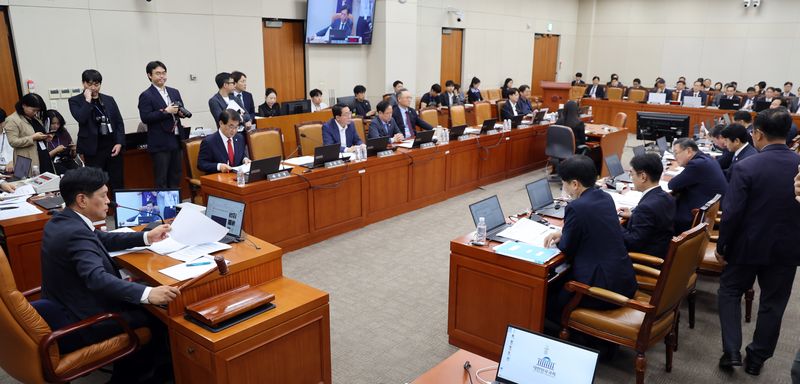
[Financial News] The first public hearing on a tax reform plan since the launch of the Lee Jae Myung administration will be held at the National Assembly on the 3rd of next month. Amid continued controversy over the government’s tax-increase measures, including higher taxes on real estate holdings and a reduced special deduction for long-term holding, the ruling and opposition parties have unusually agreed to hold a hearing with tax bill review just around the corner. Attention is focused in particular on whether the Democratic Party of Korea, which has been weighing the government’s proposal against public opinion, will use the hearing as an opportunity to revise the tax reform plan. Observers say the hearing could prove a turning point in the ruling party’s efforts to find a way out of the ‘tax hike controversy.’
According to political sources on the 26th, the ruling and opposition parties agreed to convene a plenary meeting of the National Assembly’s Finance, Economy and Planning Committee on November 3 and hold public hearings on the government’s tax reform plan and the bill to establish the Future Response Fund. The fund bill must go through a public hearing because it is new legislation, but there is no separate requirement to hold one for the tax reform plan. The parties’ decision to hold a hearing ahead of tax bill review is seen as evidence of the scale of the controversy surrounding the government’s proposal. Relevant experts are expected to attend as witnesses and present their views on key issues.
The government’s tax reform plan, announced on August 3, was embroiled in controversy from the outset. Key measures include increasing the Comprehensive Real Estate Holding Tax and Property Tax, which are taxes on real estate holdings, and reducing the special deduction for long-term holding (the long-term holding deduction). In particular, the proposal to reduce tax benefits for owners of a single home who do not live in it prompted objections that their tax burden could become excessive. Controversy also continues over whether taxation of virtual assets will take effect in 2027 and over the so-called ‘stock-price suppression prevention bill.’
The People Power Party has labeled the government’s tax reform plan a ‘tax bomb’ and is demanding a complete overhaul. It maintains that property tax reform, including higher taxes on holdings and a reduced long-term holding deduction, should be reconsidered from scratch. The party plans to highlight the flaws in the government’s proposal at the hearing and take the lead in the upcoming review by the Tax Subcommittee of the Strategy and Finance Committee. A People Power Party member of the committee told Financial News, “We will gather opinions through the public hearing and then draw up our strategy for reviewing the tax bills.”
The Democratic Party of Korea’s agreement to hold a public hearing has also drawn attention. On the surface, the aim is to gather a broad range of views for and against the government’s tax reform plan and secure procedural legitimacy in the legislative process. However, there is also speculation that the Democratic Party, which has been weighing the government’s tax-increase policy against public opinion, may use views raised at the hearing to justify revising the government’s proposal. In effect, formally gathering even opposition to the proposal would create room to adjust some disputed points during tax bill review.
Caution is also being urged within the Democratic Party over some of the proposed tax reforms. Party leader Kim Min-seok has previously voiced opposition to increasing the tax burden on owners of a single home who do not live in it. On the question of delaying taxation of virtual assets, he also left open the possibility of an adjustment, saying, “I will work to help the National Assembly and the government find a reasonable solution.” Reducing the income tax deduction for credit card spending and ending the excise tax relief for draft beer—both of which could increase the burden on the self-employed and small business owners—are also issues the party is weighing. The scope of any revisions to the government’s proposal during tax bill review may depend on the views raised at the hearing.
A public hearing on the bill to establish the 162 trillion-won Future Response Fund will also be held that day. The government plans to build a large-scale fund using additional tax revenue next year and make strategic investments to secure future growth engines, while setting aside surplus funds to strengthen fiscal capacity and help repay government bonds.
The ruling and opposition parties are also divided over the Future Response Fund. The Democratic Party agrees that the fund is needed but says it must not be run as the government’s ‘pocket money.’ It is considering safeguards, including strengthening the National Assembly’s powers to review and approve the fund in advance. The People Power Party, meanwhile, says that under the National Finance Act, excess tax revenue should first be used to repay national debt and is demanding that the fund proposal be withdrawn altogether. The parties’ clash over the tax reform plan and the Future Response Fund is expected to intensify after the public hearing.
[email protected] Lee Hae-ram, Kim Hyeong-gu Reporter