China Holds Fifth Plenum One Year Before Xi Jinping’s Fourth Consecutive Term Is Confirmed; Sweeping Reshuffle Expected
- Input
- 2026-10-26 13:52:21
- Updated
- 2026-10-26 13:52:21
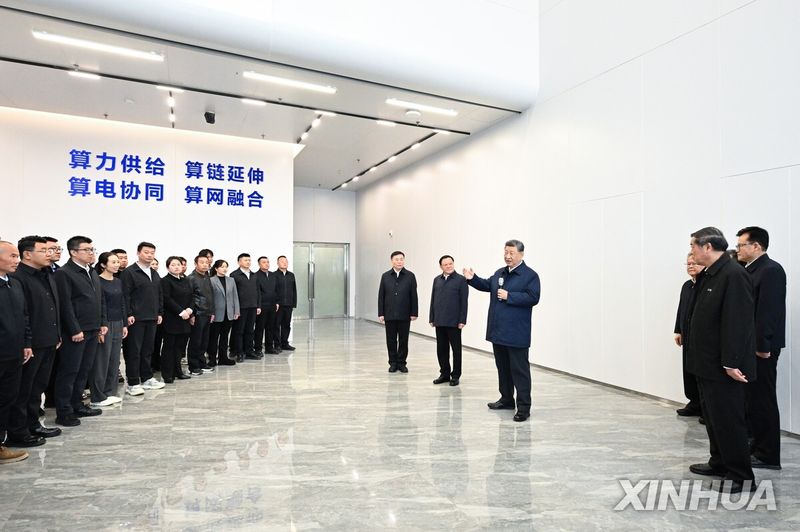
[Financial News] The Fifth Plenary Session of the 20th Central Committee of the Chinese Communist Party (the Fifth Plenum), a meeting of China’s top official decision-making body, opens on the 26th and will run through the 29th in Beijing.
The meeting is being held one year before the 21st National Congress of the Chinese Communist Party, which will confirm Chinese President Xi Jinping’s fourth consecutive term. It is expected to bring measures to strengthen the foundation for another term, including a major personnel overhaul, a tougher anti-corruption drive and other steps to reinforce party discipline. Major foreign media outlets predicted that the four-day meeting, held behind closed doors starting today, would formalize the largest-ever turnover of senior party, government and military officials.
The Central Committee of the Chinese Communist Party consists of 205 members, including the general secretary, the party’s top leader, and decides major policies and personnel appointments.
China’s top leadership reiterated its anti-corruption stance ahead of the meeting. At a Politburo of the Chinese Communist Party meeting chaired by Xi on the 23rd, it said, “We must maintain intense pressure to root out corruption and uphold a strict stance to the very end.” It also announced on the 25th, the day before the opening, that the results of inspections targeting 36 central institutions had been handed over to disciplinary authorities, including the Central Commission for Discipline Inspection and the National Commission of Supervision.
Currently, 20 Central Committee members and seven alternate members are under investigation on corruption allegations, and further expulsions are expected among military generals, who have faced sweeping purges over the past several years. A decision ratifying the expulsion from the Party of Zhang Youxia, former vice chairman of the Central Military Commission, and former member Liu Zhenli is also expected; both were stripped of their Party memberships and military status on the 21st of last month. How to fill the vacuum in the military leadership caused by a series of ousters is a major focus of interest.
Hong Kong’s Ming Pao reported that 45 members could be removed from the Central Committee, potentially bringing the number of vacancies to a record high.
A series of appointments to local leadership posts took place ahead of the meeting. On the 24th, appointments to party and government leadership posts were announced in six provinces: Hunan, Yunnan, Fujian, Qinghai, Hebei and Jiangxi. Wang Zhijun was appointed Hunan provincial party secretary and Mo Gaoyi Yunnan provincial party secretary. Appointments were also announced for incoming governors in the other four provinces.
China has begun seriously promoting younger, seventh-generation officials as potential future leaders. The seventh generation refers to those born from the late 1960s through the 1970s. Many seventh-generation officials who have taken top posts in local governments or central ministries this year are expected to join the Central Committee.
Hong Kong’s South China Morning Post (SCMP) commented, “With the countdown to the 2027 Party Congress underway, this meeting will provide new momentum for strengthening the Party’s control and securing complete loyalty.” SCMP identified seventh-generation officials as strong candidates to rise to the top leadership after 2032.
The Center for China Analysis at the U.S.-based Asia Society said in a report in May, “Xi is building a talent pool that can both diffuse immediate succession threats and allow him to retain control beyond 2032.”
[email protected] Lee Seok-woo, International Affairs Specialist Reporter