Francesca Albanese takes aim at those sustaining the war beyond Gaza [Hong Chae-wan's Global Profile]
- Input
- 2026-10-31 05:00:00
- Updated
- 2026-10-31 05:00:00
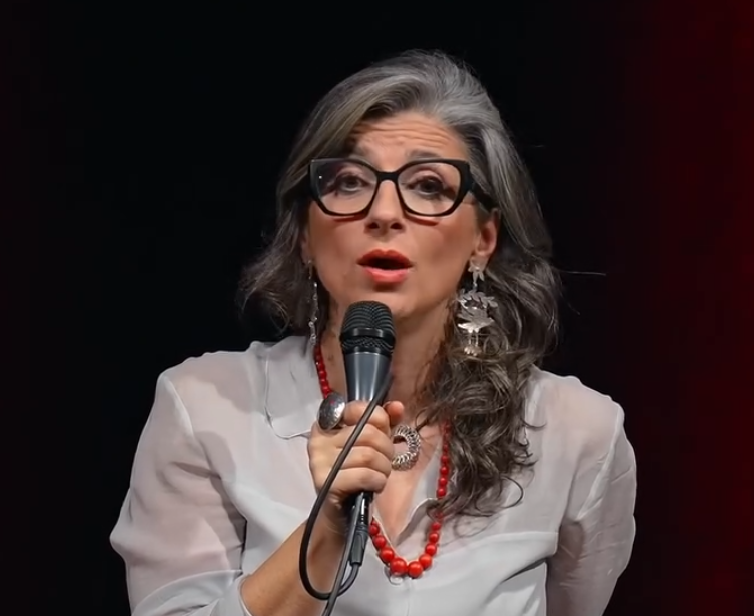
Assessments of her differ sharply. Supporters see her as someone who upholds the principles of international law despite pressure from powerful countries. In fact, last December, nearly 300 figures from 33 countries, led by a member of the European Parliament, recommended her for this year's Nobel Peace Prize. The United States, Israel and others, by contrast, accuse her of bias in her remarks and activities. The lawyer who once studied the rights of Palestinian refugees now stands at the center of an international debate over the independence of human rights monitoring.
A lawyer who studied the legal status of refugees
Albanese is from Ariano Irpino in southern Italy. After studying law at the University of Pisa, she earned a master's degree in human rights law from SOAS University of London. She later worked at the Office of the UN High Commissioner for Human Rights (OHCHR) and the UN Relief and Works Agency for Palestine Refugees (UNRWA), among other organizations, addressing human rights, refugee protection and forced displacement in the Middle East and North Africa, and the Asia-Pacific region.Palestinian refugees were at the heart of her expertise. In 2020, she published the revised edition of “Palestinian Refugees in International Law” with refugee law expert Lex Takkenberg. The book analyzed the origins of the Palestinian refugee issue, refugees' legal status and the protection framework. What rights people who had lost their homes possessed, and what responsibilities the international community should bear, were longstanding subjects of her research.
Albanese began serving as the Special Rapporteur on human rights in the occupied Palestinian territory in May 2022. She was the first woman to hold the post. Her official mandate was to investigate and report on the human rights situation in the Palestinian territories occupied since 1967.
Seeking to hold companies and capital accountable for their role behind military operations
The Gaza war brought Albanese to global attention. In her March 2024 report “Anatomy of a Genocide,” she found reasonable grounds to believe that Israel had committed genocide against Palestinians in the Gaza Strip.Her focus widened beyond governments and militaries to the economic relationships underpinning their war. In her 2025 report “From the Economy of Occupation to the Economy of Genocide,” she argued that companies were supporting Israel's occupation and the destruction of the Gaza Strip, and profiting in the process. She questioned how corporate activities—including not only arms and military equipment but also technology and services—were connected to human rights violations.
The question raised by the report was how far responsibility for war and human rights violations could extend. Its argument was that responsibility should be examined not only for those who directly use force but also for companies that provide supplies, technology and an economic foundation. It could also be seen as a warning that transactions companies consider ordinary business can amount to helping violate international law.
In her report “Torture and Genocide,” submitted in March this year, she addressed the torture of Palestinians since 2023. Analyzing human rights violations both inside and outside detention facilities, she linked them to the issue of genocide.
The paradox of a human rights investigator becoming a target of sanctions
The United States sanctioned Albanese in July last year. The U.S. explanation was that she had been involved in efforts to prompt the International Criminal Court (ICC) to take action against U.S. and Israeli nationals.The president of the UN Human Rights Council and the Coordination Committee of Special Procedures objected. They were concerned that sanctions targeting human rights investigations could undermine independent monitoring.
Then, in May this year, a U.S. federal court temporarily blocked the sanctions, saying they could violate freedom of expression. About a week later, the United States removed her from its sanctions list, but after an appeals court again allowed the sanctions to be enforced, it eventually put her back on the list. The clash over the independence of human rights monitoring and the U.S. authority to impose sanctions had escalated into a legal battle.
Despite controversy over her remarks ... speaking out on Gaza's future
It is difficult to explain all the controversy surrounding Albanese solely as a result of external pressure. Her own past remarks have also drawn criticism. A 2014 post portraying the United States as subservient to the “Jewish lobby” was criticized for invoking the antisemitic stereotype that Jews secretly control the country from behind the scenes.Albanese acknowledged at the time that the wording was inappropriate but rejected accusations of antisemitism. Later, 65 scholars, including researchers of antisemitism and the Holocaust, also defended her, acknowledging problems with the wording itself but arguing that her intended meaning and the context should be considered.
There have also been claims that her remarks were misrepresented. In February this year, some European ministers reacted to claims that she had called Israel “the common enemy of humanity.” British media, however, reported that they found no such reference to Israel in the transcript of the speech they reviewed. The UN Coordination Committee of Special Procedures also criticized it as “an attack based on misinformation.” This is why it is important to distinguish criticism that questions the propriety of actual remarks from attacks that distort them.
Albanese has recently also spoken out about how Gaza's postwar future should be decided. On the 21st, in Jakarta, Indonesia, she criticized U.S. President Donald Trump's Gaza peace plan. Saying that it is being led by the United States and Israel and does not sufficiently reflect the voices of Palestinians, she urged the Indonesian government, which is seeking to join the initiative, to reconsider.
Her work on the legal rights of refugees has led to questions about responsibility for war and the postwar order. As the future of Palestinians is decided, Albanese is asking the international community in turn whether the voices of the people directly affected are being adequately reflected.
[email protected] Hong Chae-wan Reporter