“LGD won’t fall any further”: Maintains 11,000-won target price... IPARK Hyundai Development Company operating profit surges 127% [Stocktopia]
- Input
- 2026-10-26 11:05:55
- Updated
- 2026-10-26 11:05:55
[Financial News] Here is a roundup of reports from major securities firms as of the morning of October 26.
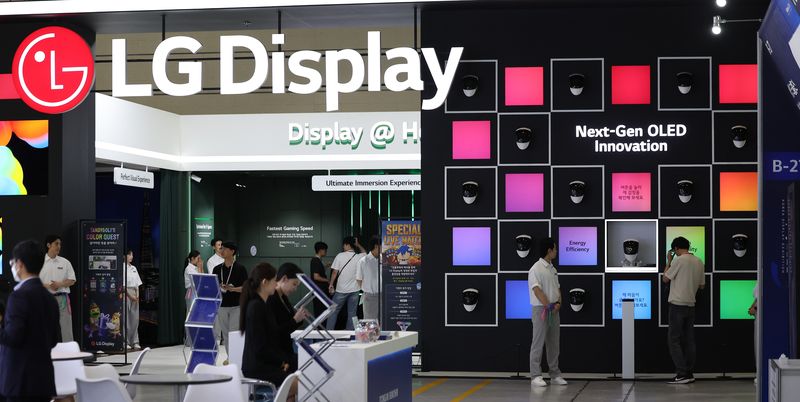
LG Display was viewed as having limited downside potential, despite cost pressures from the falling exchange rate and rising semiconductor prices expected to continue into the fourth quarter, as concerns about demand for finished products had largely been reflected in its share price.
Analysts said IPARK Hyundai Development Company posted third-quarter results that exceeded market expectations, with a recovery in revenue from its own-development housing projects and improved profitability in outsourced housing projects confirmed at the same time. GigaVis, a semiconductor substrate inspection equipment maker, is expected to see its order backlog continue to grow next year as large orders keep coming in.
LG Display: Most concerns already reflected in share price (Kiwoom Securities)
◆ LG Display (034220)— Kiwoom Securities / Researcher Kwon Min-kyu- Target price: 11,000 won (maintained) | Previous closing price: 7,150 won
- Investment rating: Buy (maintained)
Kiwoom Securities maintained its target price of 11,000 won for LG Display, saying that although cost pressures from the falling exchange rate and chipflation would make it difficult to improve profitability in the near term, the potential for further share-price declines was limited.
The company reported third-quarter revenue of 6.277 trillion won, down 10% from a year earlier, and operating profit of 250.6 billion won, down 42%, slightly below the market consensus of 259.1 billion won. Shipments of large OLED panels and smartphone panels remained solid, but margins are estimated to have fallen from a year earlier, given that semiconductors and memory account for more than half of smartphone component costs.
Researcher Kwon Min-kyu said the industry was “in a phase where rising costs due to chipflation are leading to higher prices for finished products, and the resulting higher prices are sustaining weak demand.” Expecting the falling exchange rate and pressure to cut selling prices to persist into the fourth quarter, he lowered the revenue and operating profit forecasts for the quarter by 3% and 15%, respectively.
However, solid shipments to major North American customers are supporting the share price, and shipments are expected to increase further next year as the company expands its share of business with customers. Researcher Kwon said he believed that “the concerns over demand for finished products and uncertainty have largely been reflected, with the stock down 57% from its peak.”
He added, “At a time when expectations for the global finished-products industry are being lowered, it is important to defend margins and maintain profitability,” stressing that “this is a difficult period, but the company is building the conditions for a rebound if the external environment changes.”※ ChipflationA blend of “chip” and “inflation,” the term describes how sharp increases in semiconductor prices drive up costs and retail prices across a range of electronic products. When prices of finished products such as smartphones and TVs rise, demand weakens, putting panel makers under pressure from both higher costs and slower demand.※ Price-to-book ratio (PBR, Price-to-Book Value Ratio)A metric calculated by dividing a company’s share price by its net assets per share, showing the share price relative to the company’s book value. A ratio below 1 means the company’s market capitalization is lower than its net assets, and is used as a measure of potential downside in the share price.
IPARK Hyundai Development Company: Strong earnings visibility (Hyundai Motor Securities)
◆ IPARK Hyundai Development Company (294870)— Hyundai Motor Securities / Researcher Shin Dong-hyun- Target price: 30,000 won (raised 7.1%, from 28,000 won) | Previous closing price: 21,950 won
- Investment rating: Buy (maintained)
Hyundai Motor Securities raised its target price for IPARK Hyundai Development Company to 30,000 won, saying the company had posted third-quarter results that exceeded market expectations. The company reported revenue of 1.0821 trillion won for the quarter, up 2.8% from a year earlier, and operating profit of 165.7 billion won, up 127%, with an operating margin of 15.3%.
Researcher Shin Dong-hyun said the company had “confirmed both a rapid recovery in revenue from its own-development housing projects and improved profitability in outsourced housing projects,” adding that “the resulting improvement in sales mix is expected to continue smoothly through 2027.” In other words, the improvement in the revenue mix is expected to continue into next year as both the higher-margin own-development housing business and the outsourced housing business, in which the company builds projects under contract, improve.
Researcher Shin said “Seoul One IPARK is about one-third complete and is contributing to revenue as planned,” adding that “revenue from large outsourced projects such as Paju Unjeong IPARK is beginning to ramp up in the second half of the year.” Seoul One IPARK, with presale revenue of 2.8901 trillion won, is the largest of the company’s own-development housing projects, which have combined presale revenue of 4.6 trillion won.
Researcher Shin judged that “earnings visibility remains high,” as both own-development and outsourced projects are expected to expand in scale and improve in profitability.※ Own-development and outsourced housing projectsAn own-development housing project is one in which a construction company buys the land itself and handles both development and construction. The company records all presale revenue as sales, resulting in higher margins, but also bears the risk of unsold homes. In an outsourced housing project, the company builds under contract for a developer or other client. Earnings are more stable, but margins are lower, making the balance between the two types of projects an important factor in a construction company’s profitability.
GigaVis: Equipment orders expected in stages, not as a one-off (iM Securities)
◆ GigaVis (420770)— iM Securities / Researcher Shin Hee-cheol- Target price: 185,000 won (raised 19.4%, from 155,000 won) | Previous closing price: 101,300 won
- Investment rating: Buy (maintained)
iM Securities raised its target price for GigaVis to 185,000 won, saying its order backlog continues to surge. GigaVis makes automated optical inspection equipment (AOI), which detects circuit defects on semiconductor substrates, and repair equipment (AOR), which fixes those defects.
Researcher Shin Hee-cheol said a 47 billion won order for a major domestic substrate manufacturer, announced on the 23rd, “covers AOI (automated optical inspection equipment) only, and follow-up orders for AOR (repair equipment) and FA (automation equipment) are likely.” He added that “given that inspection and repair equipment have historically been shipped in roughly similar proportions, additional orders of a similar size are expected.”
Researcher Shin estimated the current order backlog at about 230 billion won, adding recently disclosed new orders to the backlog reported in the company’s semiannual report. He said, “The backlog is likely to be even larger when undisclosed orders are taken into account.”
He added that “discussions on additional orders with major substrate manufacturers in Korea, Japan and Greater China are understood to be ongoing,” and expected the order backlog to continue growing next year.※ Automated Optical Inspection (AOI)This equipment uses cameras to capture circuit patterns on semiconductor substrates and automatically detect defects such as open and short circuits. High-performance substrates for AI servers have very fine circuitry, making defect detection crucial to yields; AOI equipment is therefore considered essential when substrate manufacturers expand capacity.※ Automated Optical Repair (AOR)This equipment uses lasers to automatically repair defective areas identified by optical inspection equipment. Because it is installed on production lines alongside inspection equipment, orders for repair equipment often follow orders for inspection equipment.
[Stocktopia]is an AI-powered stock-report briefing that compiles reports from major domestic securities firms. To keep receiving [Jutopia], please subscribe on the reporter’s page.
[email protected] Seong Min-seo Reporter