LH chief’s conviction that home prices will crash: Could it become reality? Price growth slows
- Input
- 2026-10-26 10:39:32
- Updated
- 2026-10-26 10:39:32
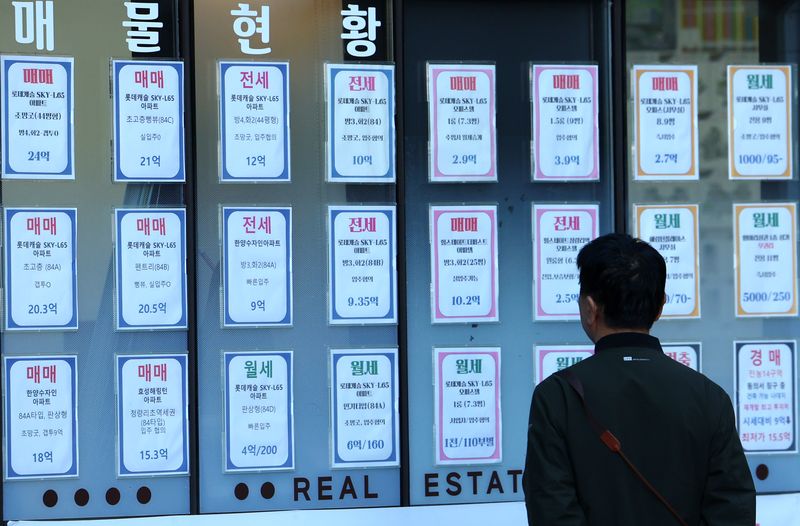
[Financial News] With Lee Seong-hun, president of Korea Land and Housing Corporation (LH), predicting a crash in home prices, signs of overheating in Seoul’s apartment market are easing, as listings approach 80,000 and price growth slows. Listings are rising rapidly not only in the Gangnam area but also in non-Gangnam districts such as Seongbuk, Gangdong and Dongjak, and the wait-and-see attitude among buyers appears to be spreading across Seoul.
However, apartment prices in Seoul have continued to rise for 89 consecutive weeks, while northern Seoul is still seeing weekly gains of around 0.3%. Although loan restrictions and rising interest rates are reducing buyers’ purchasing power, a shortage of rental listings and demand from end users are supporting the price floor. Some analysts say it remains to be seen whether this will lead to an actual price correction.
LH chief Lee: ‘Home prices could plunge’ → predicts they ‘will crash’
According to Newsis on the 26th, Lee affirmed that he was confident home prices would fall when asked by Kim Eun-hye, a People Power Party lawmaker, at a comprehensive parliamentary audit by the National Assembly’s Land, Infrastructure and Transport Committee on the 23rd. Citing a shortage of supply as the cause of current increases in home prices and jeonse and monthly rents, he said, “Supply will ramp up in earnest under our government over the next three years. Home prices will crash then, and once the market recognizes this ahead of time, it will inevitably stabilize.”
This is not the first time Lee has mentioned the possibility of a sharp drop in home prices. At an audit of LH on the 12th, he also cited factors including expanded supply and rising interest rates, predicting that “home prices could plunge going forward.” He then drew attention by saying, “If home prices stabilize, people won’t lose money even if they don’t buy a home right away.”
At this comprehensive audit, Lee went a step further, using the word “crash” and lending weight to his forecast of a decline. The government, however, is taking a cautious stance toward such predictions. On the same day, Minister of Land, Infrastructure and Transport Hong Ji-seon drew a distinction at the comprehensive audit, saying there was “no direct connection” in response to a question about the relationship between normalizing housing supply and a crash in home prices.
Minister Hong said, “Many different factors affect housing prices, so I don’t think the housing market changes because of any one factor.” He explained that, as supply expands, increases in the benchmark interest rate and mortgage rates could affect market stability going forward.
Listings for Seoul apartments are rising... around 78,000
The number of apartment listings in Seoul is trending upward. According to Asil, a real estate big-data company, there were 78,323 apartments listed for sale in Seoul on the 25th, the highest level in about seven months, since March 29, when the figure stood at 78,739.
Since the tax reform plan was announced on August 3, listings have risen by 17,914 (29.7%) in about three months, from 60,409. Notably, listings have increased not only in the Gangnam area but also in non-Gangnam districts.
During this period, apartment listings in Seongbuk District rose 55.8%, from 1,474 to 2,297, the largest increase among Seoul’s 25 autonomous districts. Gangdong District followed, rising 39.8% from 3,193 to 4,465, while Dongjak District was up 38.8%, from 1,666 to 2,314. Seongdong District also rose 38.5%, from 2,113 to 2,928, and Mapo District increased 37.4%, from 1,858 to 2,553.
All five districts with the largest increases in listings are outside the Gangnam area, suggesting that the wait-and-see mood previously concentrated in Gangnam is spreading to other parts of Seoul. The trend is attributed to a rise in homes listed for sale, particularly in areas where prices have surged over a short period, while loan restrictions and interest costs have made buyers more cautious about chasing the market.
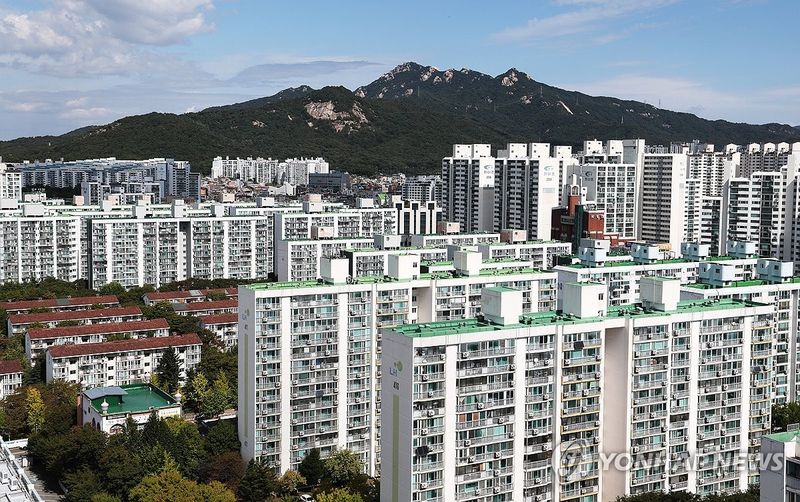
Up for 89 consecutive weeks, but... Seoul home-price growth ‘stalls’
Price indicators also show Seoul home-price growth slowing somewhat. According to the weekly apartment price trends for the third week of October (as of the 19th), released by the Korea Real Estate Board, apartment sale prices in Seoul rose 0.13% from the previous week.
Prices continued to rise for 89 consecutive weeks, but the increase narrowed by 0.03 percentage points, from 0.16% the previous week. Gains also eased in northern Seoul and outlying areas, which had recently driven home-price increases in the city.
The increase narrowed in Jungnang-gu, from 0.42% the previous week to 0.31%; in Seongbuk District, from 0.41% to 0.36%; and in Dobong District, from 0.39% to 0.33%. Gains also eased in Seodaemun District, from 0.40% to 0.36%, and Nowon-gu, from 0.37% to 0.26%.
Prices in Seoul’s three Gangnam districts continue to fall. The decline in Seocho District deepened from 0.27% the previous week to 0.32%, while Gangnam-gu posted a decline of 0.31%, compared with 0.35% the previous week, and Songpa-gu fell 0.13%, compared with 0.21%. Gangnam-gu and Seocho District have declined for 11 consecutive weeks, and Songpa-gu for seven. Some distressed listings in the Gangnam area have been snapped up, but analysts say buyers may remain on the sidelines for the time being.
Rising interest rates are also weighing on buying demand. Last month, the average rate on new mortgages at the five major commercial banks was 4.936%, up 0.28 percentage points (p) from the previous month. COFIX, the benchmark for variable-rate mortgages, also rose to 3.43% in September, based on newly issued loans, up 0.25 percentage points (p) from the previous month, adding to borrowers’ interest burdens. However, some analysts say the recent slowdown in price growth is unlikely to immediately turn into falling prices, as listings for sale and for rent remain in short supply.
[email protected] Kim Hee-sun Reporter