DRC Ebola cases near 10,000; International Rescue Committee expands medical aid
- Input
- 2026-10-26 10:00:24
- Updated
- 2026-10-26 10:00:24
According to IRC on the 26th, as of the 25th, the Democratic Republic of the Congo had recorded 9,876 confirmed Ebola cases and 4,803 deaths. The fatality rate is 48.6%. The death toll is about twice that recorded during the 2018–2020 outbreak, which had previously been the country's largest.
The current outbreak, which began in the Democratic Republic of the Congo in May, is spreading across borders. Uganda declared the outbreak over in July, but imported cases have been confirmed in Kenya and Nigeria this month.
There is no approved vaccine or targeted treatment for the Bundibugyo strain of Ebola currently circulating. According to the World Health Organization (WHO), Ebola is transmitted through direct contact with the blood or bodily fluids of patients or people who have died. The incubation period from infection to the onset of symptoms is 2–21 days. Early hydration and treatment of symptoms increase the chances of survival.
In eastern DRC, conflict, forced displacement and attacks on healthcare facilities make contact tracing difficult. Long-standing underinvestment and cuts to international humanitarian aid funding have also weakened disease surveillance systems, hindering early detection and response.
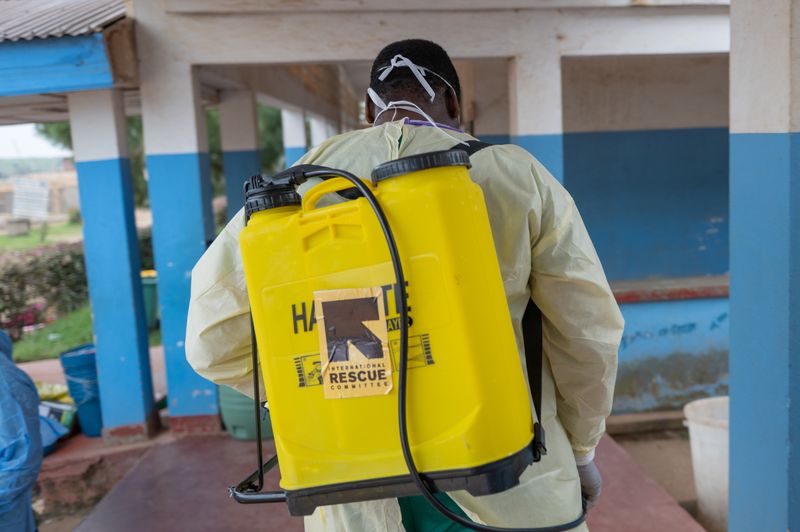
IRC is supporting patient screening and isolation, the provision of personal protective equipment, and improvements to water and sanitation at 24 healthcare facilities in Ituri and Goma, DRC.
Since this month, IRC has expanded its response to Beni and Butembo in North Kivu Province, helping provide infection-prevention education and restore sanitation facilities. It is also providing community prevention education, protecting vulnerable groups, and offering mental health and psychosocial support.
In Kenya, IRC is part of the national Ebola response task force and supports screening, contact tracing and healthcare worker training at border crossings, including Jomo Kenyatta International Airport, and in 13 high-risk areas.
IRC said that funding needed for contact tracing and healthcare worker protection, among other efforts, is not being secured promptly or in sufficient amounts, and called for international financial support and coordination among countries on disease control.
Irene Bosire, IRC's deputy representative in Kenya, said, “A rapid initial response in Kenya is a critical opportunity to prevent Ebola from spreading further,” adding, “Immediate international cooperation is needed to support contact tracing, border screening and frontline medical work.”
[email protected] Jang In-seo Reporter